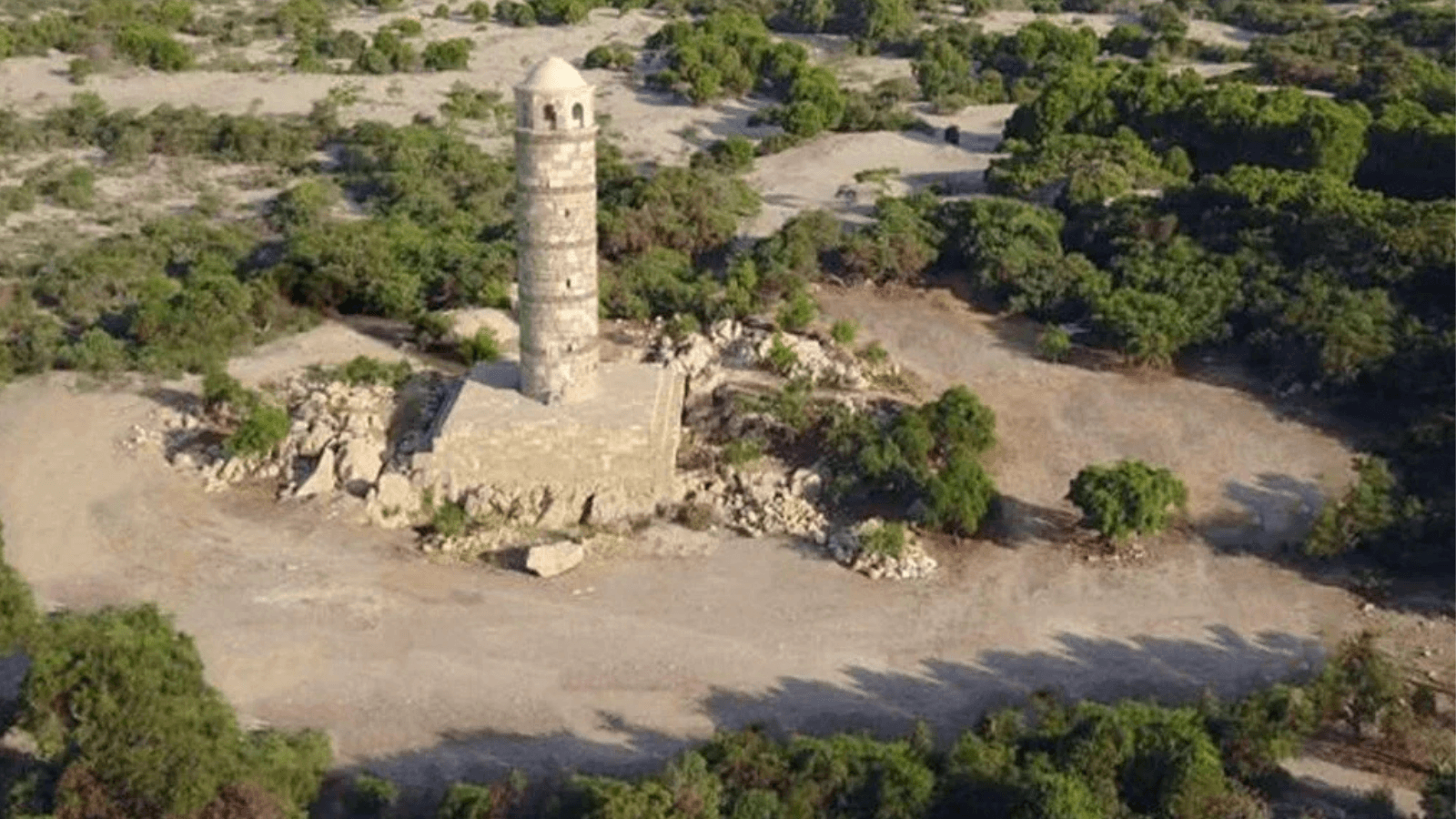
Patara’s Roman Lighthouse stood at the entrance to one of ancient Lycia’s most important harbors for more than a thousand years. A new study now suggests that a devastating earthquake and tsunami in 1481 may help explain how the long-lived monument was finally destroyed.
The disaster struck on May 3, 1481, when a major earthquake affected Rhodes and southwestern Anatolia and generated a tsunami along the eastern Mediterranean coast.
Research published in Geoheritage by İrem Elitez, Cenk Yaltırak and Havva İşkan combines archaeological evidence, historical earthquake records and geological data to examine how repeated seismic events affected Patara and the wider Lycian region.
The researchers suggest that the 1481 tsunami may have contributed to the destruction of the lighthouse. They do not identify the tsunami as the sole cause of its collapse, leaving open the possibility that centuries of earthquakes and structural stress had already weakened the monument.
A lighthouse that survived for more than 1,300 years
The lighthouse was built in AD 64/65 during the reign of Emperor Nero, when Patara was a major harbor on the Mediterranean coast of Lycia, in what is now southwestern Türkiye.
Its position at the southwestern end of the harbor allowed it to mark the approach to a city closely connected to regional and long-distance maritime routes.
Excavations have also provided unusually precise evidence for the monument’s origin. Inscriptions once fitted with gilded bronze letters identified Nero and recorded that the structure was built for the safety of people traveling by sea.
Archaeological finds suggest that the lighthouse remained in use far beyond the Roman period. Ceramics and coins recovered at the site indicate activity continuing into the 15th century.
That chronology is central to the new study. It places the final phase of the lighthouse within the same century as the 1481 earthquake and tsunami.
The disaster that reached Rhodes and Anatolia
Historical records indicate that the 1481 earthquake was followed by a tsunami affecting Rhodes and the southwestern coast of Anatolia.
For the researchers, the event provides a credible natural mechanism that could have contributed to the lighthouse’s destruction.
But Patara had already endured a long history of seismic activity.
The ancient Lycian region occupies part of the modern Teke Peninsula, an area shaped by active fault systems and the complex tectonics of the eastern Mediterranean.
By examining recorded earthquakes from antiquity onward, the study shows that their impact varied considerably.
Several earthquakes between AD 23 and 601 appear to have affected relatively limited groups of settlements. The earthquake of AD 142, however, was far more destructive, damaging more than 30 ancient cities across southwestern Anatolia.
Patara’s monuments were therefore exposed to repeated seismic events for centuries before the 1481 disaster.
This longer history is one reason the authors avoid presenting the tsunami as a simple single-event explanation for the lighthouse’s collapse.
More than 2,500 stones revealed its structure
The remains of Patara’s lighthouse began to emerge during excavations in 2004 and 2005, after archaeologists cleared a large sand dune near the ancient harbor.
More than 2,500 blocks of local limestone were recovered and documented around the structure, preserving an exceptional amount of its original architectural material.
Three-dimensional recording and reconstruction studies helped reveal the monument’s design.
The lighthouse consisted of a cylindrical tower rising from a stepped podium, with two concentric walls surrounding a spiral staircase. At the top, a domed chamber with arched openings is interpreted as the space where the beacon fire was maintained.
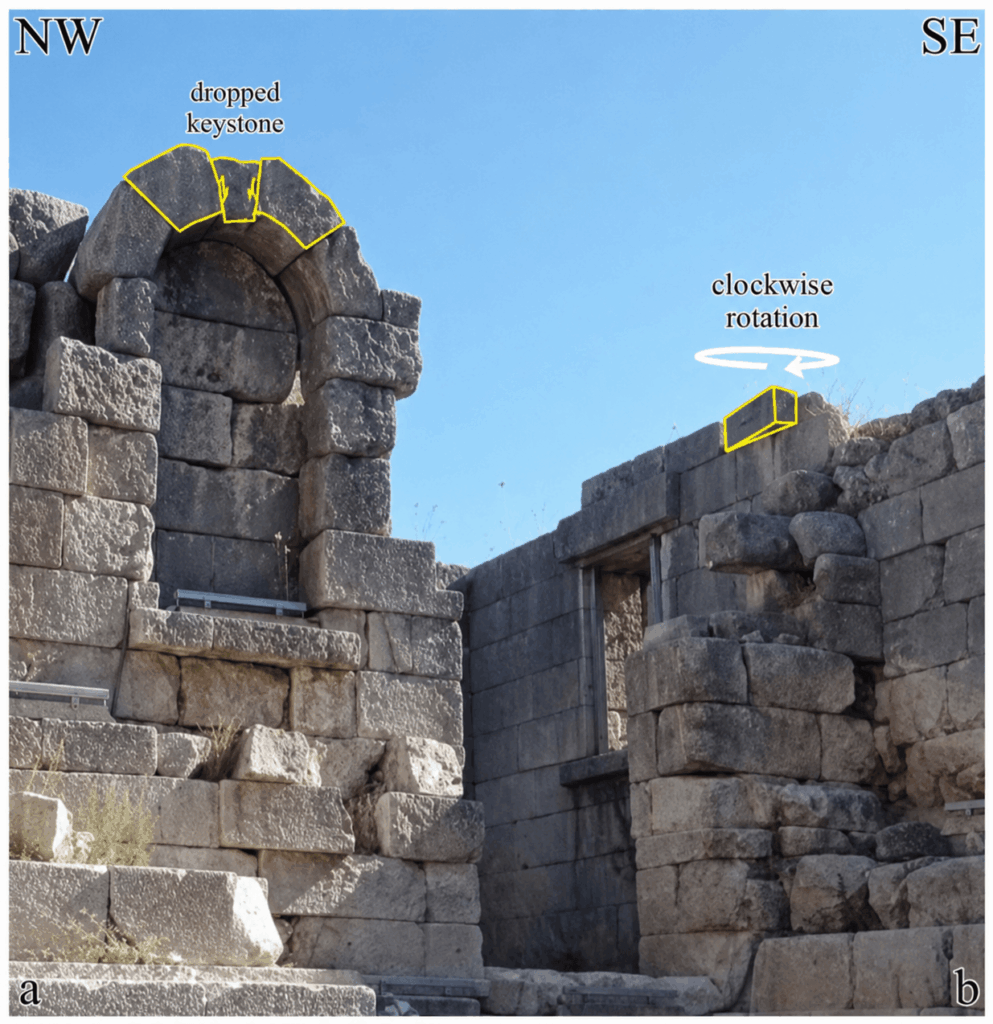
The surviving architecture has also allowed researchers to study how major buildings at Patara responded to earthquakes.
Elsewhere in the city, archaeologists have documented rotated masonry, displaced blocks and other structural deformation, physical traces that demonstrate the repeated impact of seismic forces on Patara’s built environment.
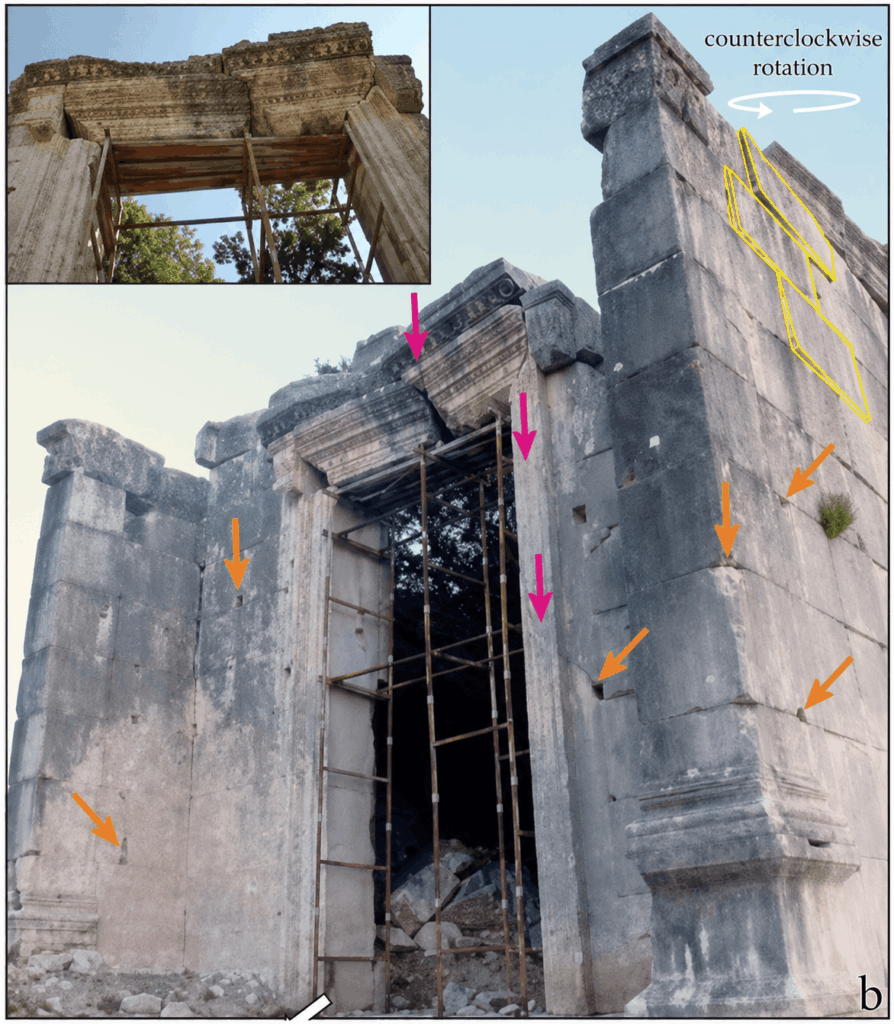
These observations give the lighthouse value beyond its role as a rare example of Roman maritime architecture. Its unusually long history provides researchers with an opportunity to examine how a monumental structure endured natural hazards over many centuries.
The evidence cannot yet prove that the 1481 tsunami alone destroyed Patara’s Roman Lighthouse. But the timing of the disaster, combined with the monument’s archaeological record and the region’s documented seismic history, offers a compelling explanation for the final collapse of a tower that had stood on the Lycian coast for more than 1,300 years.