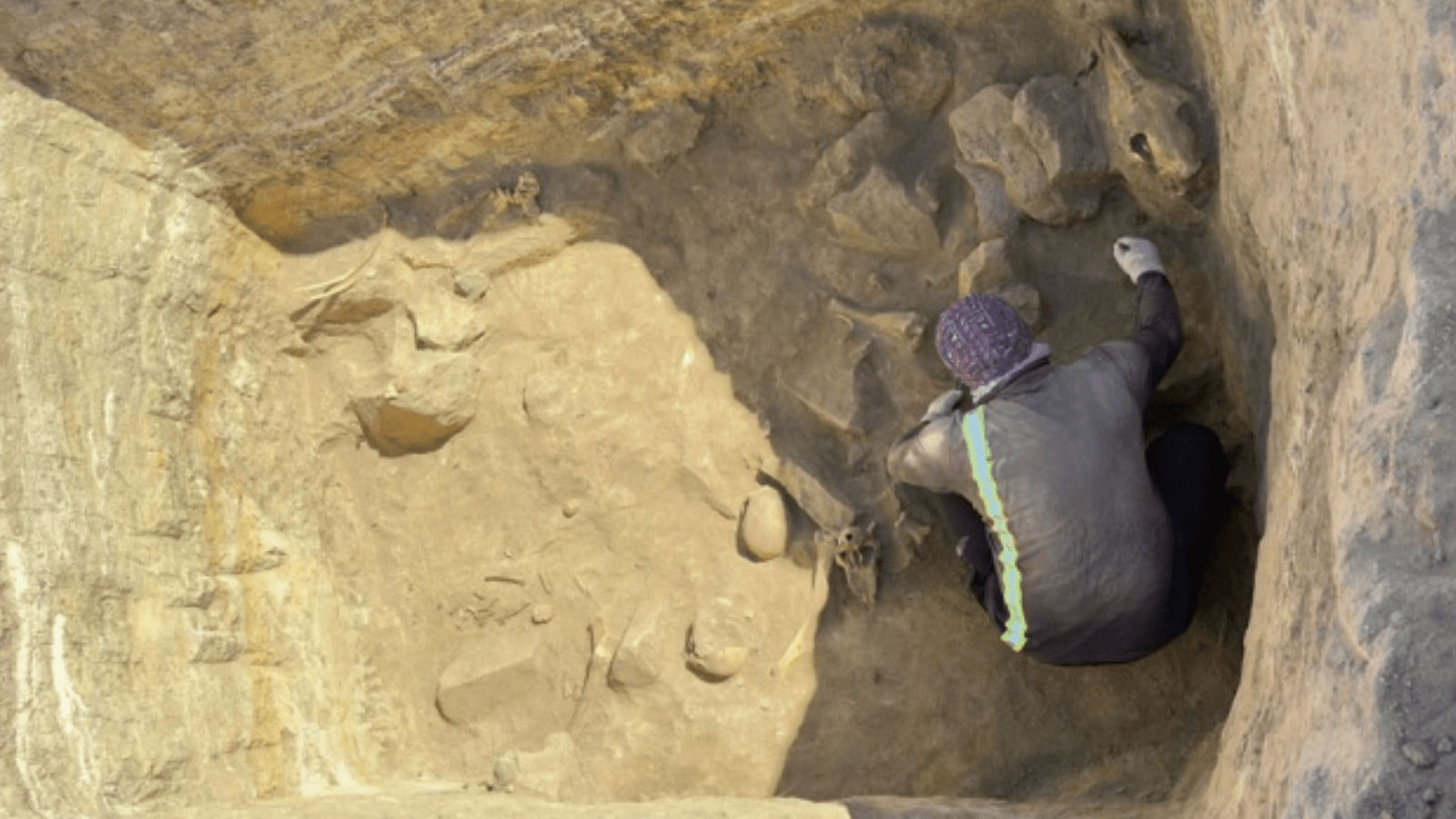
Archaeologists excavating a Xiongnu cemetery in eastern Mongolia have uncovered the remarkably well-preserved skeleton of a woman inside a monumental tomb dating to around 2,000 years ago.
The burial, discovered at Bulgan Uul in Khentii Province, also contained fragments of a painted coffin, parts of a horse-drawn vehicle, bronze and ceramic vessels, and an object associated with female clothing.
The size of the tomb and the objects placed inside suggest that the woman may have held an elevated social position, although researchers say further study is needed before her status can be determined more precisely.
The discovery was made during the Horsemen Culture-2026 project, a joint archaeological program involving Istanbul University’s Center for Mongolian Studies, Istanbul Aydın University and the Institute of Nomadic Civilizations at the National University of Mongolia.
Excavations were conducted at both Bulgan Uul and nearby Yazaar Uul, revealing several burials that shed new light on Xiongnu funerary practices in eastern Mongolia.
A remarkably intact burial
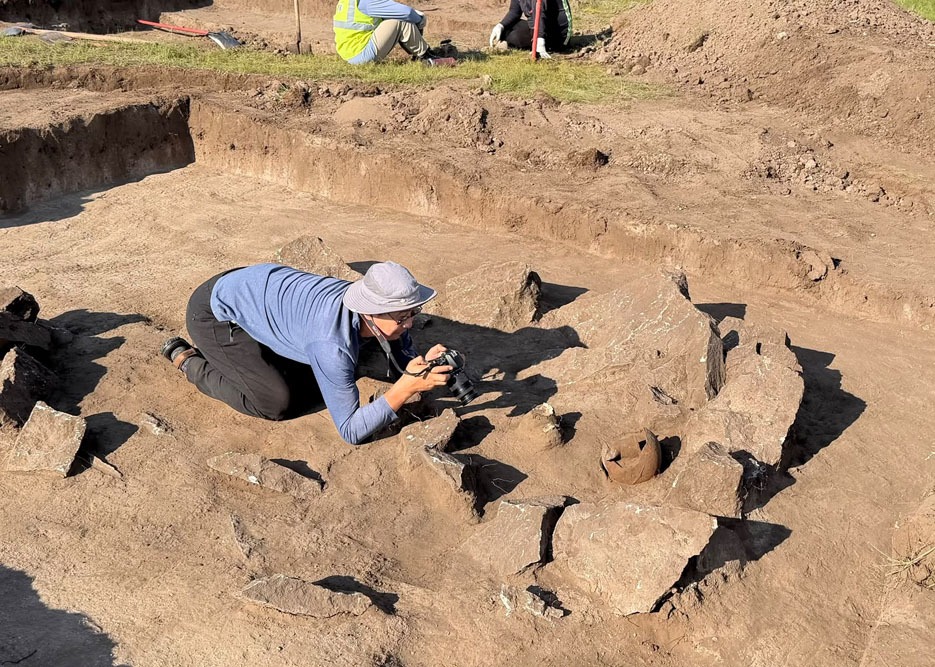
The woman’s skeleton was found largely intact, while substantial parts of the burial structure and associated grave goods had also survived.
Fragments of the painted coffin remained within the tomb, together with components believed to have belonged to a horse-drawn vehicle. Bronze and ceramic vessels were also recovered from the grave.
Because the burial had retained much of its original arrangement, archaeologists can examine not only the individual objects but also their position in relation to the deceased.
The tomb is broadly dated between the second century BC and the second century AD, a period when the Xiongnu became one of the most powerful political forces across the eastern Eurasian steppe.
Xiongnu society included communities spread across a vast region, and burial customs varied considerably according to location, period and social status. Monumental graves are particularly important because they can preserve evidence of hierarchy, ritual and connections between different groups within the wider Xiongnu world.
Unusual graves at Yazaar Uul
The excavations at Yazaar Uul produced a different set of discoveries.
One grave contained an offering cauldron whose form differs from objects normally associated with Xiongnu burials. In another, archaeologists found the skull of a second individual placed beside the principal deceased.
A separate burial contained the remains of a horse, while scattered human bones were recorded in several other graves.
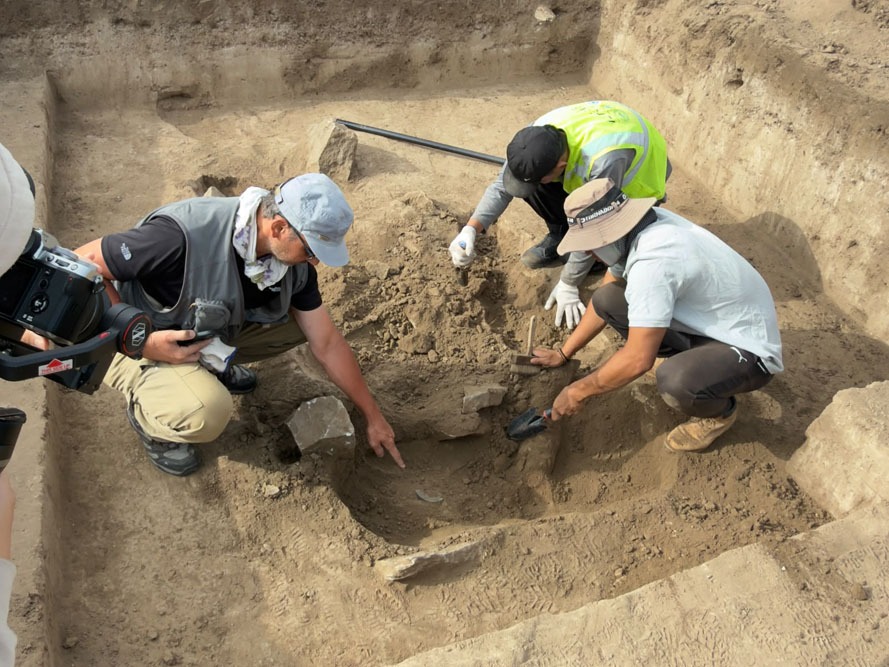
The differences between the burials may point to variations in funerary practice within the region, although researchers have not yet determined whether they reflect status, chronology, local traditions or other factors.
Together, the two cemeteries provide archaeologists with a broader sample for examining how Xiongnu communities in eastern Mongolia treated their dead.
Possible signs of riding and archery
Preliminary examination of some of the human remains has also identified skeletal changes that researchers believe may be connected with repeated horse riding and archery.
Such traces can develop through long-term physical activity, but detailed anthropological analysis will be required before they can be associated with particular individuals or patterns of life.
The observation is especially relevant in a Xiongnu context, where horses played a central role in mobility, warfare and life across the steppe.
Researchers are now conducting further anthropological and zooarchaeological studies of the human and animal remains recovered during the excavations.
The results may help clarify the age, health and biological characteristics of the individuals, while also providing more information about the horses and other animals associated with the graves.
For the woman found at Bulgan Uul, the combination of an intact skeleton, monumental tomb, painted coffin and surviving grave goods offers an unusually detailed archaeological context from a Xiongnu burial in eastern Mongolia.
Cover Image: An archaeologist works inside a Xiongnu-period tomb in eastern Mongolia, where human remains and grave goods were uncovered during the 2026 excavations. Credit: Istanbul University Center for Mongolian Studies.