
Archaeologists have uncovered a collection of bone tools and ornamental beads dating back around 13,000 years in Direkli Cave, a prehistoric site in Kahramanmaraş, southeastern Turkey. The discovery sheds new light on the technological innovation and symbolic life of some of Anatolia’s earliest inhabitants.
Early Craftsmanship at the Dawn of Sedentary Life
The excavation team, led by Prof. Dr. Cevdet Merih Erek from Ankara Hacı Bayram Veli University, identified two bone awls — sharp, hand-crafted tools likely used for piercing leather and stone beads — along with four perforated bead fragments.
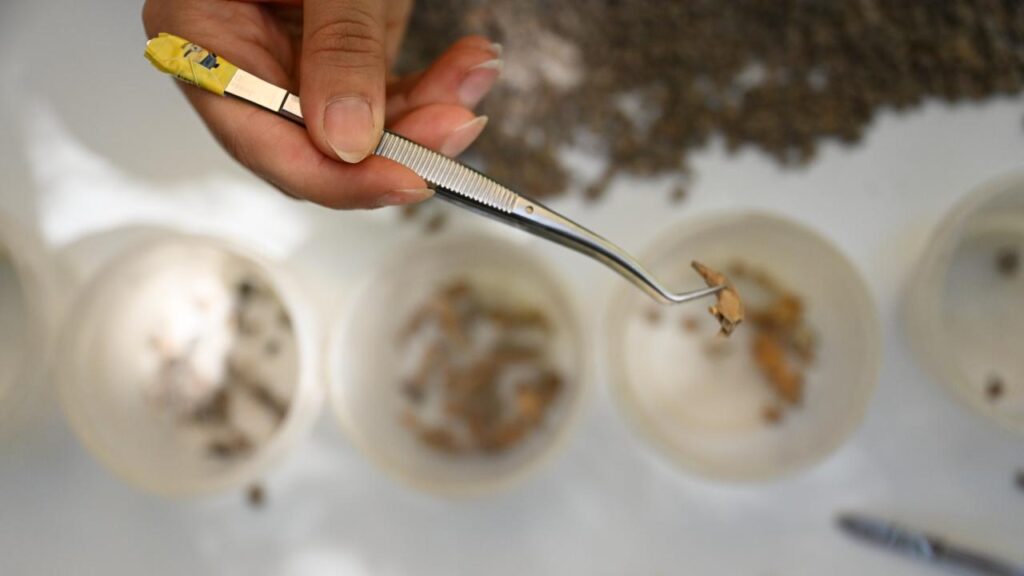
Erek explained that one of the awls was probably designed for fine ornamental work, while the other was used in textile or leather production, suggesting an impressive degree of technological specialization for the Epipalaeolithic period.
“The diversification of this tool industry indicates a surprisingly advanced stage of industrial development for its time,” said Erek.
Adornment Beyond Life and Death
Equally remarkable were the small beads unearthed alongside the tools. Laboratory analysis places them in the seventh archaeological layer, dating to around 11,000 BCE. According to Erek, these ornaments were not only worn by the living but also used to decorate the dead.
“The people of this period saw the dead as part of a continuous existence,” he added. “They adorned the deceased as they would the living — a gesture of symbolic continuity.”
Such behavior reflects a sophisticated social world, in which artistic expression and ritual belief were already intertwined long before the agricultural revolution.
Direkli Cave: Tracing Anatolia’s Deep Human Past
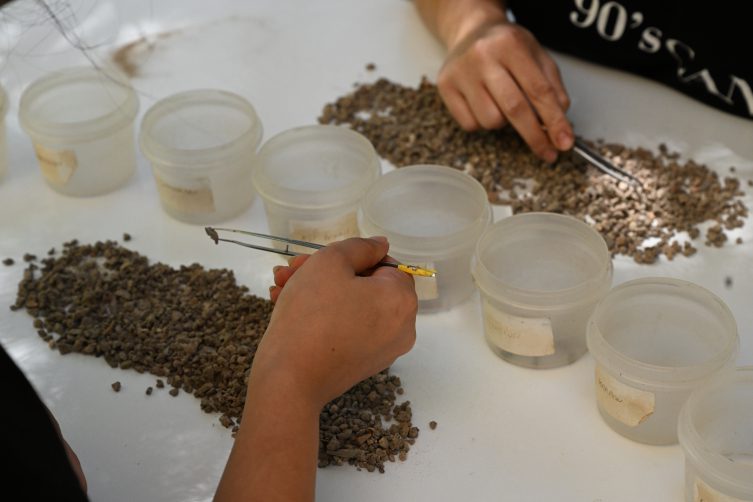
Situated near the Eşek Deresi Valley, Direkli Cave has been under systematic excavation for nearly two decades. Its sediment layers preserve evidence of human activity between 14,000 and 8,500 BCE, marking it as one of the oldest known sites in Anatolia with continuous occupation.
Each stratigraphic layer represents a vast span of time — even 3 to 5 centimeters of soil can record 1,000 to 2,000 years of human history. Together with nearby Eşek Deresi Cave, Direkli reveals the existence of a distinct Anatolian cultural development that flourished independently during the Late Epipalaeolithic, foreshadowing the Neolithic transformation that would follow in Upper Mesopotamia.