The structure, excavated during the 2025 season by a Kuwaiti-Danish mission in collaboration with the Moesgaard Museum, lies on a mound known as Tell F6, just east of the well-known Dilmun Palace and Temple complex. Measuring roughly 11 by 11 meters, the newly revealed sanctuary was found beneath another temple unearthed in earlier seasons, indicating two superimposed sacred buildings dating to around 1900–1800 BCE. Excavations revealed altars, pottery fragments, seals, and other ritual artifacts, all associated with the religious and administrative life of the Dilmun civilization — a culture that flourished across the Gulf and maintained long-distance trade with Mesopotamia. According to Mohamed bin Redha, Assistant Secretary-General of Kuwait’s National Council for Culture, Arts, and Letters (NCCAL), the temple’s design and contents “confirm the presence of an advanced urban society on Failaka Island 4,000 years ago.” The discovery also reinforces Failaka’s status as a major hub of religion, trade, and governance in the Bronze Age Gulf. Archaeologists believe the proximity of two temples and a large administrative complex reveals a well-organized settlement that served as both a spiritual center and regional power node. Failaka, located about 20 km off the coast of Kuwait City, has long been recognized as the heart of the Dilmun civilization, often described in Mesopotamian sources as a “land of abundance.” The island’s strategic position along ancient maritime routes made it a key intermediary between Mesopotamia, the Indus Valley, and Arabia. Experts expect further findings from the ongoing excavation to shed light on Dilmun’s ritual practices and political structure, potentially rewriting the early history of urban life in the Gulf. The NCCAL reaffirmed its commitment to supporting fieldwork, conservation, and research across the country, calling this temple “a milestone in understanding the religious landscape of ancient Dilmun.” This remarkable discovery not only deepens our understanding of Bronze Age religion in the Gulf but also positions Failaka Island as a global reference point in the study of early civilizations.

4,000-Year-Old Dilmun Temple Unearthed on Kuwait’s Failaka Island

Archaeologists have uncovered a 4,000-year-old Bronze Age temple belonging to the ancient Dilmun civilization on Failaka Island, Kuwait — a discovery hailed as one of the most significant in the Gulf region’s recent archaeological history.

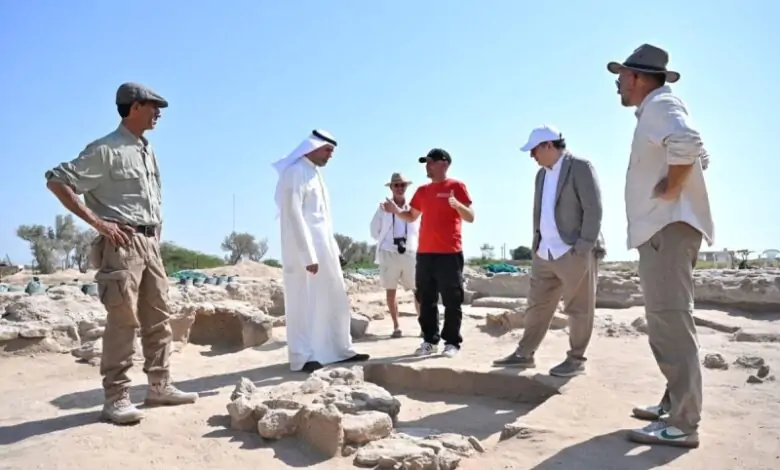
The structure, excavated during the 2025 season by a Kuwaiti-Danish mission in collaboration with the Moesgaard Museum, lies on a mound known as Tell F6, just east of the well-known Dilmun Palace and Temple complex. Measuring roughly 11 by 11 meters, the newly revealed sanctuary was found beneath another temple unearthed in earlier seasons, indicating two superimposed sacred buildings dating to around 1900–1800 BCE.

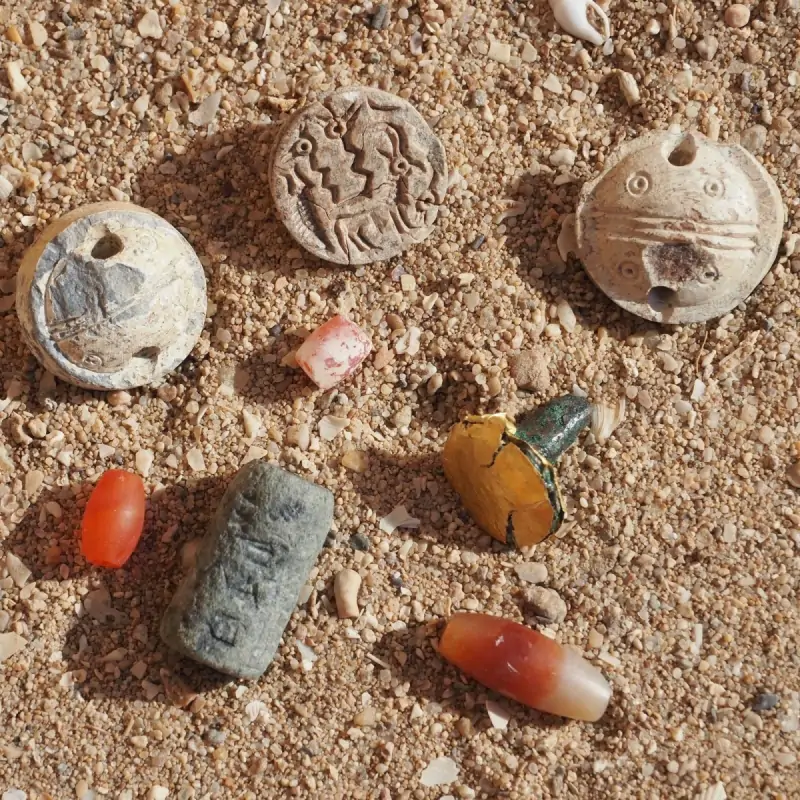
Excavations revealed altars, pottery fragments, seals, and other ritual artifacts, all associated with the religious and administrative life of the Dilmun civilization — a culture that flourished across the Gulf and maintained long-distance trade with Mesopotamia.

According to Mohamed bin Redha, Assistant Secretary-General of Kuwait’s National Council for Culture, Arts, and Letters (NCCAL), the temple’s design and contents “confirm the presence of an advanced urban society on Failaka Island 4,000 years ago.”
The structure, excavated during the 2025 season by a Kuwaiti-Danish mission in collaboration with the Moesgaard Museum, lies on a mound known as Tell F6, just east of the well-known Dilmun Palace and Temple complex. Measuring roughly 11 by 11 meters, the newly revealed sanctuary was found beneath another temple unearthed in earlier seasons, indicating two superimposed sacred buildings dating to around 1900–1800 BCE.

Excavations revealed altars, pottery fragments, seals, and other ritual artifacts, all associated with the religious and administrative life of the Dilmun civilization — a culture that flourished across the Gulf and maintained long-distance trade with Mesopotamia.

According to Mohamed bin Redha, Assistant Secretary-General of Kuwait’s National Council for Culture, Arts, and Letters (NCCAL), the temple’s design and contents “confirm the presence of an advanced urban society on Failaka Island 4,000 years ago.”

The discovery also reinforces Failaka’s status as a major hub of religion, trade, and governance in the Bronze Age Gulf. Archaeologists believe the proximity of two temples and a large administrative complex reveals a well-organized settlement that served as both a spiritual center and regional power node.

Failaka, located about 20 km off the coast of Kuwait City, has long been recognized as the heart of the Dilmun civilization, often described in Mesopotamian sources as a “land of abundance.” The island’s strategic position along ancient maritime routes made it a key intermediary between Mesopotamia, the Indus Valley, and Arabia.

Experts expect further findings from the ongoing excavation to shed light on Dilmun’s ritual practices and political structure, potentially rewriting the early history of urban life in the Gulf.

The NCCAL reaffirmed its commitment to supporting fieldwork, conservation, and research across the country, calling this temple “a milestone in understanding the religious landscape of ancient Dilmun.”

This remarkable discovery not only deepens our understanding of Bronze Age religion in the Gulf but also positions Failaka Island as a global reference point in the study of early civilizations.

The discovery also reinforces Failaka’s status as a major hub of religion, trade, and governance in the Bronze Age Gulf. Archaeologists believe the proximity of two temples and a large administrative complex reveals a well-organized settlement that served as both a spiritual center and regional power node.

Failaka, located about 20 km off the coast of Kuwait City, has long been recognized as the heart of the Dilmun civilization, often described in Mesopotamian sources as a “land of abundance.” The island’s strategic position along ancient maritime routes made it a key intermediary between Mesopotamia, the Indus Valley, and Arabia.

Experts expect further findings from the ongoing excavation to shed light on Dilmun’s ritual practices and political structure, potentially rewriting the early history of urban life in the Gulf.

The NCCAL reaffirmed its commitment to supporting fieldwork, conservation, and research across the country, calling this temple “a milestone in understanding the religious landscape of ancient Dilmun.”

This remarkable discovery not only deepens our understanding of Bronze Age religion in the Gulf but also positions Failaka Island as a global reference point in the study of early civilizations.