
At Nineveh’s Shamash Gate, archaeologists have uncovered an unusually powerful record of destruction: the fall of the Assyrian capital in 612 BC and the scars of the modern battle for Mosul more than 2,600 years later.
The discovery comes from recent work at the monumental eastern entrance to ancient Nineveh, one of the most important cities of the Assyrian Empire. Excavations by the Iraqi-Italian Nineveh Expedition, known as NINEV_E, have revealed fragments of a shattered stele of King Ashurbanipal, human remains, arrowheads, burned deposits and damage caused by ISIS tunnels dug during the group’s occupation of Mosul.
It is rare for one archaeological monument to preserve two moments of violence so far apart in time. At the Shamash Gate, however, ancient imperial collapse and modern urban warfare now sit in the same archaeological frame.
A Gate Built for an Imperial Capital
The Shamash Gate was one of the great entrances into Nineveh, the Assyrian capital expanded on a monumental scale under King Sennacherib, who ruled from 705 to 681 BC. It stood on the eastern side of the city and controlled the road toward Arbela, modern Erbil.
In its original form, the gate was not only a defensive structure. It was also a statement of power. Anyone entering Nineveh from the east passed through architecture designed to project the authority of the Assyrian state.
But the latest excavations have shown that the gate’s story did not end with imperial display. Its stones also recorded collapse.
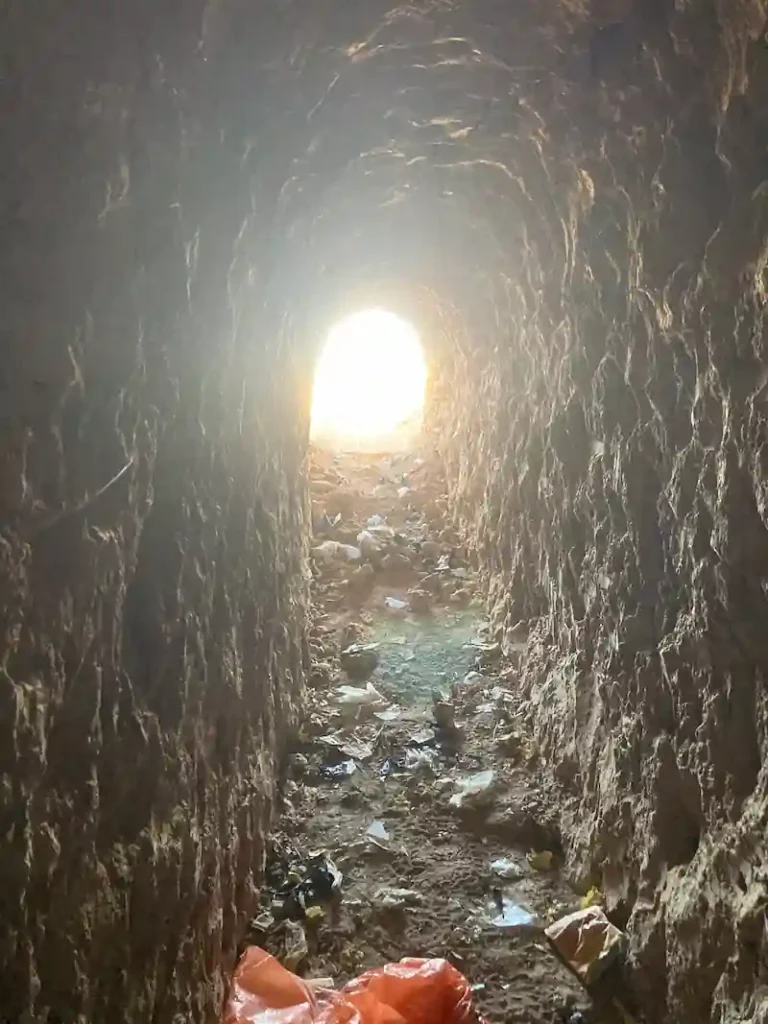
ISIS Tunnels Cut Through the Ancient Monument
The most recent damage came during the ISIS occupation of Mosul between 2014 and 2017. Militants turned the Shamash Gate into a defensive position and dug a network of tunnels through the foundations and superstructure of the ancient complex.
The tunnels extended for roughly 210 meters. They cut through stone slabs, damaged parts of the ancient pavement and threatened the structural stability of the gate. Some inscribed stones were also affected.
After Mosul was retaken, archaeologists documented further signs of modern conflict around the site, including shrapnel, projectiles, craters and burn marks. The area outside the gate had also been used as a dumping ground for objects looted from homes in the city, including appliances, furniture and other domestic items.
For archaeologists, this modern debris is uncomfortable but significant. It shows how the ancient city wall became part of a 21st-century battlefield.
Emergency Work Saved the Gate From Collapse
Before excavation could continue, the monument had to be stabilized.
In 2021, the team documented the tunnel system using 3D laser scanning. The survey showed the full scale of the underground damage and confirmed that the gate was at serious risk.
A later stabilization project, supported by the United Nations Development Programme, filled the tunnels with sandbags using earth originally removed during the ISIS digging. This intervention allowed the archaeologists to move from emergency documentation to controlled excavation.
Only then did the deeper ancient story begin to emerge.
A Shattered Stele of King Ashurbanipal
Inside the central passage of the gate, archaeologists identified two pavement phases. The lower surface was made of large stone blocks and may belong to the original construction of Sennacherib’s time. Above it was a later pavement of pebbles set in clay.
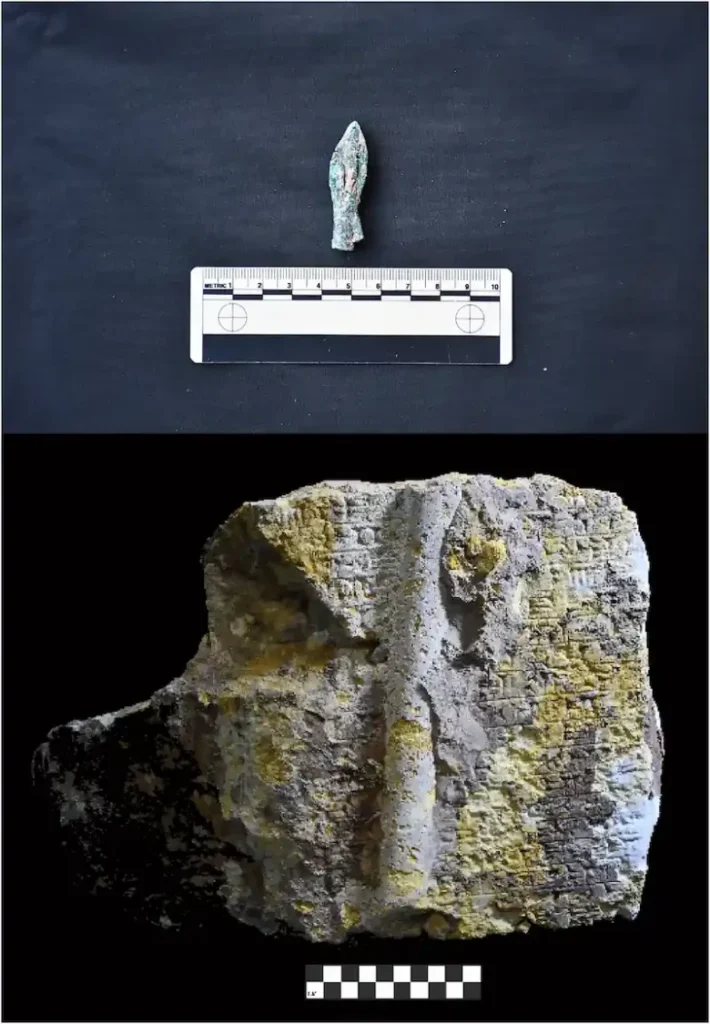
On top of that later surface lay a destruction layer filled with fragments of a large limestone stele, human remains, bronze and iron arrowheads, pottery and a decorated bone button.
The stele belonged to King Ashurbanipal, one of the last great rulers of the Assyrian Empire. He ruled from 669 to 631 BC, only a generation before Nineveh fell.
The monument must once have stood at least two meters high. By the time archaeologists found it, it had been violently broken into pieces. So far, 196 fragments have been recovered.
The condition of the fragments points to deliberate destruction. The stele appears to have been smashed during the sack of Nineveh in 612 BC, when the city fell to the forces that ended Assyria’s imperial dominance.
The Surviving Text Still Speaks
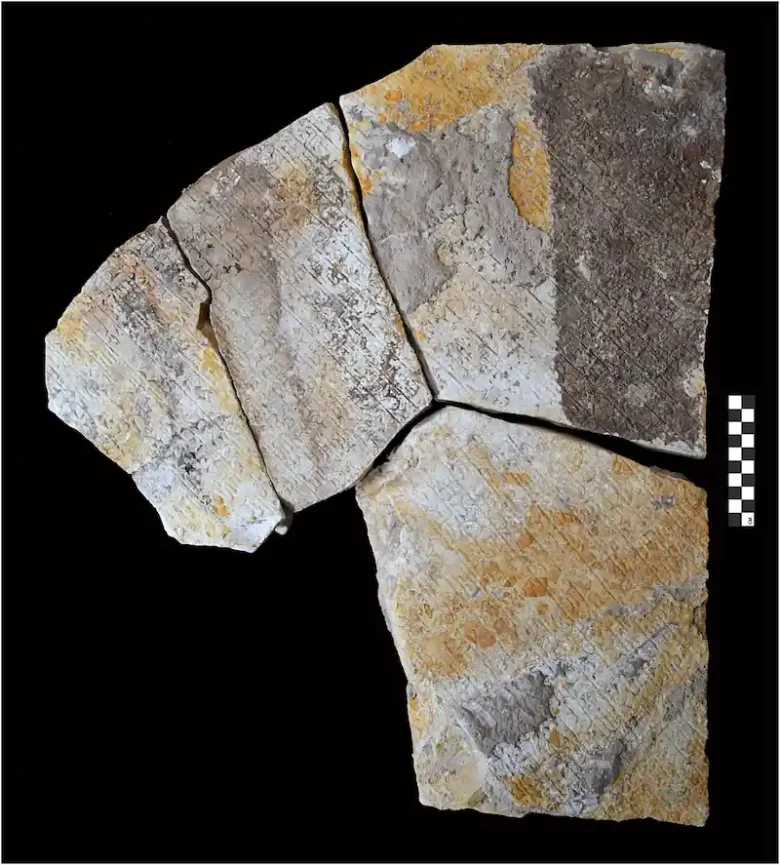
Despite the damage, parts of the inscription remain readable.
Four joining fragments preserve substantial cuneiform text on both faces. The text matches known inscriptions of Ashurbanipal from clay tablets. One section describes the flight of Pharaoh Taharqa from Thebes after the Assyrian army defeated his forces. Another refers to the betrayal of three vassal kings in Egypt who attempted to ally with Taharqa against Assyria.
Two of those rulers were captured and brought before the Assyrian king, who later pardoned them.
The survival of this text is important because it gives the stele more than artistic value. It links the Shamash Gate to the political language of empire, conquest and royal memory.
Its destruction, in turn, suggests that attackers did not merely break a stone object. They attacked a symbol of Assyrian royal authority.
Human Remains Point to the Violence of Nineveh’s Fall
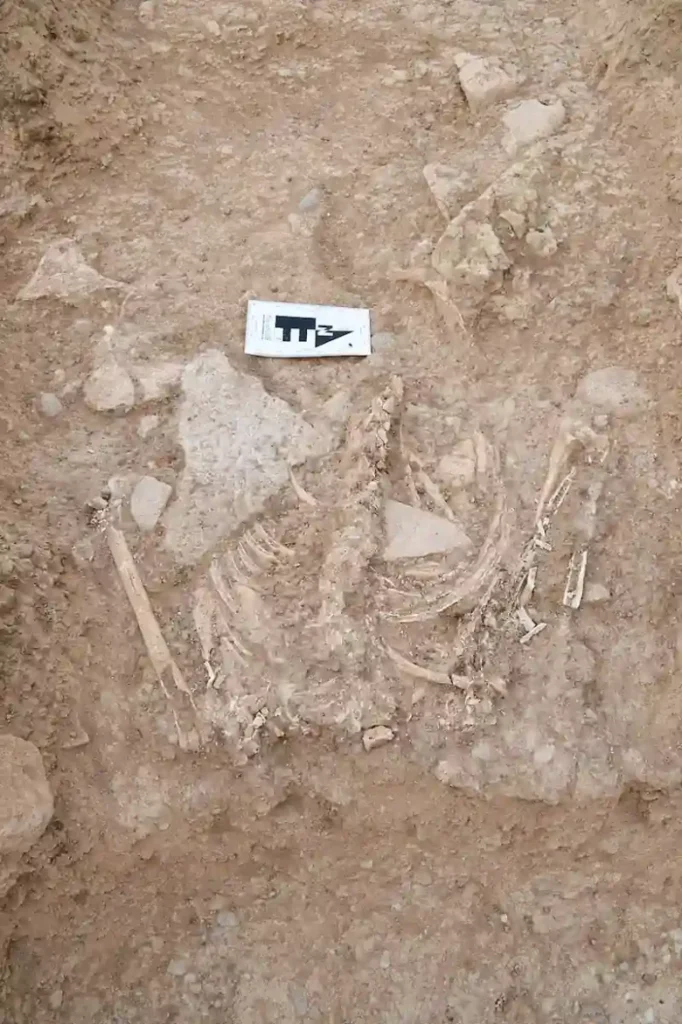
Near the stele fragments, archaeologists found human remains that may belong to the final violence of the city’s capture.
In the central passage, bones were mixed and fully disarticulated. Preliminary analysis identified at least four individuals: a young child, an adolescent male, an adult woman and another adult whose age and sex remain uncertain.
Another individual was found near the western entrance of the gate. The body was poorly preserved and lay face down. The skull was missing, although part of the jaw survived beneath a brick. Dental wear suggests the person was between 35 and 45 years old.
The remains cannot tell the full story of the battle. But together with arrowheads, burned deposits and the shattered royal stele, they give the destruction layer a human dimension.
This was not an abstract imperial collapse. People died inside or near the gate as Nineveh fell.
Pottery Confirms the Neo-Assyrian Setting
Ceramic evidence supports the dating of the destruction layer. Archaeologists recovered 87 diagnostic pottery fragments, many of them vessel rims. Their forms closely match finds from Nineveh’s Mashki Gate, excavated in earlier campaigns.
Most pieces belong to the Neo-Assyrian ceramic tradition, including greenish-yellow wares typical of the period. One striking glazed fragment preserves dotted decoration, horizontal bands and part of a lotus motif.
A few older and later sherds were also found, including Middle Bronze Age, Sasanian and early Islamic pieces. These fragments show that the area remained part of a long urban sequence, but the main destruction evidence belongs to the final Neo-Assyrian phase.
A Monument of Empire, War and Recovery
The Shamash Gate had already been excavated and partly reconstructed in the 1960s. That earlier work preserved parts of the monument, but it also created challenges for modern archaeologists. Reconstructed mudbrick, erosion and overburden now complicate excavation and conservation.
Even so, the new work has confirmed that the gate still contains major archaeological evidence.
For ancient history, it offers a rare view into the last days of Nineveh, when the Assyrian Empire’s symbolic heart was broken. For modern Mosul, it is also a damaged landmark of survival after ISIS occupation and war.
That double meaning gives the Shamash Gate unusual force. It is not only a monument to Assyrian power. It is a place where two destructions, separated by more than 2,600 years, have left their marks in stone, soil and memory.
The gate still stands. And beneath it, Nineveh’s story is not finished.
Cover Image: Aerial view of Nineveh’s Shamash Gate from the east, showing the monumental entrance where recent excavations revealed Assyrian destruction layers and modern conflict damage. Credit: T. Harrison et al., 2026.
Harrison T, AbuJayyab K, Batiuk S, et al. The Shamash Gate, Nineveh: a Window into Two Episodes of Instability. Iraq. 2025;87:163-183. doi:10.1017/irq.2026.10042