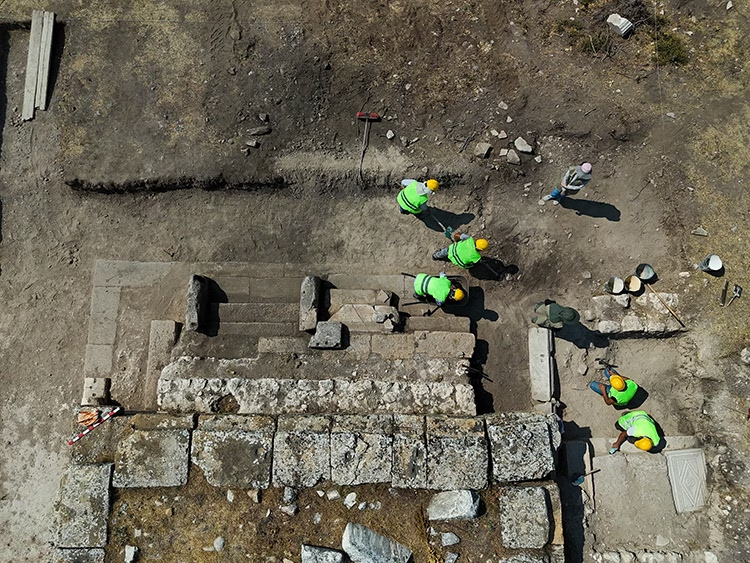
Archaeologists have unearthed the remains of a monumental temple in the ancient city of Blaundos, located in Ulubey, Uşak Province. The newly discovered North Temple, built nearly 1,900 years ago, adds a significant chapter to the history of this strategically positioned settlement, once a vital Roman garrison city.
A Strategic City Carved into the Ulubey Canyon
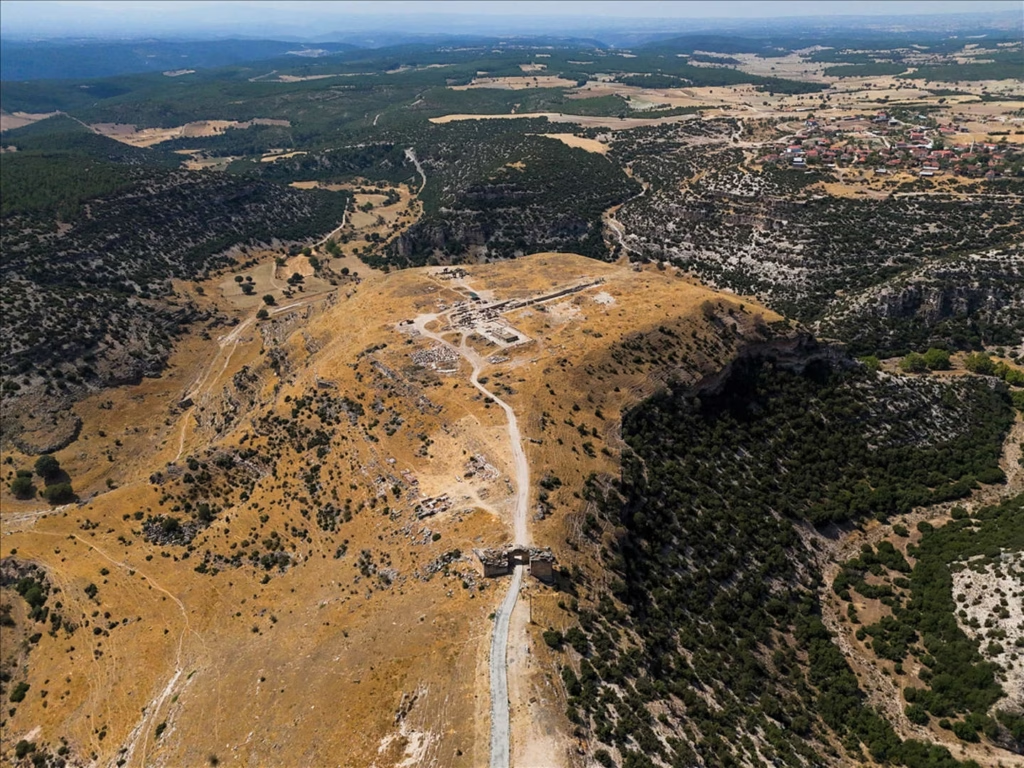
Founded in the 3rd century BCE by Macedonian settlers during Alexander the Great’s Anatolian campaign, Blaundos was constructed atop a natural plateau encircled by steep cliffs, creating a fortress-like city accessible through a single fortified gate. Its dramatic location made Blaundos a key military outpost along the routes connecting Lydia and Phrygia.
Excavations at the site, initiated in 2018 and currently directed by the Uşak Museum Directorate, are part of Turkey’s “Geleceğe Miras” (Legacy for the Future) heritage conservation project. Recent fieldwork has focused on the city’s main avenue, stadium, and religious structures, including both the well-known Temple of Demeter and this newly identified North Temple.
A Temple Larger than the Sanctuary of Demeter
Located just 200 meters from the city’s main gate, the North Temple rests on a massive rectangular podium measuring 12 meters by 10 meters and nearly 2 meters in height. Excavation director Şerif Söyler notes that its size surpasses that of Blaundos’ Demeter sanctuary, the city’s primary pagan temple dedicated to the goddess of agriculture and fertility.
“This temple was a major religious center that continued to be used well into the Byzantine period,” Söyler said. “Many of its architectural blocks were destroyed by earthquakes and weathering, but we plan to implement a full restoration project after completing excavation and documentation.”
Christian Symbols from the 8th Century CE
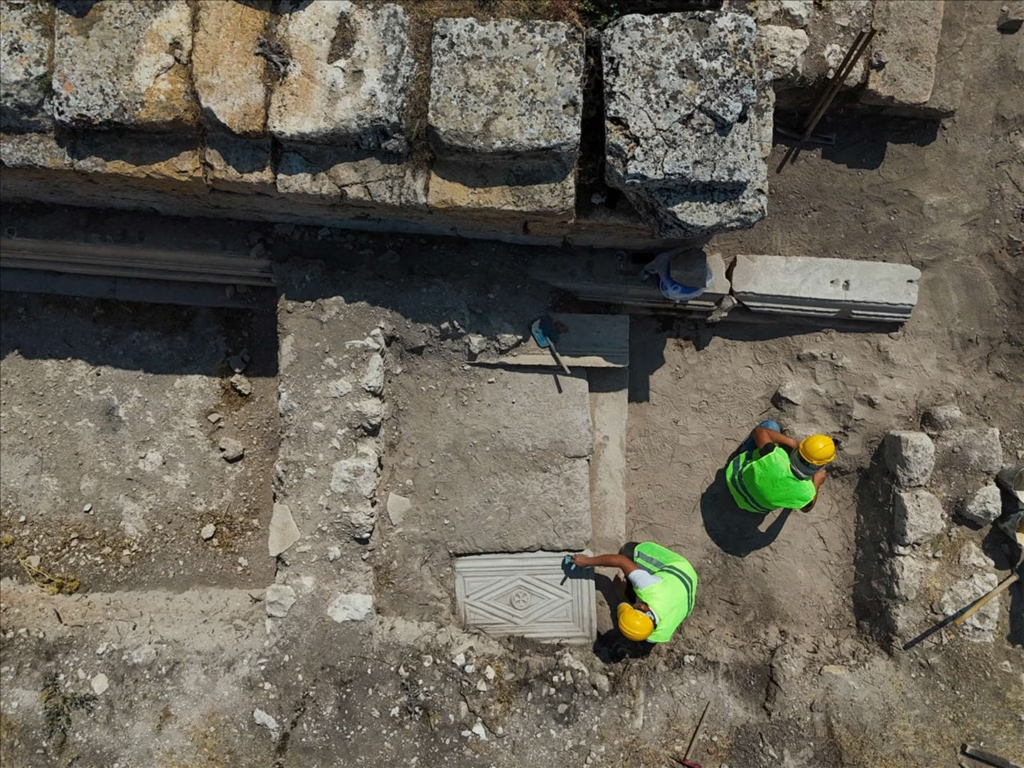
Among the most compelling finds are three marble blocks carved with crosses, stylistically dated to the 8th century CE. These artifacts confirm that the temple remained a center of worship even after the Christianization of the region.
“The presence of these cross motifs proves that the site was not abandoned but adapted for Christian use, making it an important witness to Blaundos’ religious transformation,” Söyler explained.
Blaundos: A Cultural Crossroads
Situated about 40 kilometers southwest of Uşak, Blaundos flourished as a Roman city, featuring a stadium, theater, aqueducts, and multiple temples. The new discovery strengthens its reputation as a site that preserves over a millennium of history, from Hellenistic foundations to Byzantine continuity.
Excavations continue to focus on uncovering Blaundos’ urban layout, documenting architectural remains, and planning conservation initiatives to open the site to wider tourism. Once restored, the North Temple is expected to become a focal point of the ancient city, complementing the Temple of Demeter and showcasing Anatolia’s layered spiritual heritage.