A quiet excavation in southeastern Bavaria has turned into one of the most informative early medieval discoveries of recent years. Archaeologists working near Bad Füssing in the district of Passau uncovered a cemetery that forces a major rethink of how communities lived, moved, and fought in the Inn Valley as Roman power collapsed.
A Cemetery That Rewrites the Timeline
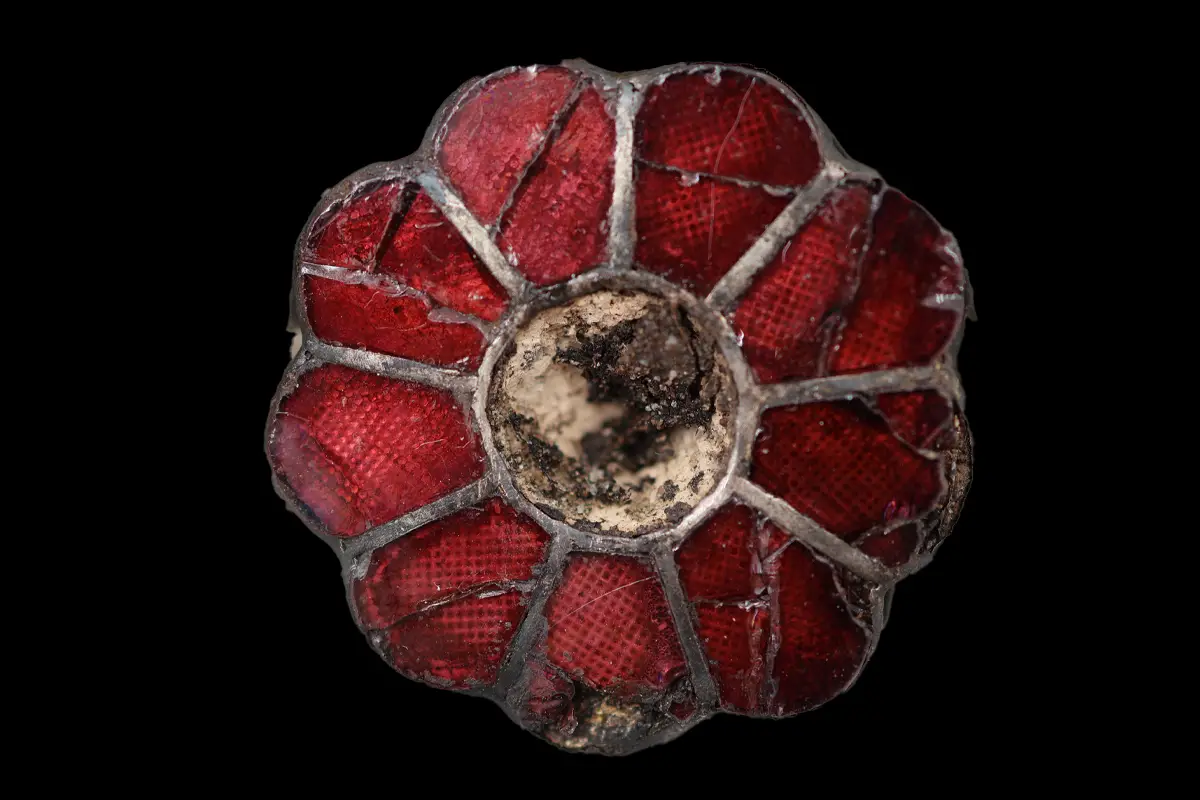
When the team began work in 2021, the roughly 90 graves were initially thought to belong to the 6th–7th centuries AD — the familiar horizon associated with the earliest known Bavarian groups. But several burials raised red flags: unusually shaped garment clasps, early ceramic forms, and delicate glass vessels that clearly did not fit the expected chronology.
To settle the matter, researchers from the Bavarian State Office for Monument Preservation selected sixteen graves for radiocarbon dating. The results upended the initial assumptions. The cemetery was already active in the mid-5th century, long before the so-called “Bavarian princess,” whose rich jewelry brought early attention to the site, was buried there.
This means people were living and dying in the Inn Valley more than a century before Bavarians appear in written sources, during a phase when Roman authority in the region was fading but not yet gone.
Migration Before the Bavarians
According to Prof. Mathias Pfeil, Director General of the BLfD, the earlier graves are the true breakthrough.
He emphasizes that the decades surrounding the Roman withdrawal — often glossed over in traditional narratives — are finally gaining definition.
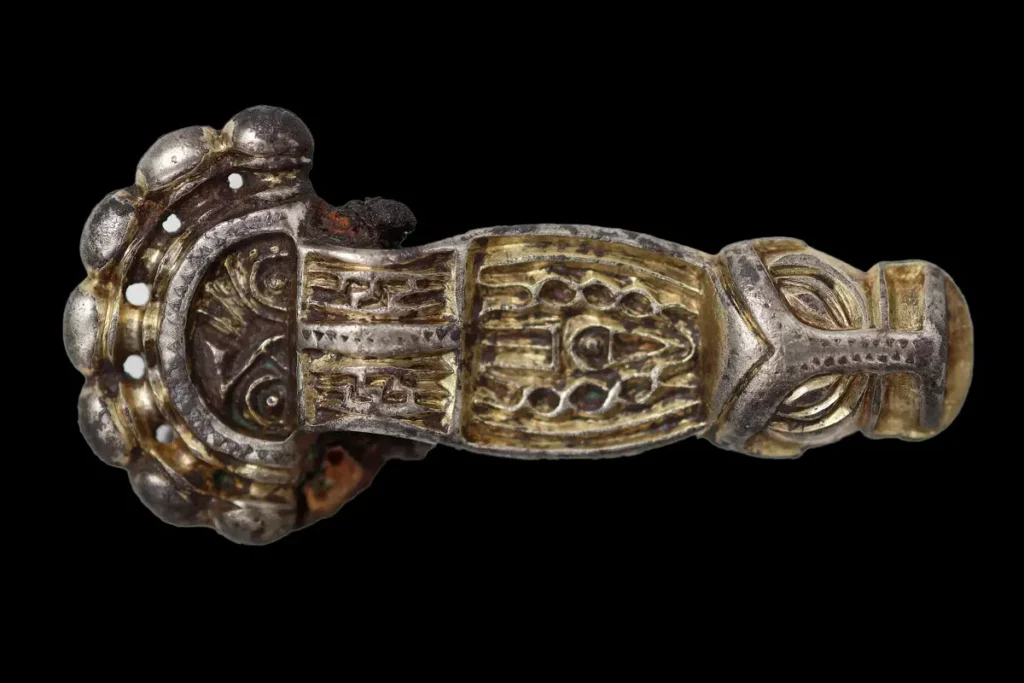
The results suggest that non-Roman groups had settled along the Inn River corridor even before Bavarian communities formed, indicating a more complex sequence of migrations and cultural interactions than previously understood. These populations used Roman administrative landscapes but were no longer part of a Roman world in any political sense.
Life and Violence on the Edge of Empire
Anthropologists analyzed the skeletons to reconstruct the lives of the individuals who witnessed this turbulent transition. The findings coincide with what researchers call the “Severinus Horizon” — the final decades of Roman rule in the Eastern Alps around 480 AD, marked by unrest, shifting alliances, and new power structures.
One burial stands out: a mounted warrior whose bones preserve the story of his final moments.
A riding spur and distinctive wear on his thigh bones show that he spent considerable time on horseback. But the wounds tell a violent ending: a sword cut to the leg followed by two deep blows to the skull, both unhealed — evidence that he died in combat.
The nature of the injuries points to a dramatic scenario: he was struck while mounted, fell, and was then killed on the ground.
A Rare Look at an Overlooked Century
The Bad Füssing cemetery provides one of the clearest archaeological snapshots of life in the Inn Valley between the end of Roman administration and the emergence of the early medieval political landscape.
Instead of a historical vacuum, the region appears as a frontier full of movement, cultural blending, and conflict — a place where new identities were forming as old structures collapsed.
Bavarian State Office for the Preservation of Historical Monuments
Cover Image: Cloisonné garnet disc brooch with silver settings from the Bad Füssing cemetery, dated to the mid-5th century. Credit: Korolnik Restoration