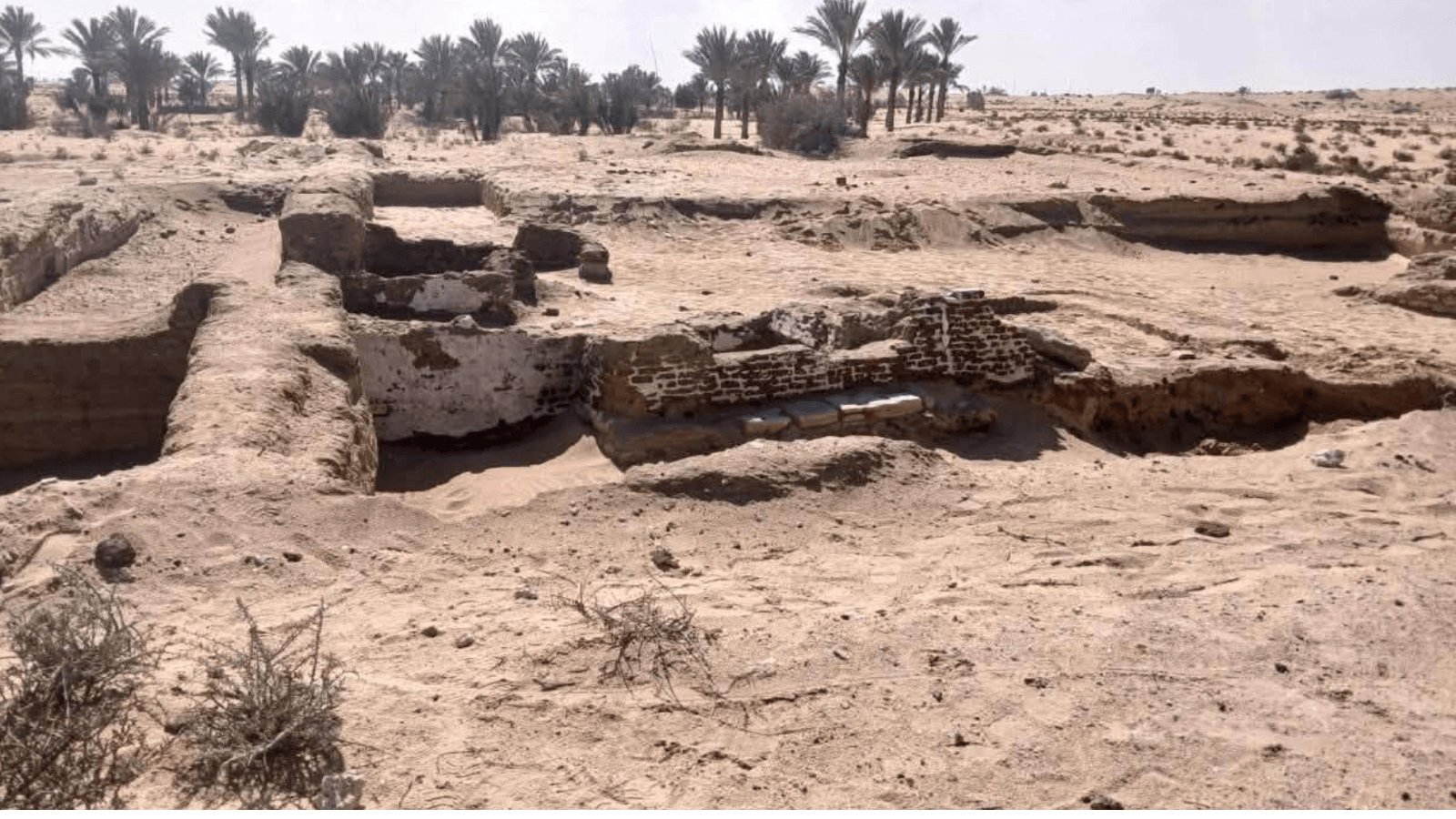
Archaeologists in Egypt’s North Sinai have uncovered the remains of a medieval roadside complex believed to have served pilgrims and merchants travelling along one of the region’s most important historical routes.
The structure was discovered at the site of Asila, where excavations by Egypt’s Supreme Council of Antiquities have exposed parts of what researchers believe was a khan, or caravanserai, associated with the Sultan’s Road, a route also linked to the historic Egyptian pilgrimage network connecting Egypt with the Levant and the Arabian Peninsula.
Excavations at Asila began in 2025 after the site had remained buried beneath desert sand for centuries.
Rooms and walls emerge beneath the sand
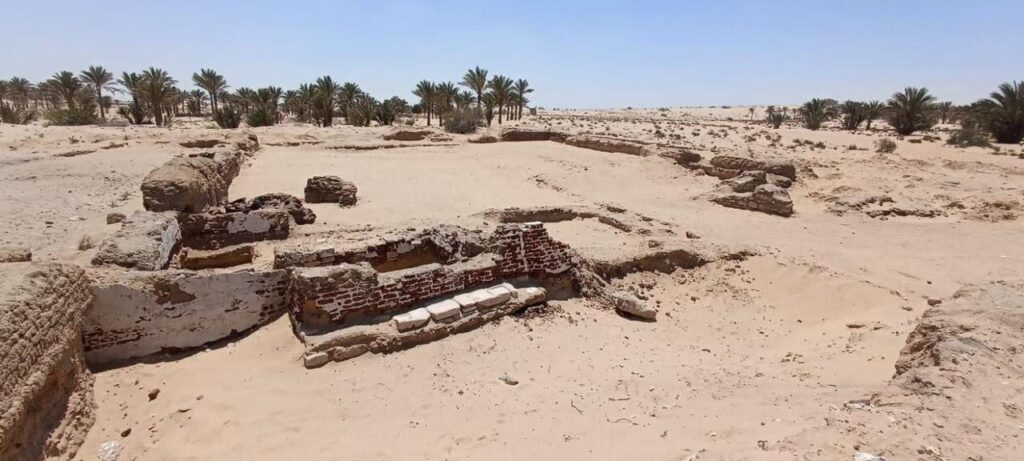
The surviving architecture includes plastered walls built from mudbrick and fired red brick, with large stones reinforcing their foundations.
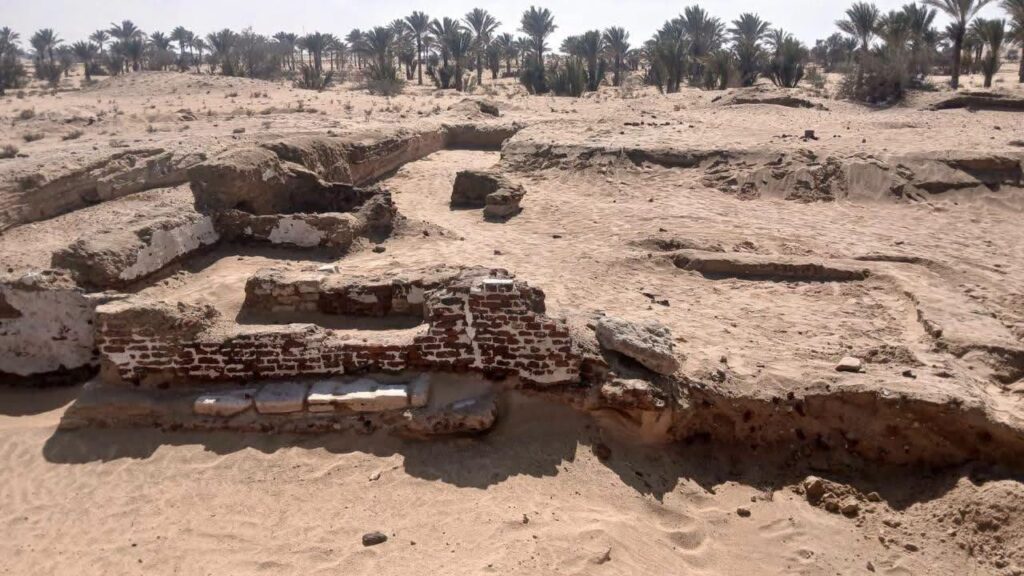
Archaeologists have also identified internal divisions indicating that the complex contained several rooms. Some may have functioned as commercial or service spaces attached to the roadside station, although their precise use has not yet been established.
Hisham Al-Lithi, Secretary-General of Egypt’s Supreme Council of Antiquities, said the building’s overall plan resembles that of Khan al-Khuwaynat, another important historical station in North Sinai.
The newly uncovered complex at Asila is smaller, but the architectural similarities support the interpretation that it may have served as a stopping place for pilgrims, merchants and other travellers crossing Sinai.
Caravanserais were an essential part of long-distance travel across medieval desert routes, offering secure places where people and animals could rest and where food, water and merchandise could be stored.
Pottery points toward the Mamluk period
Material recovered from the building is beginning to provide clues about when the complex was in use.
Excavators found large pottery vessels associated with the storage of water and grain, along with olive-green glazed ceramics, red-and-white vessels and fragments of lamps.
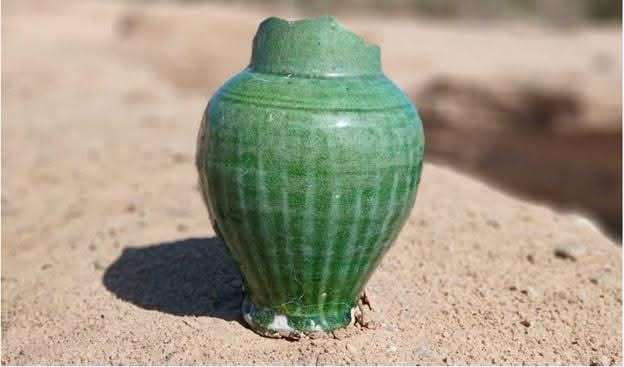
Several finds suggest that activity at the site may date to the Mamluk period, when Egypt was ruled by Mamluk sultans between the 13th and early 16th centuries.
Some pottery fragments display decorative characteristics that archaeologists believe may belong to the period of Sultan al-Nasir Muhammad ibn Qalawun, one of the most prominent rulers of the Bahri Mamluk dynasty. Al-Nasir Muhammad ruled Egypt during three separate reigns between 1293 and 1341.
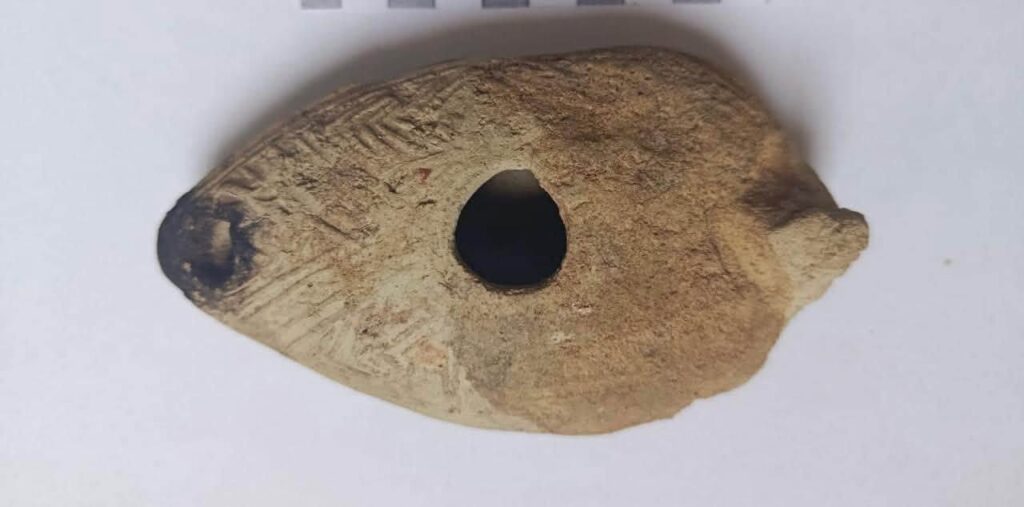
Fragments carrying Arabic letters have also attracted particular attention. Researchers believe some of the surviving characters could once have formed part of the word “al-Nasir.”
The interpretation remains preliminary, however. Further archaeological study will be required before the pottery or inscriptions can be securely associated with the reign of al-Nasir Muhammad or used to establish a more precise date for the complex.
A network that carried pilgrims and merchants across Sinai
Asila forms part of a broader archaeological landscape in North Sinai.
Historical sites including al-Khuwaynat, Amuriya and Qatiya are located within the same region and have been associated with trade, pilgrimage and movement across the peninsula.
Together, these sites provide evidence for the infrastructure that supported long-distance travel through an environment where access to water, supplies and secure stopping places was essential.
The Egyptian pilgrimage route was not used only by people travelling toward Mecca. Parts of the same network were also used by merchants, government couriers and military forces moving between Egypt, the Levant and the Arabian Peninsula.
Political conditions repeatedly altered the course of these routes. During periods of instability associated with the Crusades, Egyptian pilgrimage traffic shifted toward southern routes connecting Upper Egypt with Red Sea ports.
Under the Mamluks, the overland route through Sinai again became important, and a network of stations, khans and fortified points developed along the corridor to support travellers and official movement.
The apparent Mamluk date of the Asila complex would therefore fit a period when authorities invested heavily in maintaining communication and pilgrimage routes through Sinai.
Excavations continue at Asila
Archaeologists are continuing to expose additional sections of the building and its associated structures while documentation, conservation and analysis of the finds proceed.
Further excavation may clarify the exact layout of the complex, determine how its individual rooms were used and establish whether the building was constructed specifically as a caravanserai.
More detailed study of the ceramics and inscribed fragments could also narrow the chronology of the site.
Even at this stage, the discovery at Asila adds another potential station to the network of medieval sites that once supported movement across North Sinai, offering new archaeological evidence for how pilgrims, merchants and officials travelled between Egypt and the eastern Mediterranean world.
Cover Image: Excavated walls and architectural remains at Asila in North Sinai, where archaeologists uncovered a roadside complex believed to have served travellers on Egypt’s historic pilgrimage route. Credit: Egyptian Ministry of Tourism and Antiquities