
A Bronze Age tomb discovered in the United Arab Emirates served as a communal burial place for more than a millennium, with successive generations returning to the same underground chamber to bury their dead.
Archaeologists from the Department of Culture and Tourism – Abu Dhabi uncovered the tomb at the Qattarah Necropolis in Al Ain. The structure dates primarily to the Wadi Suq period and the Late Bronze Age, between approximately 2000 and 1300 BC, but evidence indicates that burials continued into the Iron Age.
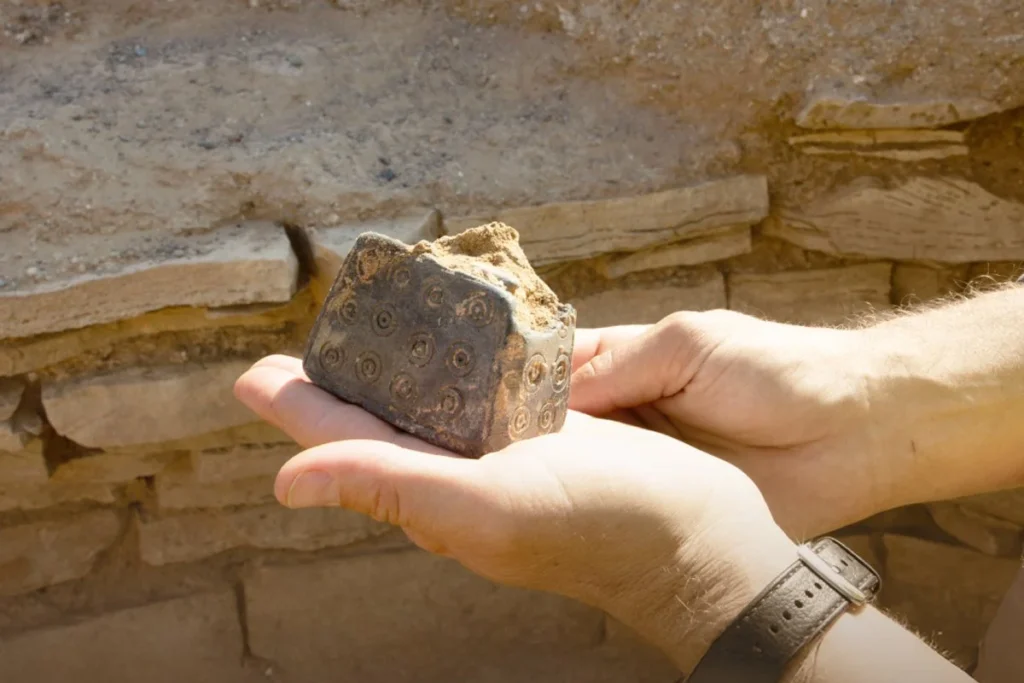
The tomb contained the remains of hundreds of people, as well as pottery vessels, weapons and personal ornaments. Together, the finds provide a rare record of changing burial traditions in southeastern Arabia over an exceptionally long period.
A Tomb Constructed from Older Monuments
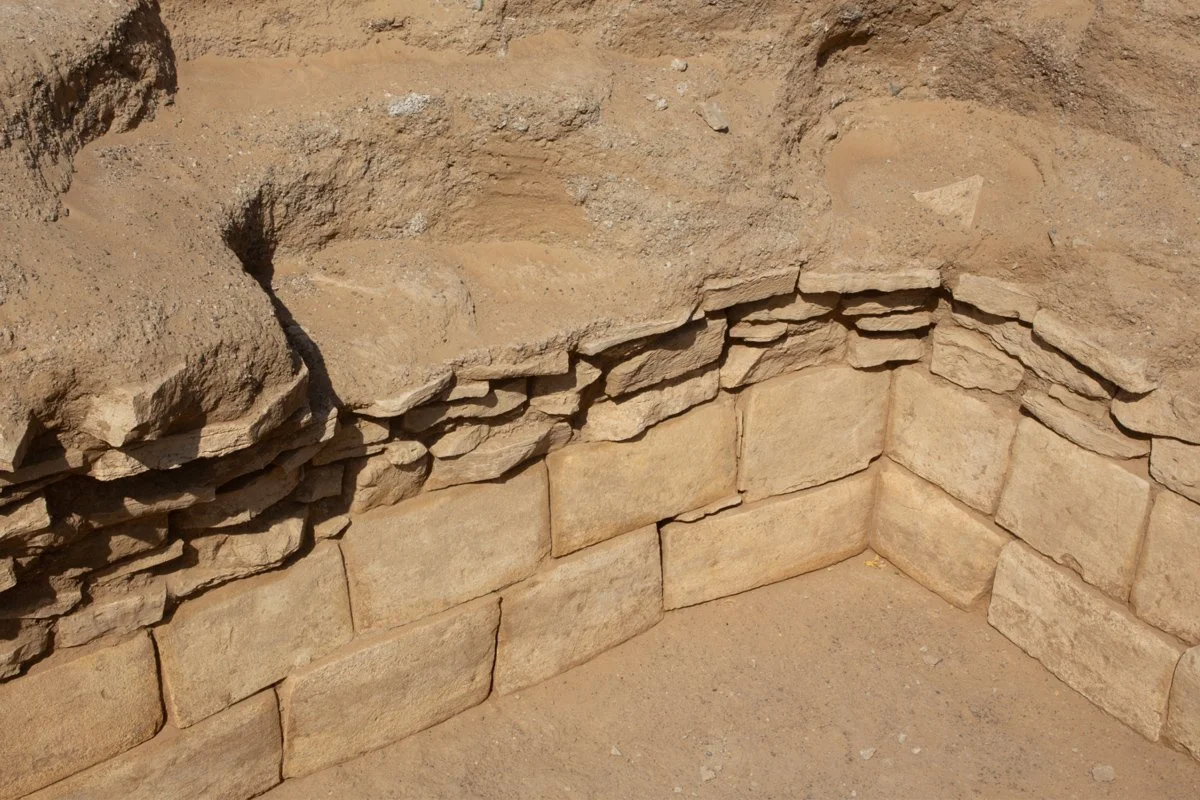
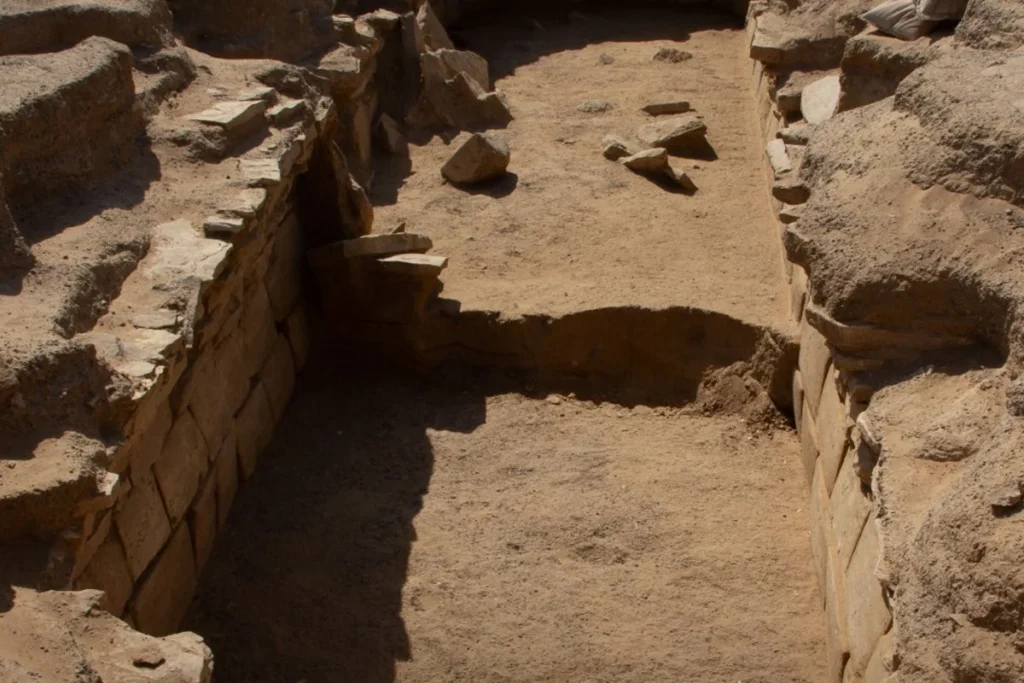
The underground chamber measures around 11 metres long and 2.5 metres wide. Instead of quarrying new stone, its builders reused carefully cut ashlar blocks taken from much older Umm an-Nar funerary monuments.
The Umm an-Nar culture flourished in parts of present-day United Arab Emirates and Oman between approximately 2700 and 2000 BC. It is particularly known for monumental circular tombs built with finely dressed stone.
By the time the Qattarah chamber was constructed, some of those earlier tombs were already several centuries old. Their demolition and reuse show how later communities adapted the remains of earlier burial monuments to create a new communal space for the dead.
The practice may have been partly practical, since shaped stone represented valuable building material. It may also indicate that older funerary sites retained meaning for the communities that inhabited the Al Ain region during the following centuries.
A 200-Kilogram Stone Door
The entrance to the tomb was sealed by a stone door weighing more than 200 kilograms. Like the walls of the chamber, the door had been reused from an earlier monument.
Its size would have made opening the tomb a deliberate and physically demanding process. The chamber was repeatedly accessed as new burials were added, suggesting that funerary ceremonies involved reopening the entrance and entering a space already occupied by earlier generations.
Archaeologists believe the door may also have represented a symbolic boundary between the worlds of the living and the dead.
The entrance faced east, an orientation that researchers consider intentional. It may have allowed sunlight from the rising sun to enter the chamber during certain burial ceremonies, although the precise meaning of the alignment remains uncertain.
Hundreds of People Buried Over Generations
Unlike tombs created for a single individual or ruling family, the Qattarah structure was used as a collective burial chamber.
The remains of hundreds of people were deposited inside during different periods. Pottery, weapons and ornaments placed alongside them changed over time, offering archaeologists an opportunity to examine how funerary customs developed from the Bronze Age into the Iron Age.
The long use of the chamber also raises questions about the community that maintained it. Researchers hope to determine whether the individuals buried there belonged to a closely related population or represented several groups that lived around the Al Ain oasis over successive centuries.
The tomb’s continuing importance suggests that it remained a recognised place of memory even as the surrounding society changed.
DNA Analysis Could Reconstruct the Community
Scientific work on the human remains is now underway. Researchers are using osteological analysis, isotope testing and ancient DNA techniques to investigate the lives of those buried inside the chamber.
Isotopes preserved in bones and teeth may reveal information about diet and mobility, including whether individuals grew up in the Al Ain region or arrived from elsewhere.
Ancient DNA could help identify biological relationships among the dead and show whether members of the same families were buried together over multiple generations. The analysis may also clarify connections between the Qattarah community and populations elsewhere in southeastern Arabia and the wider Gulf region.
Study of the skeletons could additionally provide evidence of disease, injuries and general health, allowing researchers to build a more detailed picture of life during the Bronze and Iron Ages.
A Major Funerary Landscape in Al Ain
Qattarah Necropolis has produced burials from several periods, including Wadi Suq communal tombs, Iron Age shaft burials and Late Pre-Islamic tower tombs.
The newly excavated chamber adds to evidence that the area remained an important funerary landscape for thousands of years.
Al Ain’s archaeological sites were inscribed on the UNESCO World Heritage List in 2011. The protected area includes ancient settlements, tombs, wells and oasis systems that document the development of settled communities in the desert environment of the Arabian Peninsula.
Once conservation and scientific analysis have been completed, artefacts recovered from the Qattarah tomb are expected to be displayed in Abu Dhabi’s museums.
More than its individual objects, however, the tomb reveals the endurance of a shared burial tradition. For over 1,000 years, communities in Al Ain continued to return to the same chamber, placing their dead beside those of earlier generations.