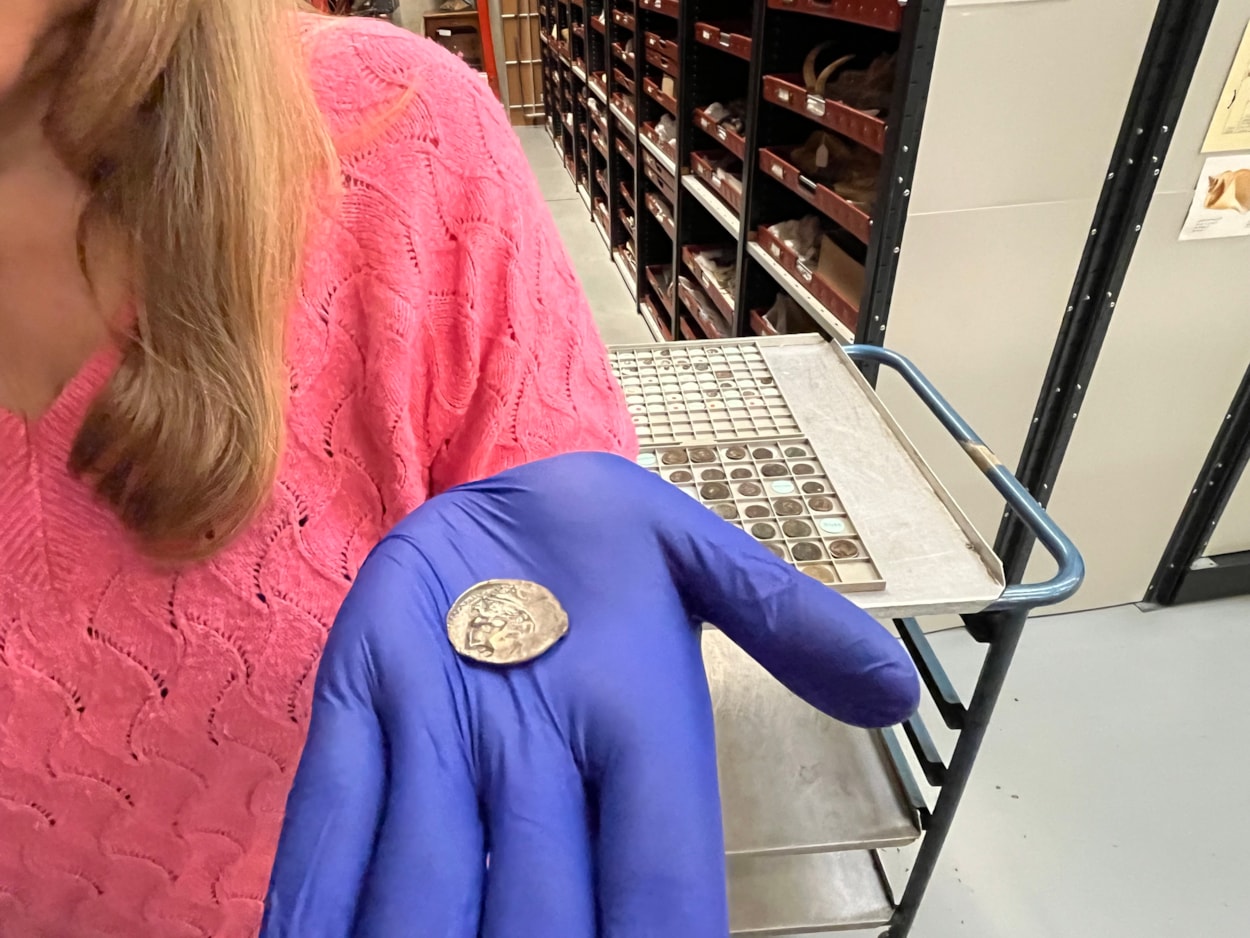
A 2,000-year-old Carthaginian coin minted in the ancient Mediterranean has resurfaced in an unexpected place: Leeds. The small bronze artifact survived not through excavation or a collector’s cabinet, but thanks to the curiosity of a Leeds bus cashier in the 1950s who set aside unusual foreign coins while counting daily fares.
The coin was discovered among fares handled by James Edwards, chief cashier for Leeds City Transport. While checking money collected from bus and tram drivers, Edwards occasionally noticed foreign or unfamiliar coins mixed in with the local currency. Instead of discarding them, he kept the unusual pieces and later passed them on to his grandson, Peter Edwards.
For more than seventy years, the coins remained stored in a small wooden chest. One of them eventually drew particular attention because of its unfamiliar lettering and distinctive imagery. Curious about its origins, Peter Edwards began researching the object and discovered that the coin dated back more than two millennia to the ancient Phoenician world.
A Coin from Ancient Cádiz
The coin was minted in Gadir, the ancient Phoenician settlement known today as Cádiz in southern Spain, during the 1st century BC. Founded by Phoenician traders centuries earlier, Cádiz became one of the most important maritime hubs in the western Mediterranean and maintained strong cultural ties with the Carthaginian world.
The coin bears the image of Melqart, one of the most important deities worshipped by the Phoenicians. On many ancient coins, Melqart was depicted in a form that closely resembled the Greek hero Herakles, including the distinctive lionskin headdress. This blending of imagery was not accidental. Phoenician and Punic coinage often adopted visual symbols recognizable across different cultures, making them easier to use in international trade.
Such coins therefore reflect more than religious symbolism; they also reveal the interconnected commercial networks that linked Phoenician settlements, Greek merchants, and Mediterranean ports during antiquity.
From Transport Office to Museum Collection
What makes the Leeds coin remarkable is the unlikely route it took to survive. It was not uncovered during an archaeological excavation or acquired through a specialist dealer. Instead, it passed quietly through the everyday routines of a transport office in postwar Britain.
Peter Edwards, now 77, recalled that his grandfather began setting aside unusual coins shortly after the Second World War, when soldiers returning home often carried foreign currency from abroad. Neither grandfather nor grandson considered themselves collectors, but both were fascinated by the designs and distant histories these coins hinted at.
To a child, Edwards later remembered, the small pieces of metal felt like treasure from another world.
After learning about the coin’s ancient origins, Edwards contacted local experts, eventually leading to its transfer to Leeds Museums and Galleries, where it will now be preserved and studied as part of the city’s public heritage.
A Small Object with a Long Journey
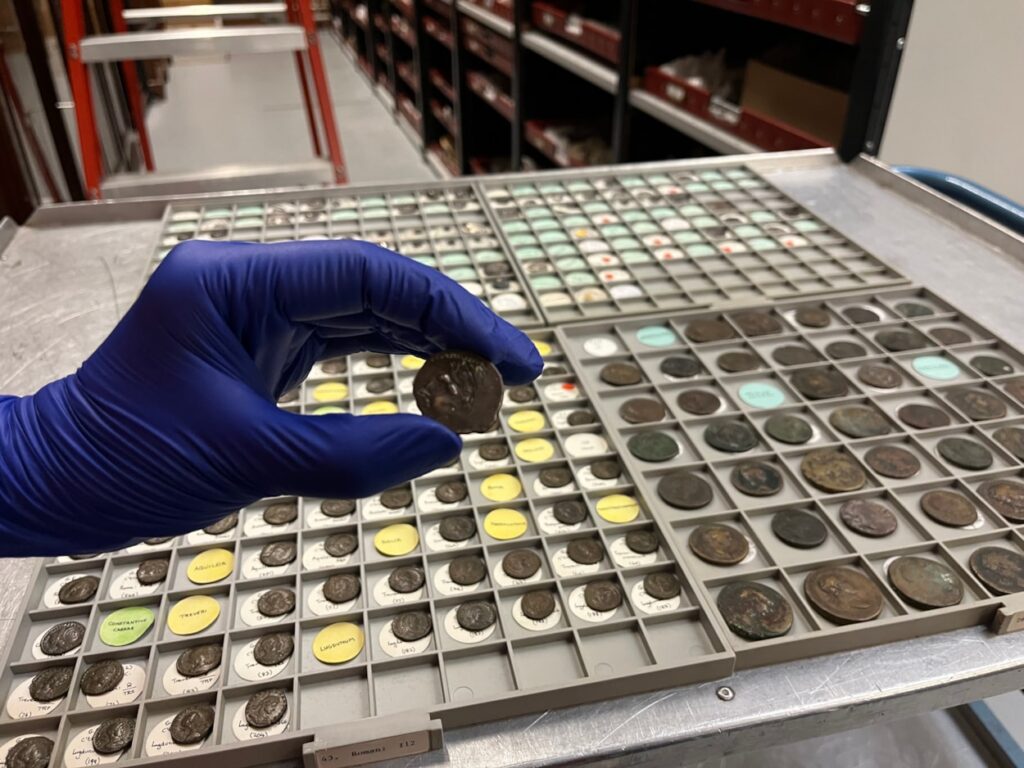
The coin will be displayed at the Leeds Discovery Centre, which houses a large collection of global currency spanning many centuries. The centre offers guided visits that allow the public to explore objects normally kept behind the scenes of museum collections.
Councillor Salma Arif, Leeds City Council’s executive member for culture, described the coin’s journey as a reminder of how history can appear in the most unexpected places. Even the smallest artifacts, she noted, can carry stories that connect distant civilizations with everyday life in the present.
The rediscovered coin is a modest object, but its story spans continents and generations. From the trading networks of ancient Cádiz to a transport office in twentieth-century Leeds, its survival depended on curiosity, chance, and the simple decision to save something that looked unusual.
Cover Image Credit: Leeds City Council