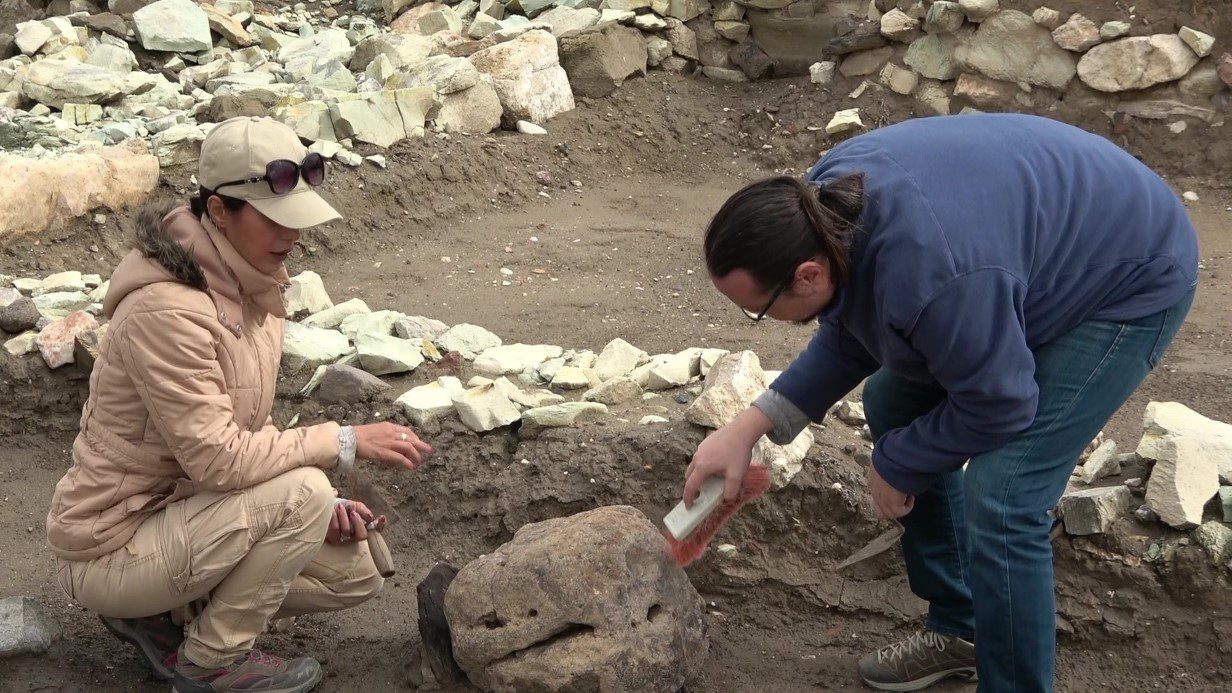
Archaeologists excavating the ancient mound of Oluz Höyük in central Anatolia have uncovered a group of infant and fetal burials that may point to Phoenician ritual practices far beyond their traditionally known Mediterranean heartland. Placed inside ceramic jars and carefully arranged within a sacred context, the burials are unprecedented in Anatolia and are now prompting fresh debate about the reach—and nature—of Phoenician cultural presence inland.
The discovery challenges long-standing assumptions that Phoenician ritual traditions remained largely confined to coastal regions of the Eastern Mediterranean.
A Rare Burial Practice with No Known Anatolian Parallel
The burials consist of infants and fetuses interred inside large ceramic jars, positioned deliberately with spatial separation rather than randomly deposited. Archaeologists emphasize that no comparable examples of this practice are currently known elsewhere in Anatolia, making the find exceptional within the region’s funerary record.
Such jar burials are well documented in parts of the Phoenician world, particularly in ritual contexts associated with infants. Their appearance at Oluz Höyük raises the possibility that similar belief systems or ceremonial practices may have been introduced—or locally adopted—much farther east than previously believed.
Could This Be an Anatolian Echo of the Phoenician ‘Tophet’?
The finds have inevitably drawn comparisons to the Phoenician ‘Tophet’ tradition, a ritual phenomenon known from sites such as Carthage, where infants were buried—sometimes following sacrifice, sometimes after perinatal death—within sacred precincts.
Excavation director Prof. Dr. Şevket Dönmez has been careful to stress scientific caution. While the Oluz Höyük burials may reflect similar ritual logic, there is currently no definitive evidence of sacrifice. Determining whether the infants were stillborn, died naturally, or were ritually killed will require detailed anthropological and osteological analysis.
Until those studies are completed, researchers describe the discovery as a strong but unconfirmed parallel rather than a proven Tophet site.

Human-Headed Glass Beads Strengthen the Phoenician Link
Supporting the burial evidence are human-headed glass beads recovered from the same archaeological context. These objects are characteristic of Phoenician material culture and closely resemble examples associated with Carthaginian glass-working traditions.
The beads provide tangible proof of Eastern Mediterranean connections and long-distance cultural exchange. When considered alongside the infant jar burials, they form a coherent body of material evidence suggesting that Phoenician influence—whether through migration, ritual transmission, or elite interaction—reached deep into the Anatolian interior.

Oluz Höyük: A 6,500-Year Archive of Cultural Transitions
Excavations at Oluz Höyük began in 2007 and have revealed a settlement history spanning approximately 6,500 years, preserved across ten distinct occupational layers. Architectural remains from Hittite, Phrygian, and Persian periods indicate that the site served as a long-term regional center rather than a marginal outpost.
One of the most revealing discoveries is a sanctuary associated with the goddess Kubaba, whose elongated, megaroid layout closely resembles Aramaean and Phoenician temple architecture. This architectural alignment further strengthens interpretations of Eastern Mediterranean religious influence at the site.
Rethinking Phoenician Mobility and Ritual Geography
If future analyses confirm ritual parallels with the Phoenician world, Oluz Höyük could represent one of the most inland expressions of Phoenician belief systems ever identified. Even without definitive proof of sacrifice, the combination of burial practices, architectural forms, and distinctive artifacts forces a reconsideration of how far Phoenician religious ideas traveled—and how they may have been adapted in local Anatolian contexts.
Rather than a static coastal civilization, the Phoenicians may now appear as participants in far-reaching cultural networks whose influence extended deep into the heart of Anatolia.