-

Vitruvius’ Lost Basilica Found: Archaeologists Confirm Legendary Roman Building in Fano
For more than two millennia, it existed only on parchment. Now, it has emerged from the ground. Archaeologists in Italy have officially confirmed the discovery of the long-lost basilica designed by Marcus Vitruvius Pollio, the Roman architect whose ideas shaped Western architecture itself. The monumental structure, uncovered beneath the historic center of Fano, marks the…
-
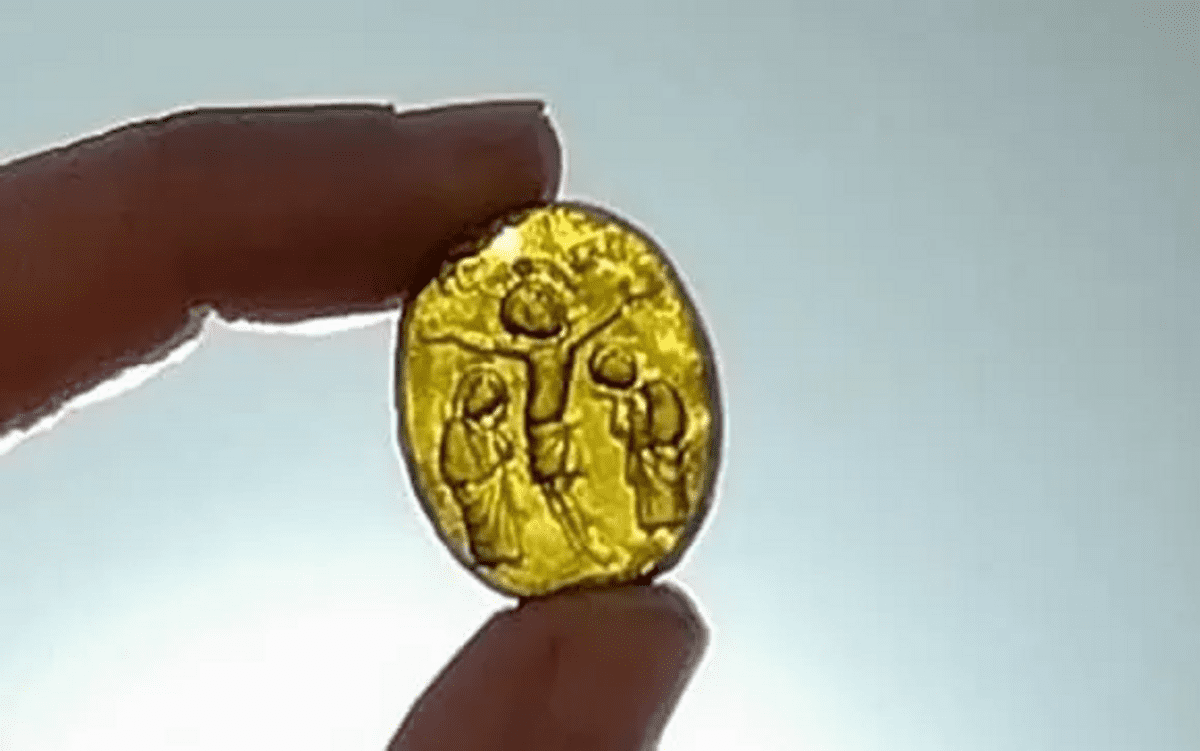
A Medieval Glass Crucifixion Jewel Emerges from England’s Largest Infrastructure Dig
Beneath the future site of the Sizewell C nuclear power station, archaeologists have uncovered an object that feels unexpectedly intimate.A tiny medieval glass jewel, depicting the Crucifixion, lay hidden in Suffolk soil for centuries. The find comes from one of the largest archaeological investigations ever carried out in eastern England, revealing not only the jewel…
-

5,000-Year-Old Pithos Burial Discovered in Coastal Attica Reveals Complex Bronze Age Rituals
An exceptionally preserved Early Bronze Age pithos burial has been uncovered in eastern Attica, revealing complex funerary architecture and long-lived ritual activity along the coast of the Aegean. The discovery was made during rescue excavations carried out since 2024 in the town of Rafina, ahead of riverbank stabilization works. Dated to the Early Bronze Age…
-

Roman Marching Camps Discovered Deep in Central Germany
Archaeologists have identified Roman marching camps deep in Central Germany, marking the northeasternmost Roman military sites ever confirmed in the region and challenging long-held assumptions about Rome’s withdrawal from Germania. The discoveries, made in Saxony-Anhalt, provide concrete archaeological evidence that Roman troops operated far beyond the Rhine frontier during the early 3rd century AD. The…
-

Lost City of Almanzor May Have Been Found: LiDAR Data Points to Medina Alzahira
For more than a century, the exact location of Medina Alzahira, the vanished seat of power built by Almanzor at the height of Umayyad rule in al-Andalus, has remained one of medieval Iberia’s most persistent archaeological riddles. Dozens of hypotheses were proposed. None could be anchored to verifiable physical evidence. That may now have changed.…
-

Europe’s Lost Black Death Graves Found: Scientists Identify First Systematically Proven Plague Mass Burial
A long-missing chapter of medieval Europe’s deadliest pandemic is finally emerging from the ground An interdisciplinary research team has identified compelling evidence of a Black Death mass grave near the abandoned medieval village of Neuses, just outside Erfurt. The discovery represents the first systematically identified plague burial site in Europe, offering rare physical confirmation of…
-

A Late Roman Bone Box Unlike Any Other Emerges from a Grave in Roman Britain
For months, archaeologists working at Milestone Ground in Broadway kept one discovery out of the spotlight. Now revealed, the find stands out as one of the most unusual small objects recovered from Roman Britain in recent years: an intact, finely carved bone box with no known parallels. The artefact, dating to the late Roman period,…
-

An Exceptionally Heavy 1,800-Year-Old Gold Roman Fidelity Ring Discovered at Bononia
Nearly six meters beneath the streets of modern Vidin, archaeologists uncovered an exceptionally heavy gold Roman fidelity ring lost nearly 1,800 years ago—an object that speaks not of war or imperial power, but of marriage, status, and social identity in the Roman world. The discovery was made during the final days of the 2025 excavation…
-

A Unique Bone Stylus from Ancient Gela Redefines Craft, Ritual, and Symbolism in Classical Greece
Archaeologists working in the ancient Greek city of Gela, on Sicily’s southern coast, have uncovered an object so unusual that specialists describe it as a true unicum—a discovery without known parallels in the archaeological record of Classical Greece. The find is a finely carved ceramist’s stylus made of bone, dated to the 5th century BCE,…