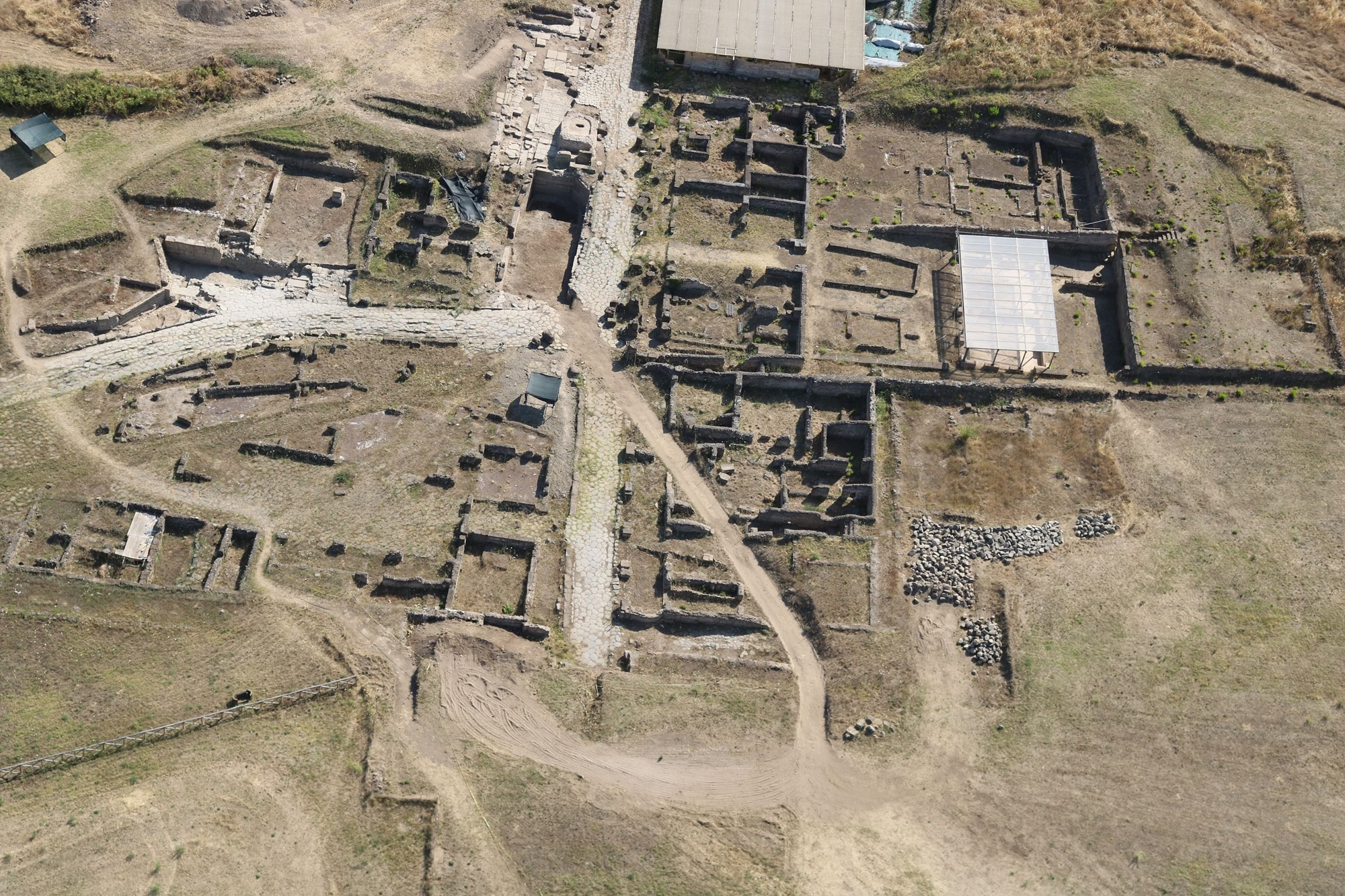
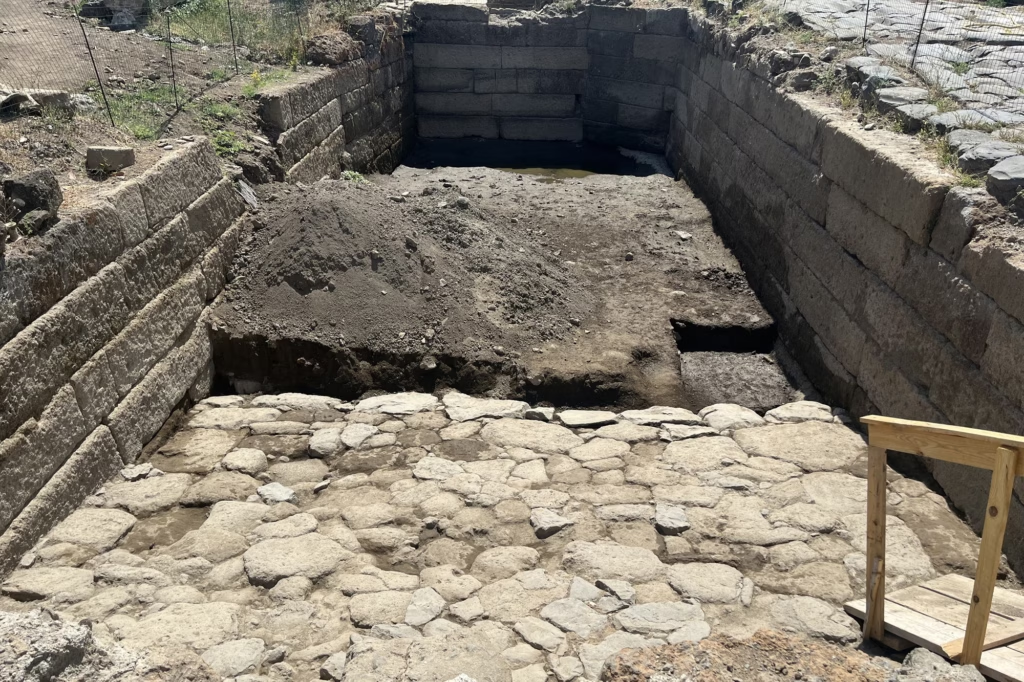
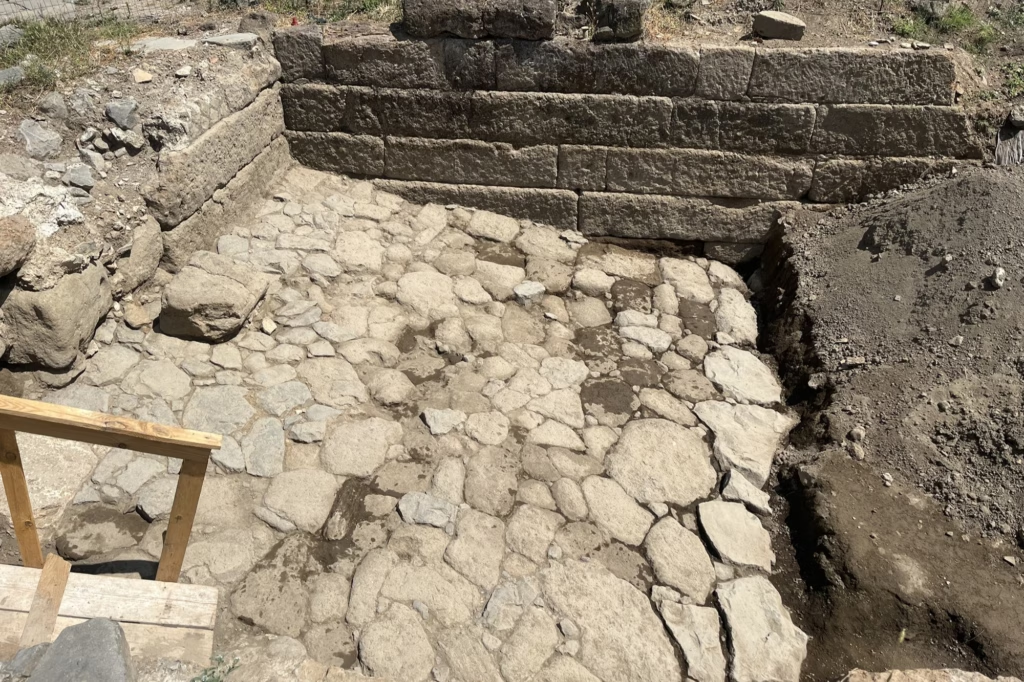
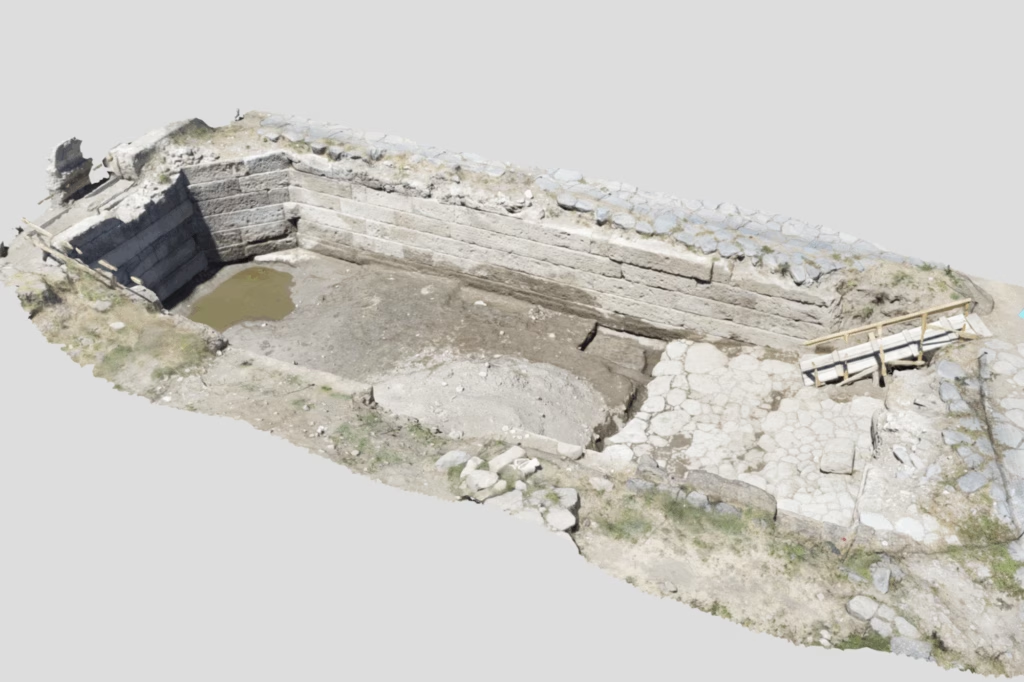
A remarkable discovery east of Rome has revealed one of the earliest examples of Roman monumental architecture — a massive stone-lined basin carved into the bedrock of the ancient city of Gabii, once a rival of early Rome. The find sheds new light on how the Romans used water, space, and architecture to express civic identity and political power.
Discovered by a team from the University of Missouri led by Professor Marcello Mogetta, the basin dates to around 250 B.C. — possibly even earlier — making it one of the first monumental constructions of the Roman Republic outside temples and city walls.
“This discovery gives us a rare look at how the early Romans experimented with city planning,” said Mogetta. “Its location near the main crossroads suggests it may have served as a monumental pool within Gabii’s forum — the civic heart of the community.”
A City Preserved in Time
Unlike Rome, whose earliest layers were buried beneath centuries of rebuilding, Gabii remained largely untouched after being abandoned around 50 B.C. This unique preservation allows archaeologists to study early Roman urbanism in ways impossible in the capital.
Previous excavations at Gabii uncovered the so-called Area F Building, a terraced complex cut into the volcanic crater on which the city stood. Together with the newly found basin, these structures show how Roman builders adapted Greek urban ideas — from public squares and terraces to monumental water features — transforming them into symbols of Roman order and authority.
Rituals Beneath the Surface
Objects found inside the basin — intact vessels, oil lamps, perfume jars, and inscribed cups — suggest that the pool may have held ritual significance. Some items appear to have been deliberately placed as offerings when the structure was decommissioned around 50 C.E., hinting at water’s symbolic and spiritual role in Roman public life.
Archaeologists will resume excavations next season, supported by Italy’s General Directorate of Museums. Using ground-based thermal imaging, the team has identified a nearby “anomaly” that could mark the foundations of a temple or civic hall. Such a discovery could help answer a fundamental question:
Did civic spaces emerge before religious centers — or did worship shape early political life?
Gabii’s Future and the Legacy of Roman Monumental Structures
Recognizing the site’s significance, the Italian Ministry of Culture has integrated Gabii into the Musei e Parchi Archeologici di Praeneste e Gabii, ensuring long-term preservation and research access.
For Mogetta and his team, the work at Gabii goes beyond uncovering ruins — it is about piecing together the story of how Rome learned to build cities, manage water, and project power long before it became an empire.
Cover Image: An aerial view of the ancient Roman city of Gabii, located just 11 miles east of Rome. Credit: University of Missouri.