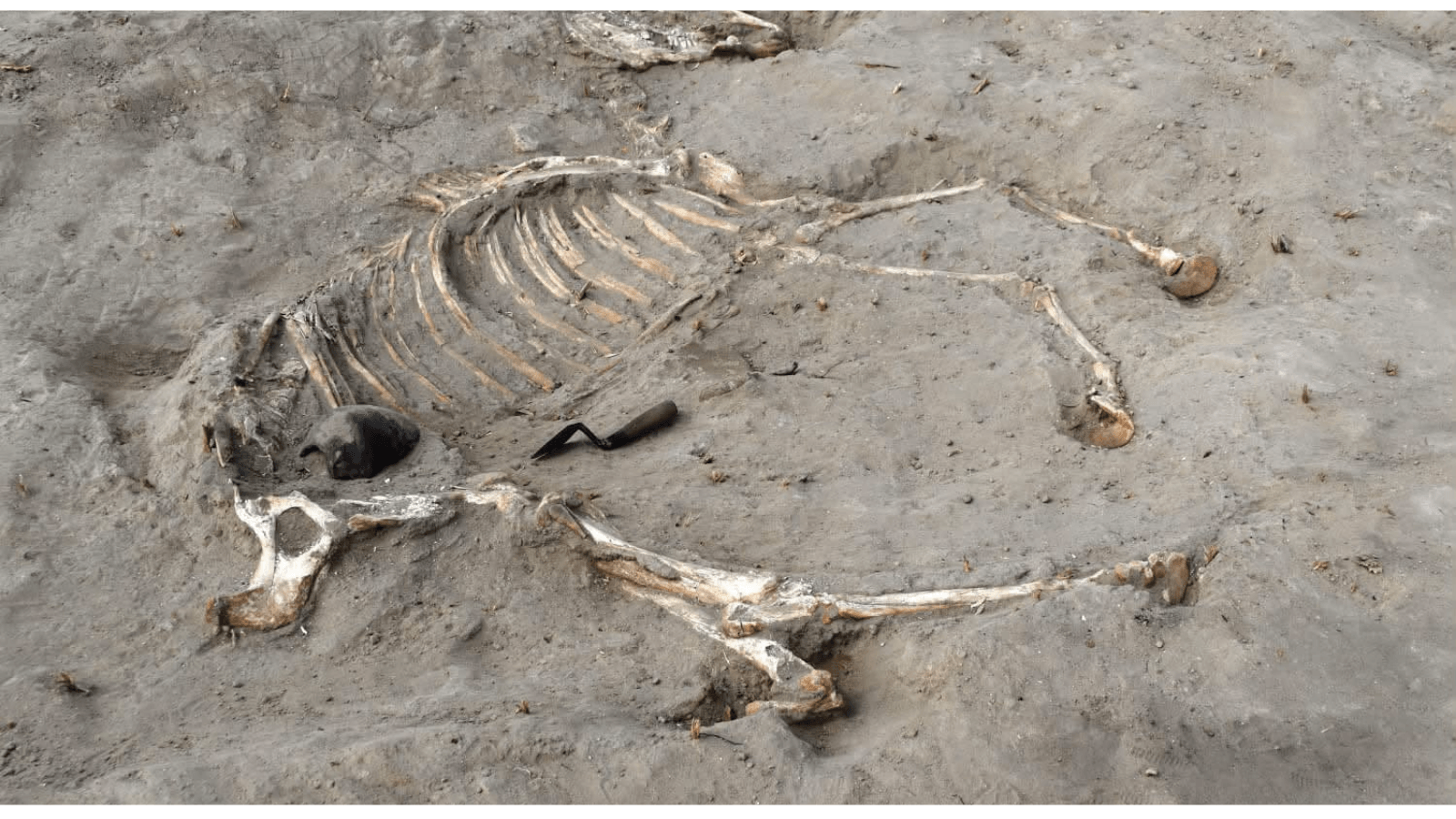
A carefully buried horse, grain still resting inside storage vessels and ovens once used to feed a military community have emerged from an ancient Egyptian fortress on the western edge of the Nile Delta. Together, the discoveries offer an unusually intimate view of life behind the walls of a New Kingdom border outpost.
The Egyptian archaeological mission made the finds at Tell el-Abqain in Beheira Governorate. The fortress formed part of a defensive network established to protect Egypt’s northwestern approaches from incursions by Libyan groups during the reigns of Seti I, Ramesses II and their successors.
Instead of revealing only weapons and fortifications, the latest excavations have exposed the routines that kept the stronghold functioning. Soldiers and other residents lived, stored food, baked bread, practiced crafts and worshipped their gods within a carefully planned settlement.
A horse buried inside the fortress
The most striking discovery is the complete skeleton of a young male horse. Archaeologists found the animal placed in an orderly position, with its head deliberately oriented and the body left largely undisturbed.
Researchers described it as a medium-sized and agile animal of the kind that could have been used for military training or to pull a chariot. Its careful placement led the excavation team to suggest that this was not the casual disposal of an animal but an intentional, possibly commemorative burial.
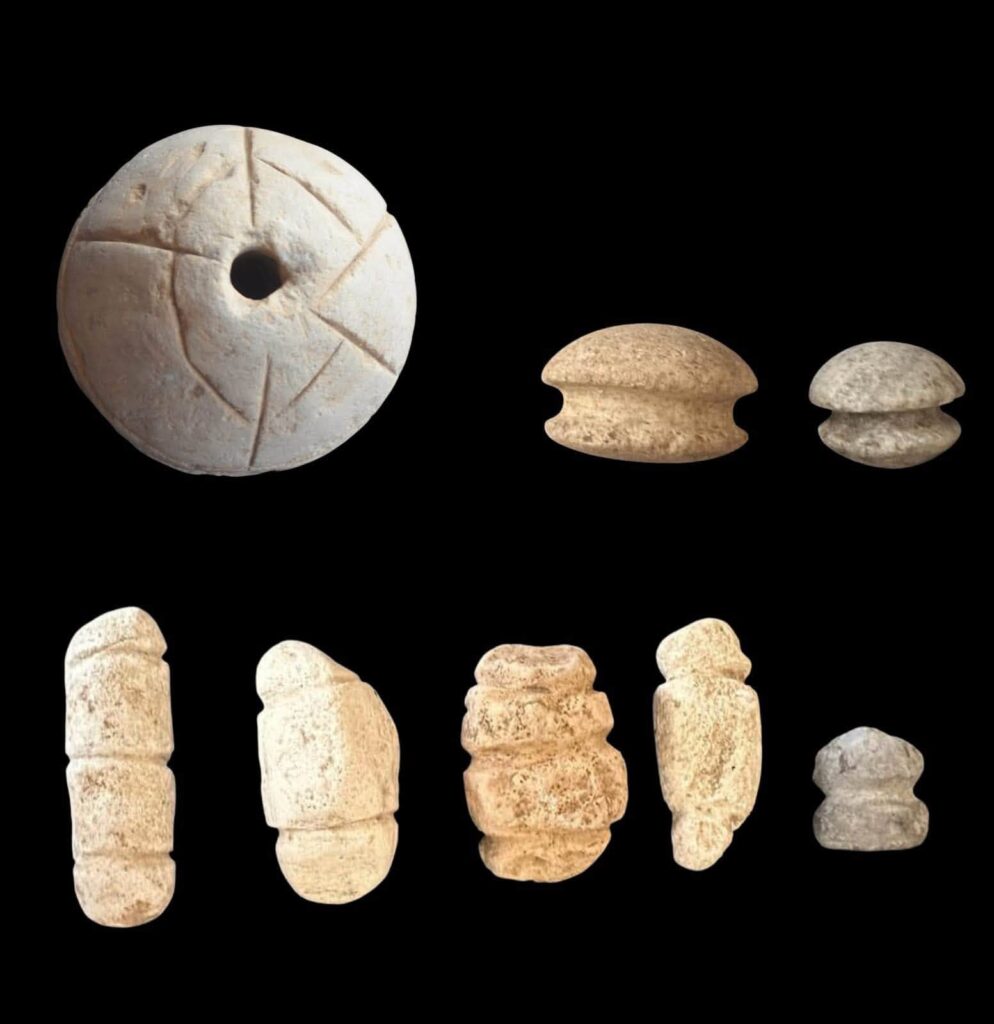
That interpretation remains preliminary, but objects discovered only a few metres away strengthen the military connection. Cylindrical pieces made from alabaster and limestone may have belonged to decorative finials fitted to a chariot harness.
Horses occupied a special place in New Kingdom warfare. Introduced into Egypt centuries earlier, they had become essential to the fast-moving chariot units represented in royal battle scenes, particularly those associated with Ramesses II. At Tell el-Abqain, however, the animal appears not in a monumental image but as the physical remains of a horse that once lived within an active frontier garrison.
Bread, grain and streets behind the walls
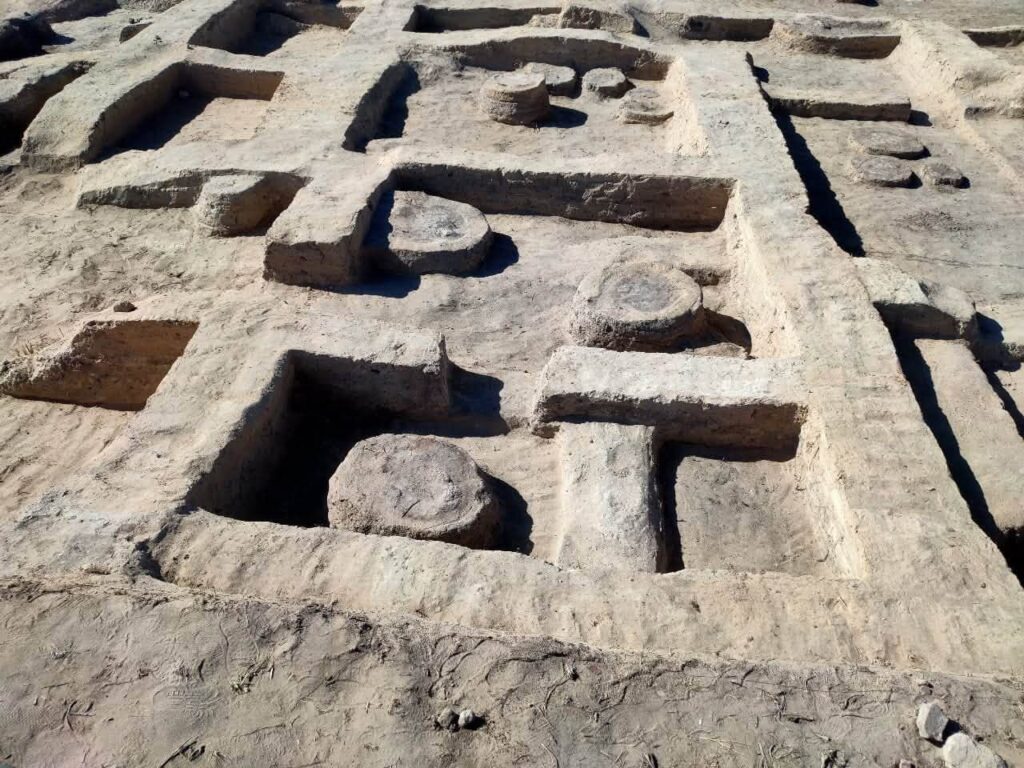
Excavations also uncovered a large mud-brick residential complex crossed by a main street approximately four metres wide. The road ran from east to west and intersected another street leading north to south, connecting the living quarter with the fortress’s limestone southern entrance.
The arrangement points to deliberate planning rather than buildings added without order. Rooms occupied both sides of the streets, while storage areas, food-production installations and water sources were positioned to serve the community living inside the walls.
Several rooms contained grain silos and cylindrical ceramic ovens used to prepare bread and other food. In a storage area north of the main street, archaeologists found large pottery vessels that still held charred, unhusked wheat, providing direct evidence of how the fortress managed its provisions.
Such reserves would have been crucial at an exposed military post. A garrison needed reliable supplies not only during an attack but throughout long periods when soldiers, craftspeople, administrators and their families may have lived far from Egypt’s major urban centres.
Another group of rooms appeared beside the wells in the fortress’s southeastern corner. Previous excavations there had revealed three stone-lined wells bearing the names and titles of Ramesses II, showing that access to water was incorporated into the settlement’s design.
Royal inscriptions and a bound Libyan captive
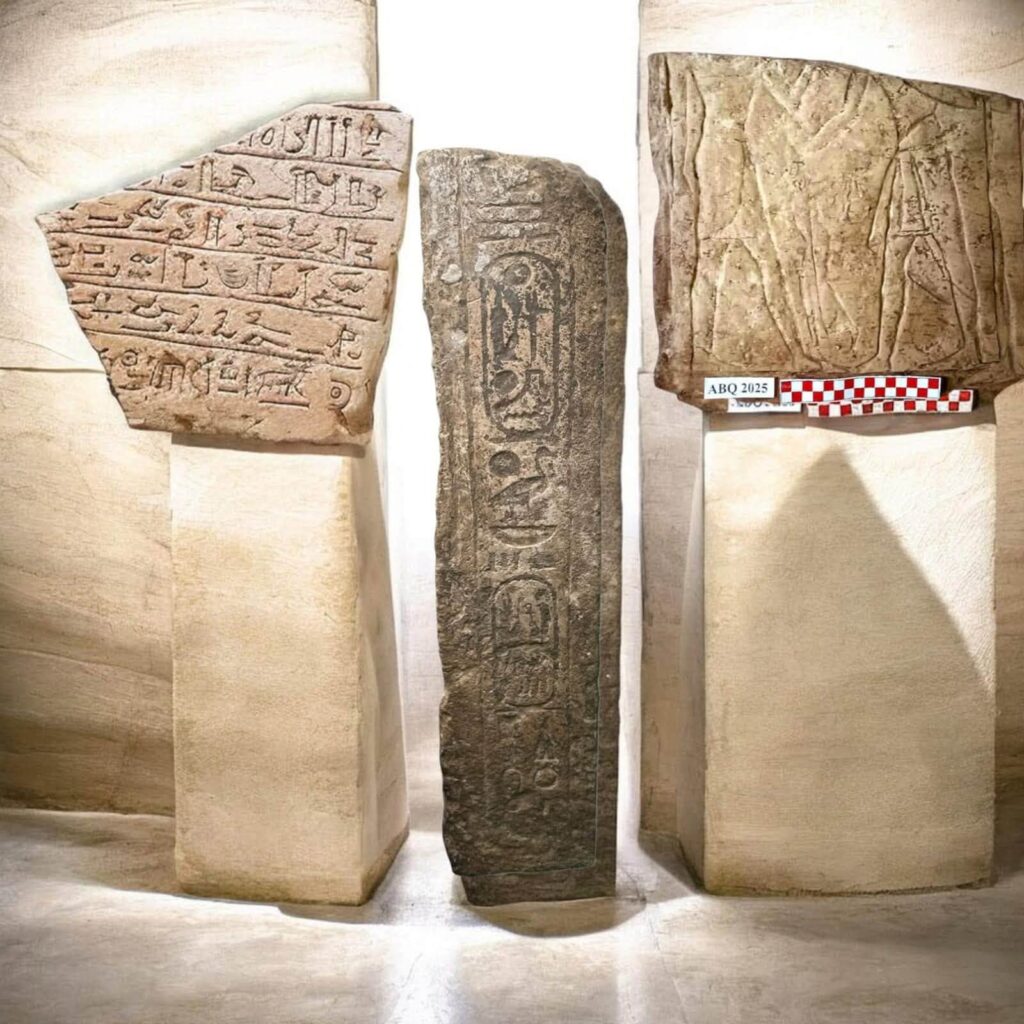
The mission also announced the first discovery in Beheira Governorate of a limestone stela fragment bearing a Hieratic inscription associated with Pharaoh Merneptah, the son and successor of Ramesses II. The surviving text compares the king’s power with that of Seth, a deity closely connected with strength, disorder and desert frontier regions, and also refers to Ptah.
A separate limestone fragment preserves elements of the royal titulary of Ramesses II, including his birth name, throne name and Horus name. Another carved slab depicts a bound captive with his hands restrained and his body lowered in submission.
The captive’s clothing led researchers to identify him as a member of the Meshwesh, a Libyan group frequently mentioned in Egyptian records. The image reflects the official ideology of a fortress established to guard Egypt’s western frontier, although it should not be read as a straightforward portrait of everyday relations between Egyptians and their neighbours.
More than a military outpost
Small objects recovered across the site reveal a community whose life extended well beyond guard duty. Scarabs carry the names of Seti I and Ramesses II, while others refer to deities including Amun, Sekhmet, Ptah and Seth.
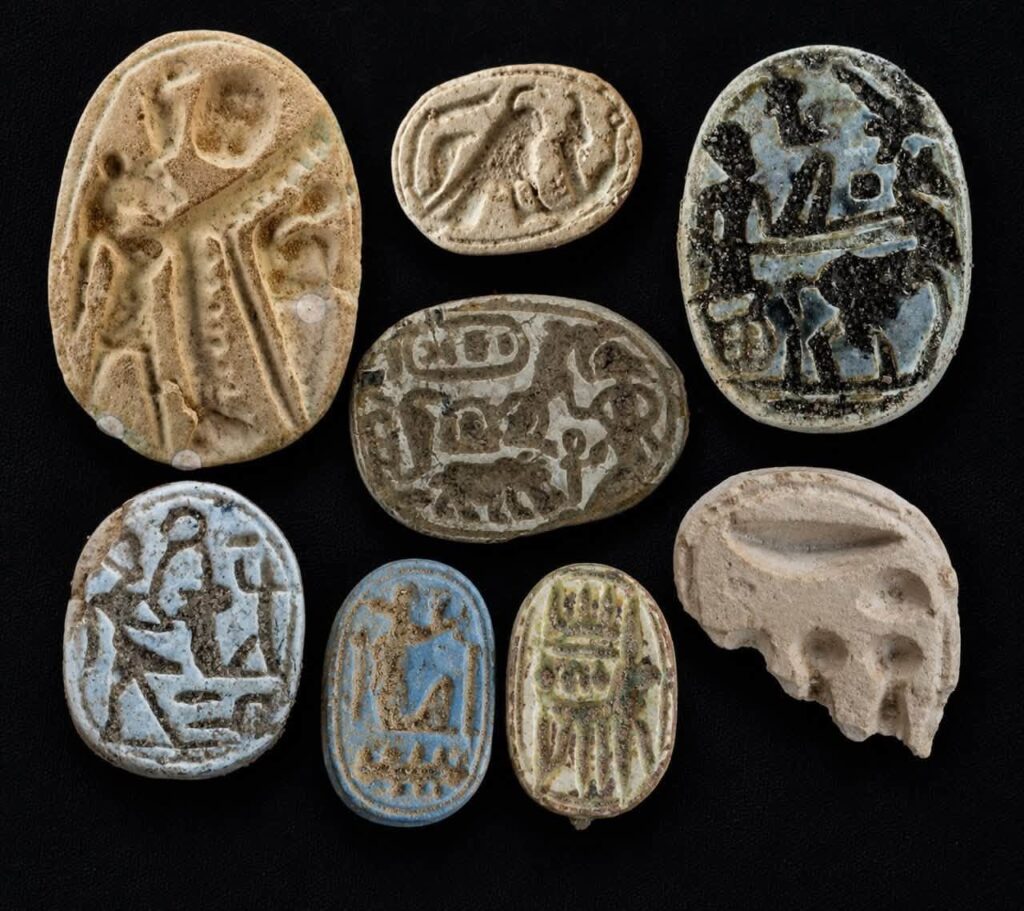
Amulets and decorated objects take the form of lotus flowers, fish, cobras, baboons and the nefer sign. These symbols were associated with ideas ranging from protection and power to fertility, renewal and well-being.
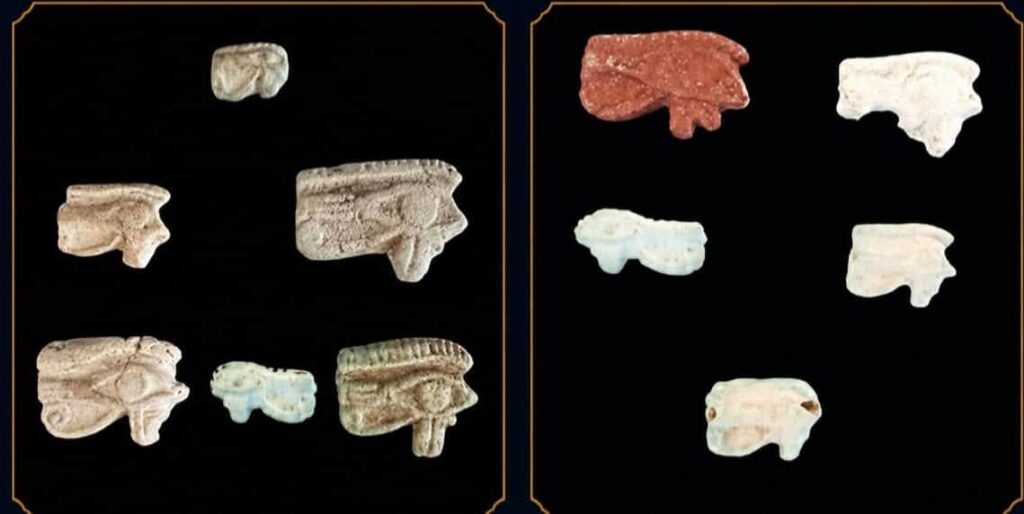
Pottery vessels served for cooking, storage, dining and the preservation of oils or perfumes. The mission also found an Abydos pilgrim flask, loom weights, grinding stones, balance weights and cosmetic implements, tracing activities that unfolded alongside military training and border defence.
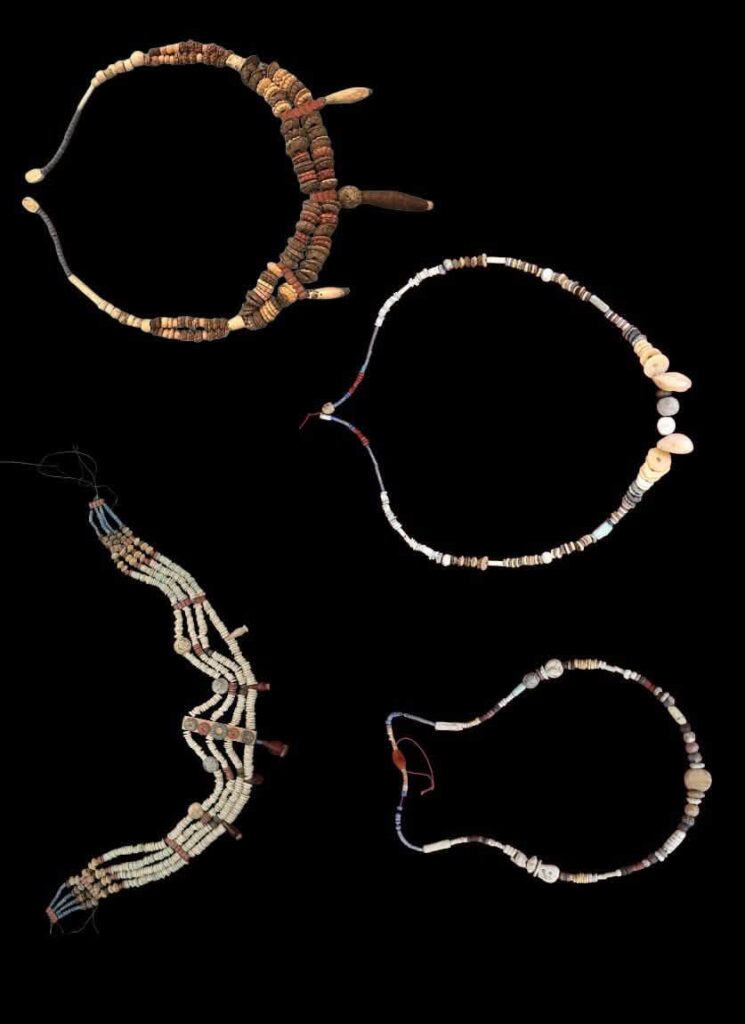
Tell el-Abqain had already produced barracks, weapons and a bronze sword bearing the cartouche of Ramesses II during earlier excavations. The latest discoveries add something different: the streets, meals, beliefs and animals that made the fortress a lived-in place.
The result is no longer simply the plan of a defensive installation. It is the emerging portrait of a tightly organized frontier community—and, at its centre, a horse important enough to receive a burial of its own.