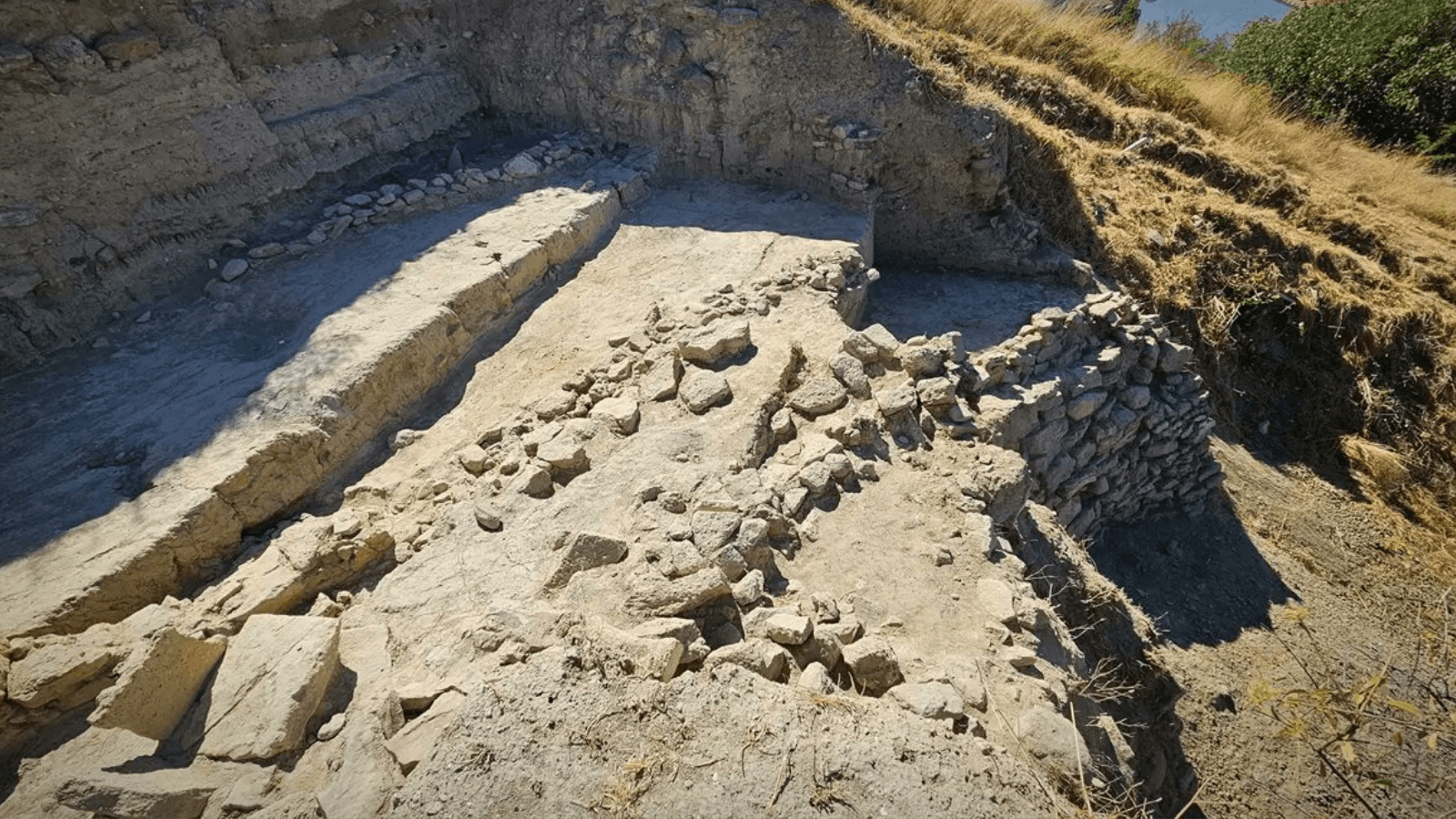
Seven meters beneath Maydos Kilisetepe, archaeologists have reached a defense wall built more than four millennia ago. The Early Bronze Age structure once protected a coastal settlement comparable in size to Troy, although only a small fraction of the mound has been explored.
The wall was uncovered at Eceabat on the Gallipoli Peninsula, close to the narrow waters of the Dardanelles. Archaeologists exposed approximately four meters of the structure after digging through seven meters of accumulated settlement layers.
Excavation director Professor Göksel Sazcı of Çanakkale Onsekiz Mart University dates the fortification to between 2200 and 2100 BCE. The discovery came during the 17th season of work at Maydos Kilisetepe, where excavations have continued since 2010.
A Wall That Grew with the Settlement
What survives is more than a scattered line of stones. The wall has a stone foundation standing over two meters high, while its upper section was originally built from mudbrick.
Evidence within the structure shows that its builders raised the wall over time. Rather than being constructed and abandoned in a single phase, it remained part of the settlement’s defenses until it eventually lost its original purpose.
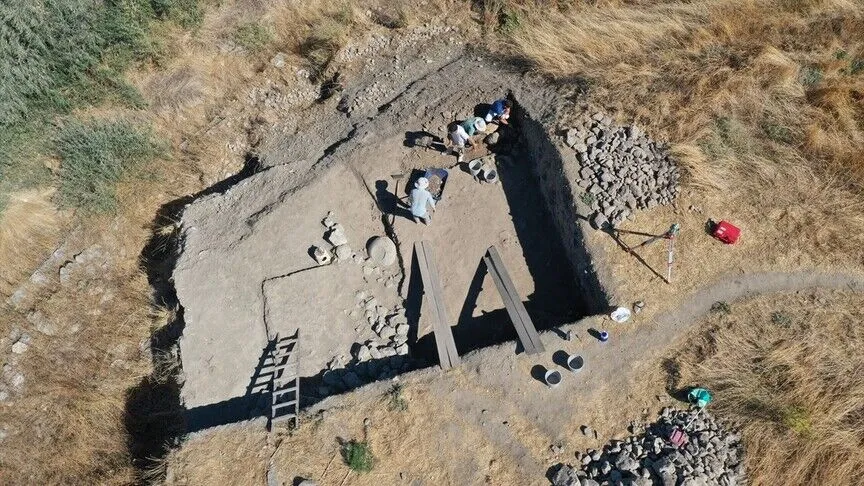
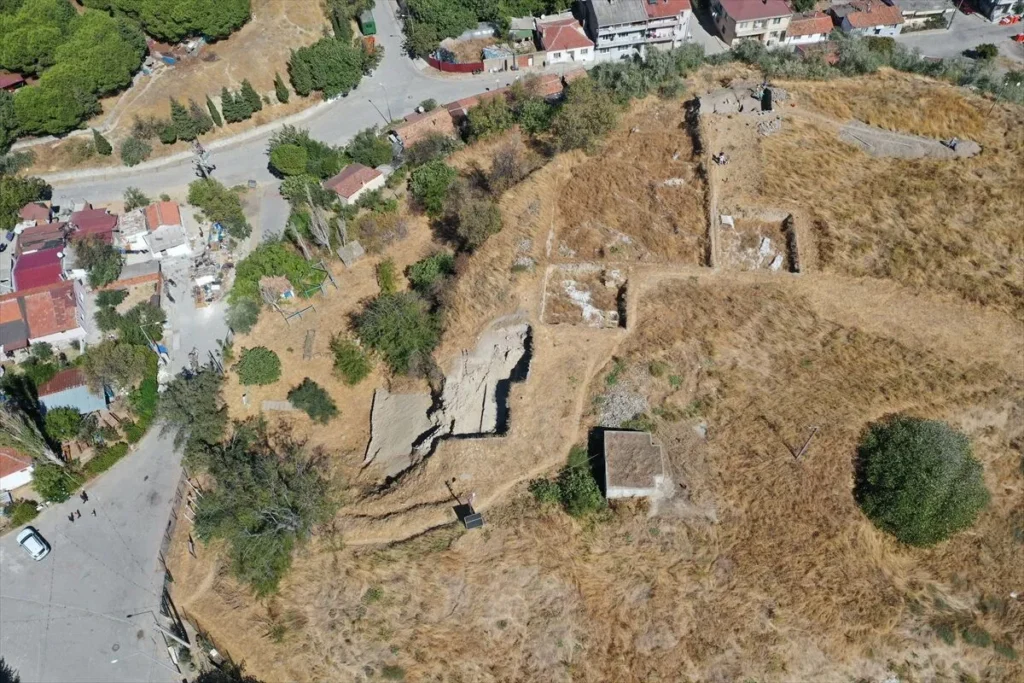
The location of the wall is equally revealing. Maydos Kilisetepe stood beside the sea, while its fortifications protected the land-facing side of the settlement. Defensive walls belonging to different periods had previously been identified in the mound’s northwestern sector; the latest discovery came from its southwestern side.
Together, these remains suggest that protecting the landward approaches was a recurring concern for the people who occupied Maydos. As the settlement changed, its defenses appear to have changed with it.
Looking Beyond Troy’s Famous Layers
The newly exposed wall belongs to a period that archaeologists are still trying to understand in greater detail. At nearby Troy, this transitional chapter is represented by the Troy III, IV and V phases, spanning the development from the Early Bronze Age toward the Middle Bronze Age.
Troy’s fortifications and destruction layers have often dominated accounts of the region. Maydos offers evidence from the opposite side of the Dardanelles and may help researchers build a fuller picture of the area during the transition from the Early to the Middle Bronze Age.
Earlier excavations in the northwestern part of Maydos had already uncovered material associated with this period. The wall now adds substantial architectural evidence that could help researchers examine changes in construction and defense during the centuries around 2200 BCE.
Comparisons between Maydos and Troy may eventually clarify developments on both sides of the strait. Their precise relationship during this period, however, remains open to further investigation.
Connections with Southeastern Europe
Finds recovered during earlier seasons show that Maydos maintained connections with communities across Thrace and Eastern Europe during the second millennium BCE. The evidence has allowed researchers to reconsider the settlement’s place within a wider regional network.
According to Sazcı, discoveries from the mound have opened new ways of interpreting connections extending through present-day Bulgaria and Romania. These findings point to interaction between northwestern Anatolia and the Balkans during the Bronze Age.
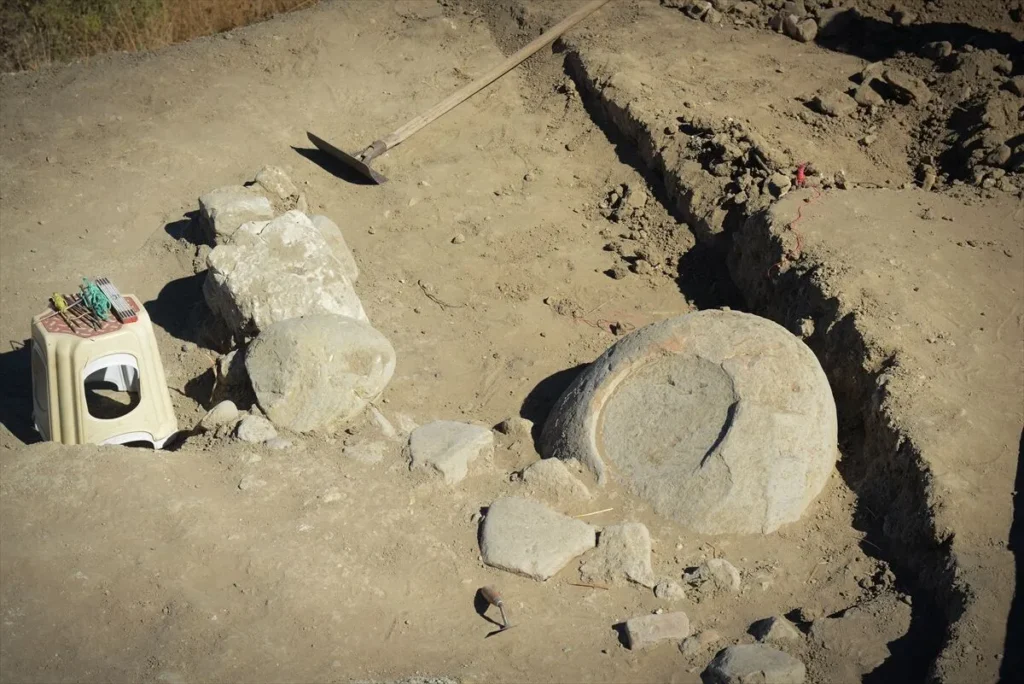
The excavation team is also investigating the Early Iron Age, a period sometimes called the “Dark Age” because archaeological evidence remains comparatively limited. Work in a specially selected area has begun to reveal remains and collapsed structures belonging to this poorly documented phase.
The site is therefore valuable for more than a single discovery. Its successive layers preserve evidence of communities that occupied the Gallipoli Peninsula across several major periods of change.
Seventeen Years and Only Five Percent
Maydos Kilisetepe is the largest settlement mound on the Gallipoli Peninsula. Sazcı estimates that it is comparable in size to Hisarlık, the hill containing the successive settlements of Troy.
Yet after 17 excavation seasons, researchers believe that only around five percent of Maydos has been examined. Sazcı noted that uncovering the entire settlement would require the work of several generations.
The newly discovered wall therefore represents only a small part of the ancient settlement still concealed beneath the mound. Future excavations may reveal how Maydos developed alongside other communities around the Dardanelles during the Bronze Age.
Cover Image: The 4,200-year-old defense wall uncovered at Maydos Kilisetepe on the Gallipoli Peninsula. Credit: Bülent Ersöz / AA