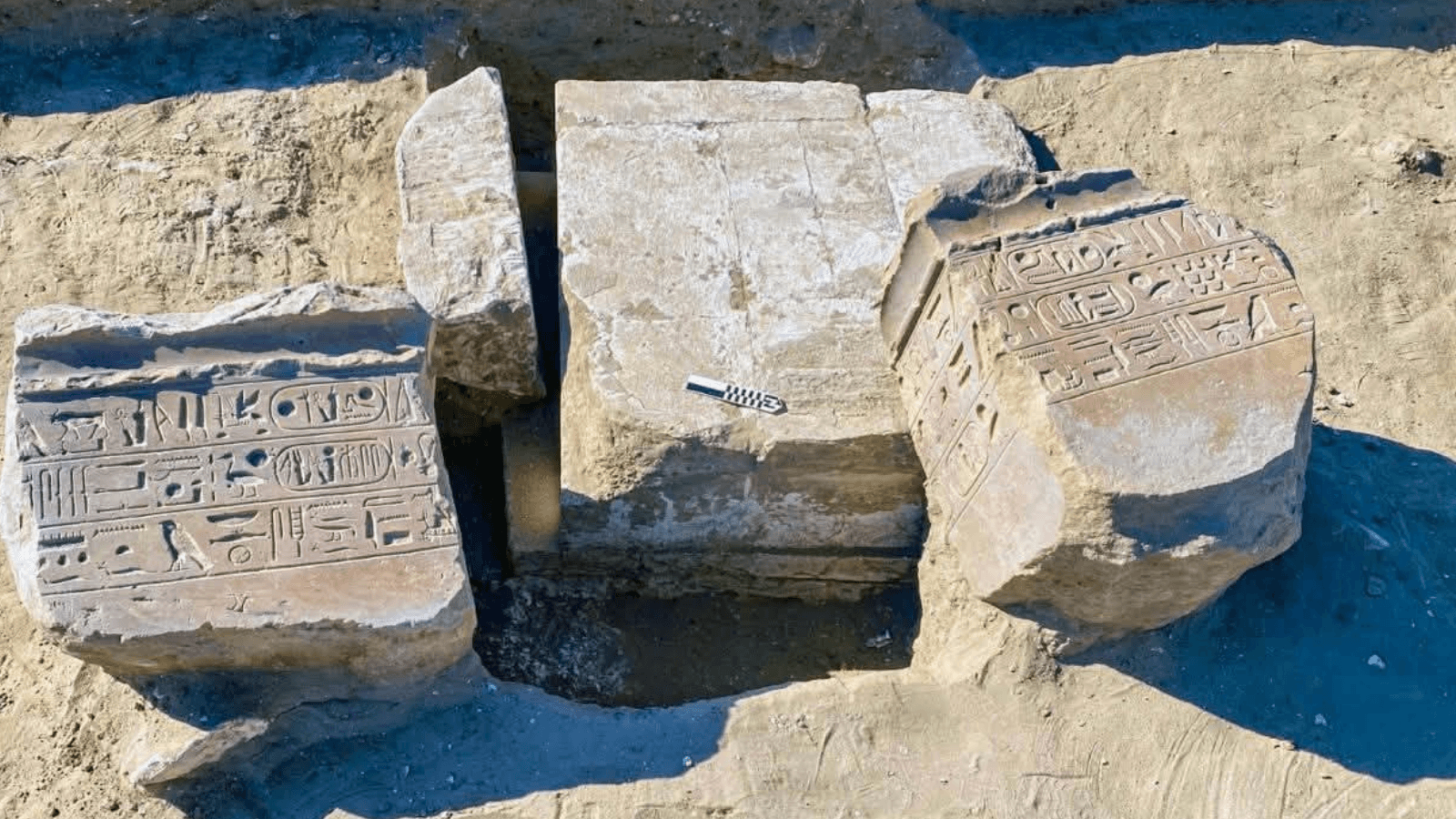
A massive sandstone lintel inscribed with the name of a long-lost ancient Egyptian city has emerged from excavations at Tell Abu Saifi, offering archaeologists one of their strongest clues yet to the possible location of Mesen.
The discovery was made near East Qantara in Egypt’s Ismailia Governorate, where an Egyptian archaeological mission is investigating a strategically important settlement along the ancient Horus Military Road. Broken into two large pieces and inscribed on three sides, the lintel bears titles of Ramesses II and a text referring to restoration work carried out on a statue of “Horus, Lord of the City of Mesen.”
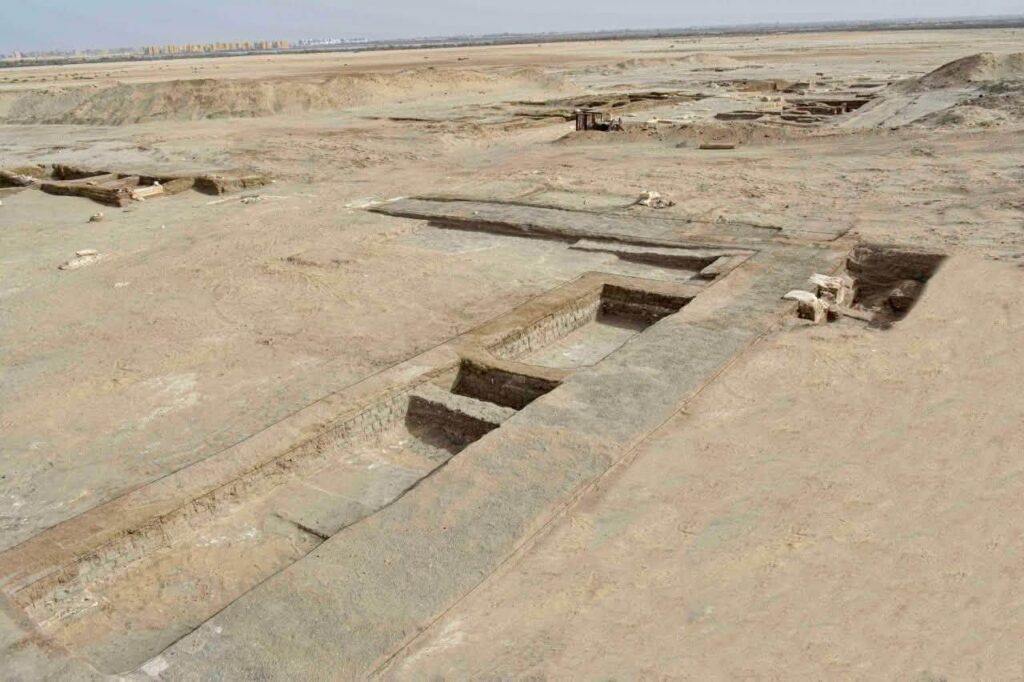
According to Egypt’s Ministry of Tourism and Antiquities, the inscription adds significant new evidence to the hypothesis that Tell Abu Saifi may be connected with Mesen, a city known from ancient Egyptian texts but whose precise location has remained uncertain. Archaeologists are not yet treating the identification as definitive, and excavation will continue in search of further evidence.
Ramesses II inscription provides a crucial clue
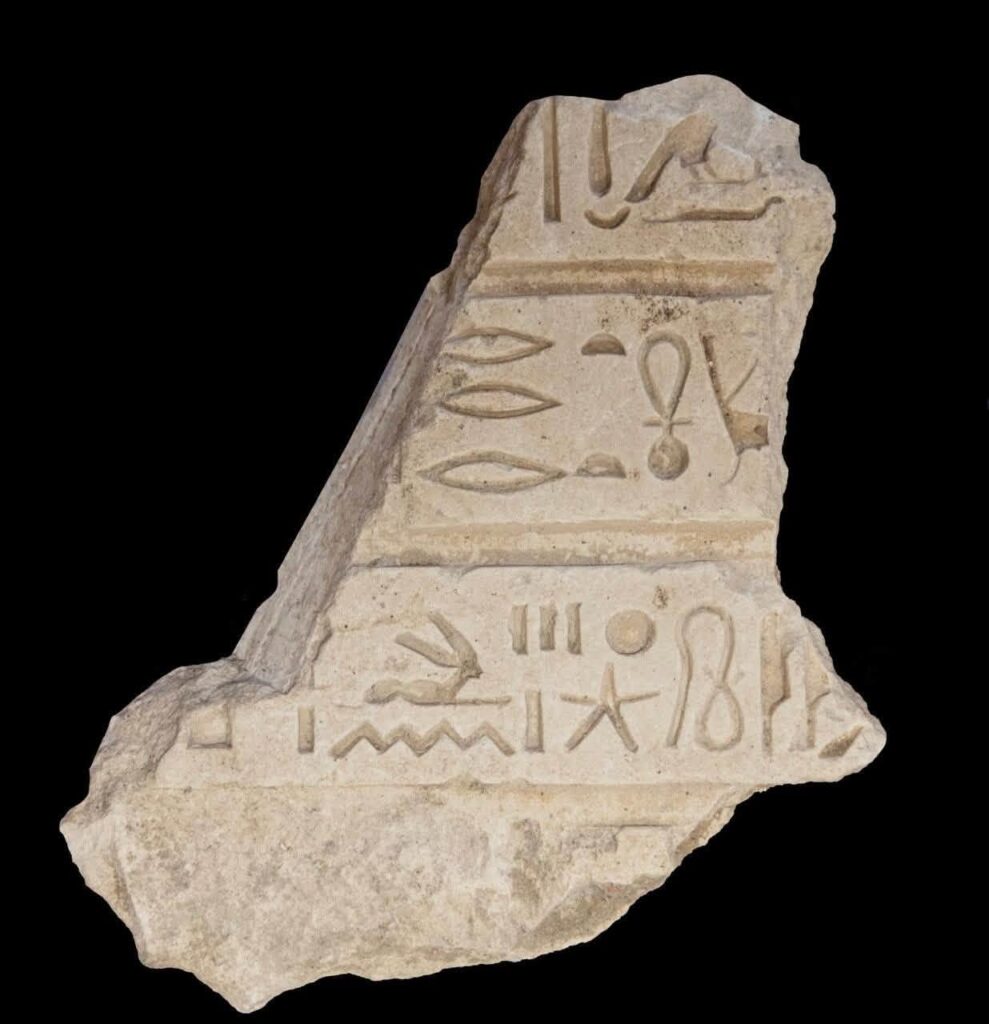
The reference to Mesen is particularly important because it comes from within the archaeological context of the site itself. Rather than relying only on Tell Abu Saifi’s geography or military character, researchers now have an inscription linking the name Mesen with religious activity at the settlement.
The text records restoration work associated with a statue of Horus, suggesting that the deity was worshipped here under a title specifically connected with the city of Mesen. Combined with the remains of a substantial temple complex, the inscription strengthens the case for identifying the site with the ancient city mentioned in Egyptian sources.
The current excavation season has also changed archaeologists’ understanding of structures uncovered during earlier work. A massive mudbrick wall with gateways, internal rooms and several construction phases, previously interpreted as part of the temple itself, has now been identified as the outer enclosure surrounding the sacred complex.
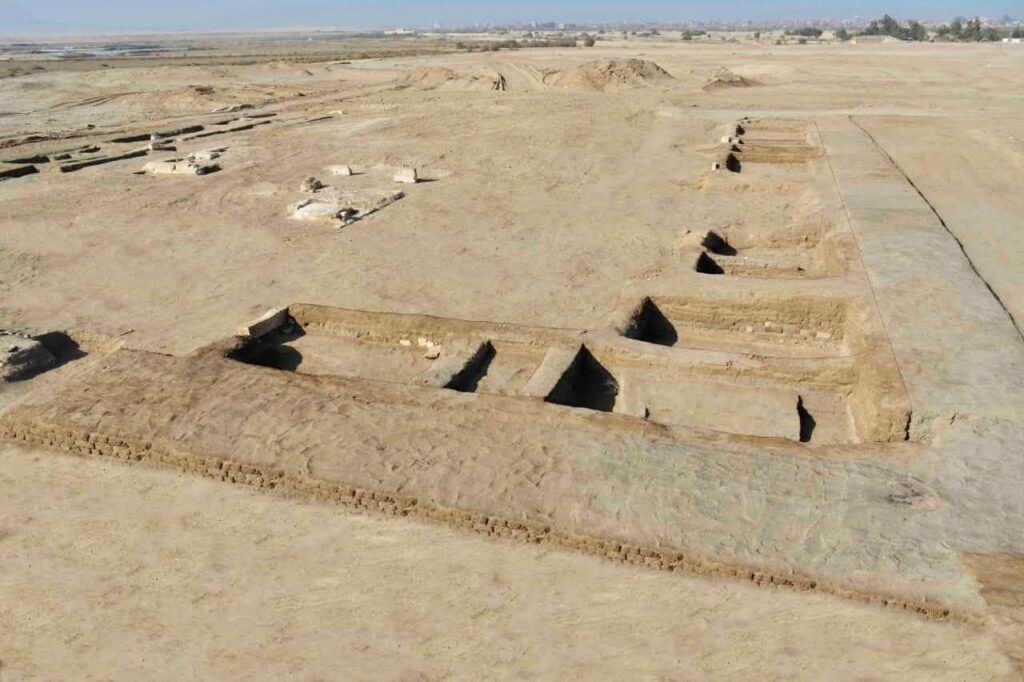
Within the enclosure, archaeologists traced additional sections of the temple, including a series of storage rooms along its northern side and larger service spaces to the south. These areas led toward the sanctuary, which was heavily damaged during later quarrying.
Two successive stone-paved roads were also uncovered leading from outside the fortified area toward the temple. The earlier road dates to the Ptolemaic period, while a narrower Roman road was later constructed above it, revealing how access to the complex changed as the settlement developed over time.
Military and religious life on Egypt’s eastern frontier
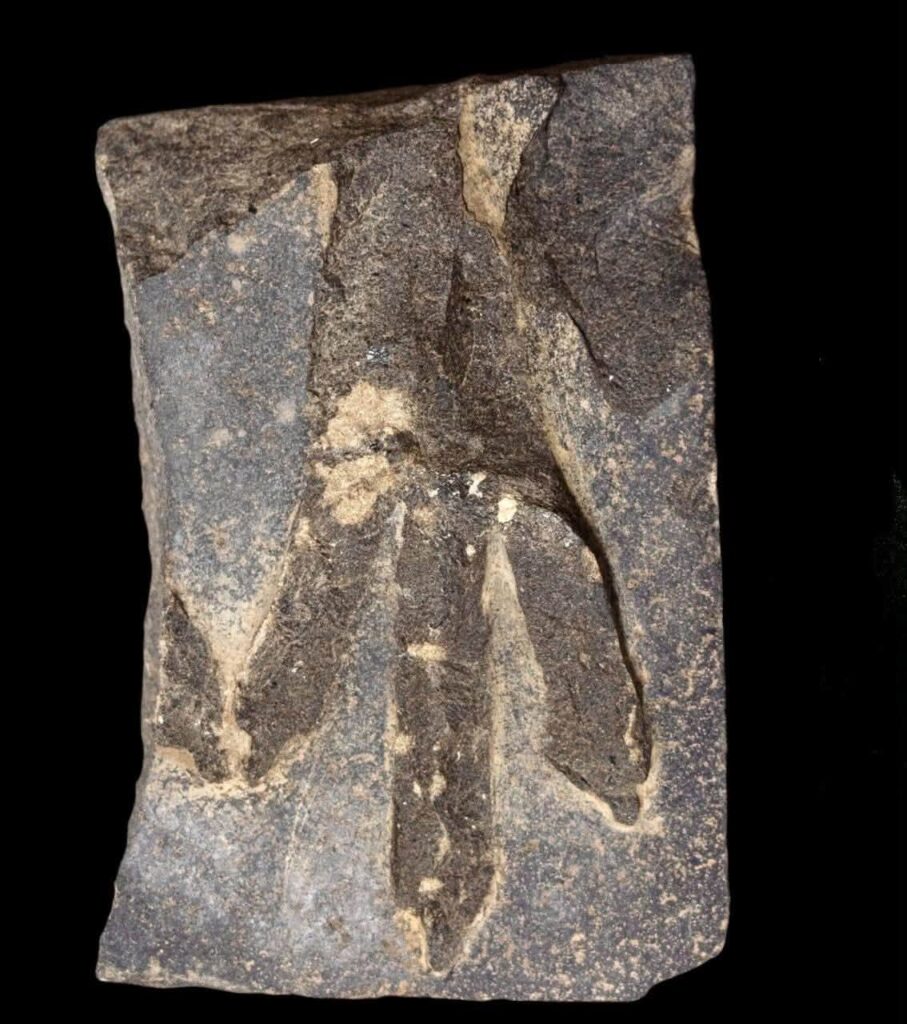
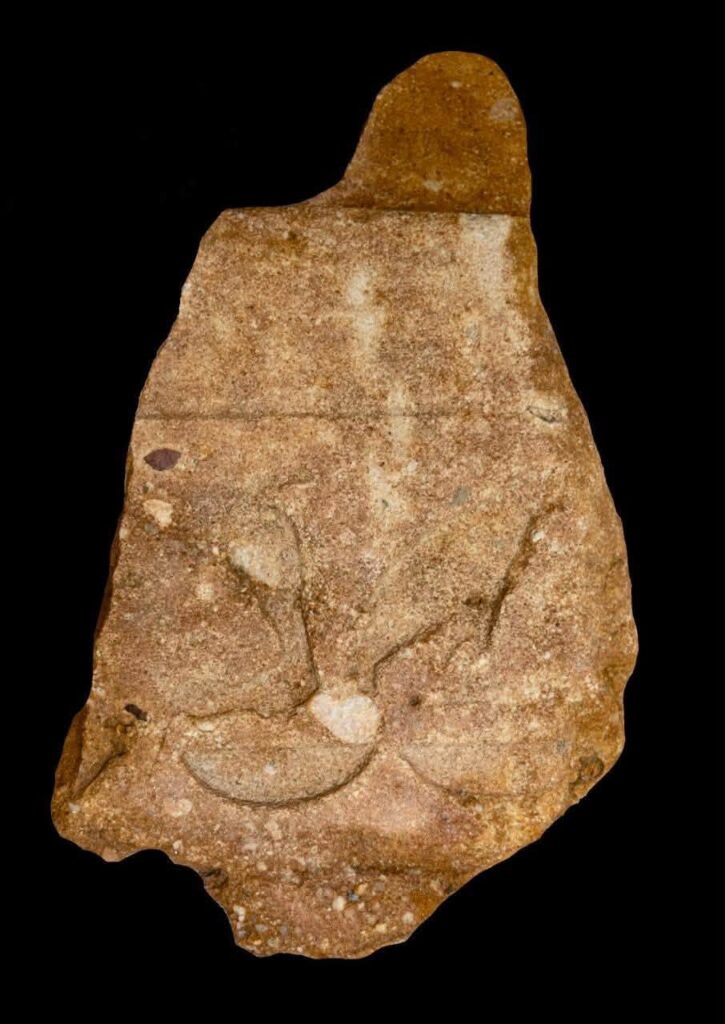
Other discoveries reinforce Tell Abu Saifi’s importance as both a religious and strategic center. Among them is part of a schist statue dating to the 26th Dynasty, depicting an army scribe carrying a damaged naos. Archaeologists also recovered a headless and footless statue from the Late Period, the torso of a royal basalt statue and fragments of falcon figures carved from basalt and limestone.
The combination of temple architecture, military-related objects and substantial fortifications reflects the unusual character of a settlement positioned close to Egypt’s eastern frontier.
Tell Abu Saifi lies along the route traditionally associated with the Horus Military Road, the network that connected Egypt with northern Sinai and helped protect the kingdom’s eastern approaches. Sites along this route served as defensive, administrative and supply points, making the area strategically important for centuries.
The latest excavation results suggest that Tell Abu Saifi passed through several major phases of use. The temple appears to have reached its greatest architectural development during the Ptolemaic period, while parts of the complex were later adapted for a Roman military installation, or castrum, during the third century AD.
By the late Roman period, the site had undergone a more destructive transformation. Sections of the former temple were quarried for building material and used for lime production. Archaeologists uncovered two large circular kilns constructed directly over corners of the sanctuary, containing limestone that had been subjected to intense heat.
Is Tell Abu Saifi the ancient city of Mesen?
The new inscription does not settle the question on its own, but it significantly strengthens the case for identifying Tell Abu Saifi with Mesen.
The importance of the discovery lies in the convergence of several types of evidence: the reference to “Horus, Lord of the City of Mesen,” the remains of a major temple, the site’s strategic location and the long sequence of military and administrative occupation documented by excavation.
Mesen is mentioned in ancient Egyptian sources dating back to the New Kingdom, but its exact location has remained debated. The Ramesses II lintel now provides a direct textual link between the city name and a site already known to have played an important role on Egypt’s eastern frontier.
Archaeologists will continue excavating Tell Abu Saifi during future seasons, focusing on unexplored architectural areas and searching for additional inscriptions or securely dated material that could clarify the site’s identity.
For now, the evidence stops short of proving that Tell Abu Saifi was Mesen. What the new discoveries do provide, however, is a far stronger archaeological basis for testing that identification than researchers had before.
Cover Image: Fragments of the massive sandstone lintel discovered at Tell Abu Saifi. The inscription bears titles of Ramesses II and refers to “Horus, Lord of the City of Mesen,” providing an important clue to the site’s possible ancient identity. Credit: Egyptian Ministry of Tourism and Antiquities