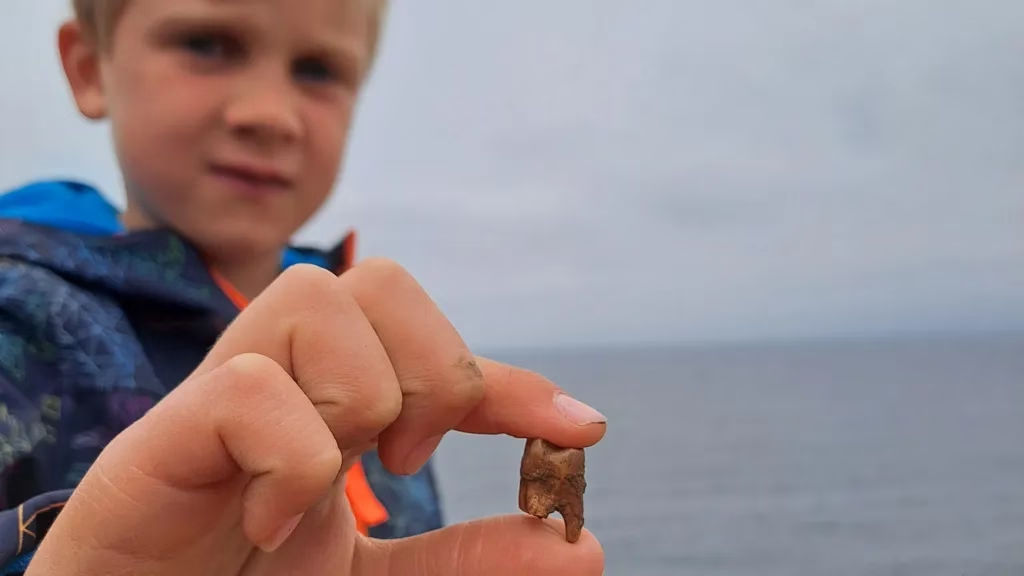
What began as a seaside stroll for a seven-year-old has unexpectedly opened a window onto prehistoric Britain.
During a family visit to Lizard Point — the dramatic tip of Cornwall and the southernmost point of mainland Britain — young Arthur picked up what he believed to be a shark tooth. Instead, the find proved to be human. He showed it to Ken Wallace, a retired dentist volunteering for the National Trust, whose trained eye recognized the enamel belonged not to a predator of the sea, but to a person from thousands of years ago.
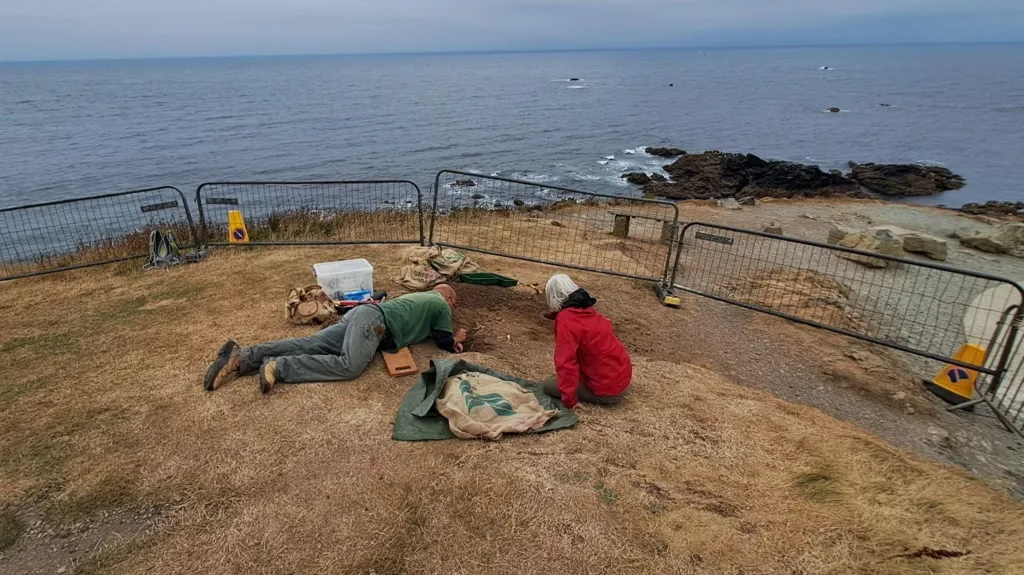
Authorities confirmed the discovery was not a modern forensic case but an archaeological one. Subsequent examination by National Trust archaeologist Jim Parry revealed that the location contained human remains preserved within an ancient earth mound, or barrow, constructed roughly 4,450 years ago during the Bronze Age. Among the finds were pieces of jawbones, teeth, and fragments of a skull, believed to represent at least one individual.
Parry explained that centuries of erosion — both from natural forces and human activity — have eaten into the site. “This is a monument placed in a spectacular position overlooking the sea. Unfortunately, its exposed setting also means that what survives is steadily disappearing. We’re documenting as much as possible before further loss occurs,” he said, noting that a broader excavation is planned to better understand the burial’s scale and context.
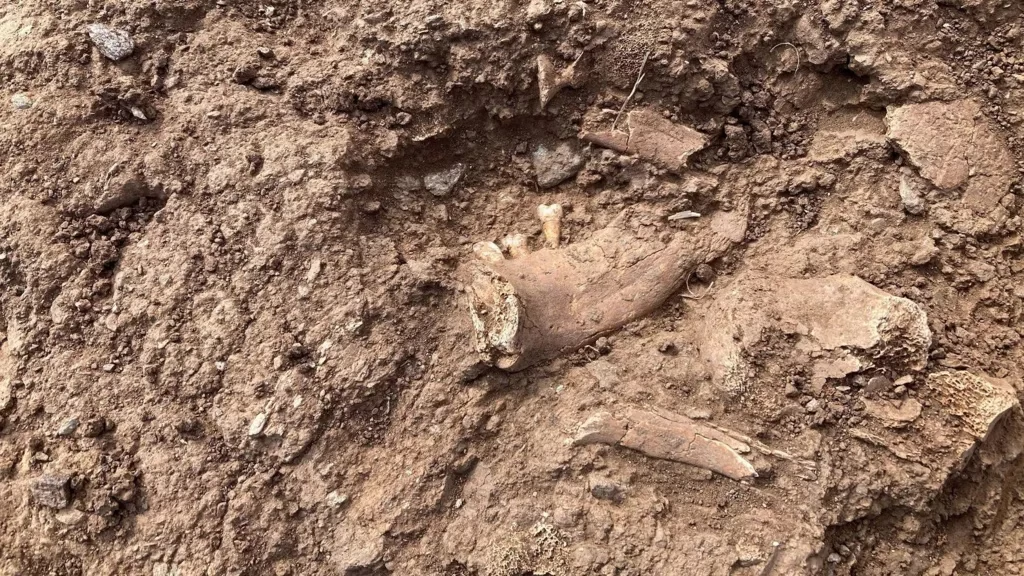
The skeletal remains are being transferred to an osteoarchaeologist for detailed study. Scientists will also employ radiocarbon dating to establish precise chronology.
The National Trust described the discovery as a poignant reminder of how coastal landscapes in Britain still conceal stories from deep prehistory — and how chance observation, even by a child on holiday, can alter the archaeological map of the nation.