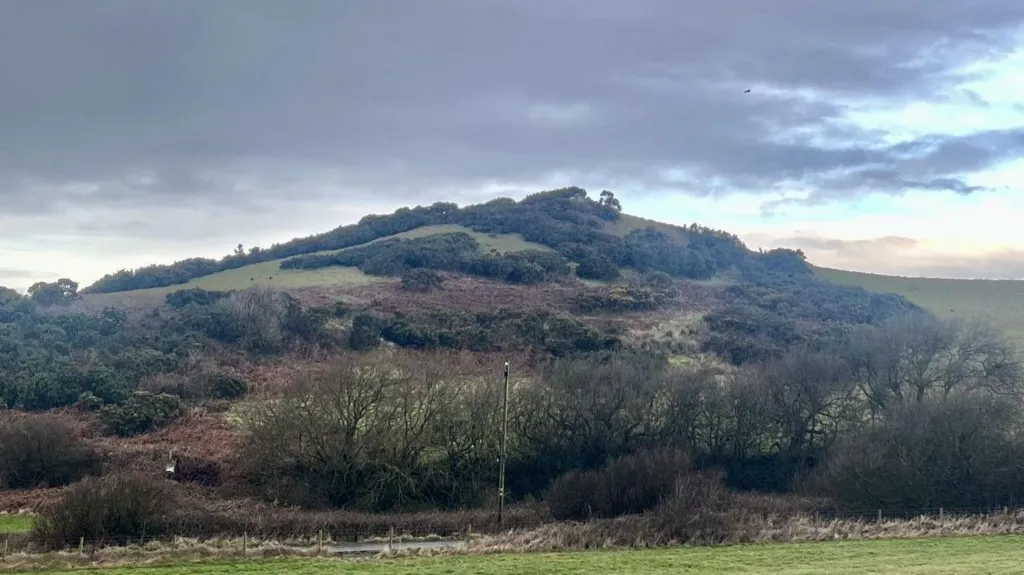
Along England’s rugged north-west coast, a broad, grass-covered mound has long blended into the Cumbrian landscape. Now, a growing body of archaeological clues suggests it may conceal something extraordinary: a monumental Viking ship burial—possibly that of Ivar the Boneless, one of the most formidable war leaders of the early medieval world.
The claim comes from British archaeologist Steve Dickinson, who argues that a site known in medieval sources as Coningeshou—“the King’s Mound”—could mark the long-lost grave of the Viking ruler who helped shape the political landscape of the British Isles and Ireland in the ninth century.
A king without a grave
Ivarr, sometimes rendered as Ivar or Ivarr the Boneless, led devastating campaigns across Anglo-Saxon England and founded a powerful Norse dynasty in Dublin. Despite his historical prominence, no confirmed burial has ever been identified. Over the years, scholars have proposed various locations, including Repton in Derbyshire, but none have yielded definitive proof.
Dickinson’s attention shifted north while studying Icelandic saga literature. Repeated references to Coningeshou—a “king’s mound” near the coast—prompted him to reassess the Cumbrian shoreline as a potential resting place for a ruler of exceptional status.
A ship beneath the earth?
The mound itself is imposing: roughly 60 metres wide, about six metres high, and positioned close to the sea—an evocative setting for a Viking burial tied to maritime belief and power. According to Dickinson, if a ship lies beneath the mound, the site would represent one of the rarest archaeological phenomena in northern Europe.
Only around 16 monumental ship burials are known across north-west Europe. None has yet been confirmed in the UK from the Viking Age. Such burials were reserved for elite figures—kings, queens, or founding leaders—interred within their ships alongside weapons, regalia, jewellery, food offerings, and sometimes sacrificed animals, all intended to accompany the dead into the afterlife.
“A belief alien to the modern world”
Speaking to BBC Dickinson described ship burial as a worldview far removed from contemporary ideas of death. In his view, placing a ruler inside a vessel beneath a great mound symbolised both earthly authority and the journey beyond life—an ultimate statement of communal respect and belief.
That belief system is best known in Britain from Sutton Hoo, an Anglo-Saxon burial dating centuries earlier. A Viking-age counterpart on the Cumbrian coast would dramatically expand understanding of elite Norse presence in Britain.

Physical clues in the landscape
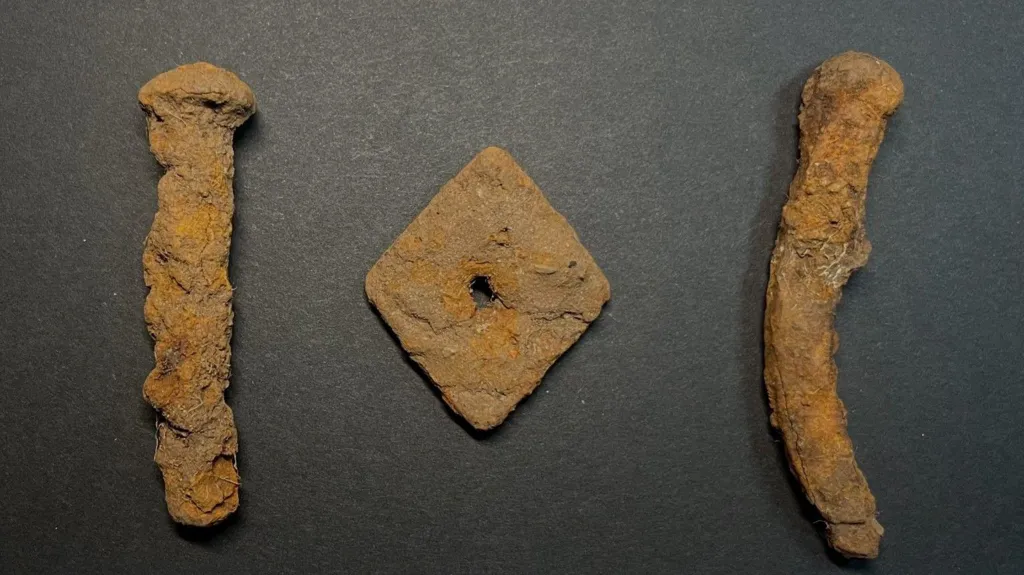
While no excavation has yet taken place, Dickinson points to a growing list of supporting evidence. Metal-detecting surveys in the surrounding area have recovered unusually large ship rivets—components consistent with substantial seagoing vessels—as well as lead weights associated with weighing silver from nearby hoards.
Equally striking is the wider topography. The main mound is encircled by 39 smaller burial mounds. Dickinson interprets these as possible graves of retainers, warriors, or family members—an “honour guard” arranged around a central ruler, echoing patterns seen in elite Scandinavian burial grounds
Science before certainty
Later this year, Dickinson plans to carry out non-invasive ground scans to determine whether the mound contains a ship structure or burial chamber. Even if a grave is confirmed, identifying the individual inside would remain extremely difficult. Organic material may be poorly preserved, and there is no known method to conclusively link skeletal remains to a specific Viking ruler.
Yet uncertainty is part of the story. Archaeology often advances through probabilities rather than absolutes, and the potential scale of the site alone makes it significant—regardless of whether Ivarr himself lies beneath the mound.
A Viking necropolis on England’s coast?
If confirmed, the King’s Mound would point to a previously unknown Viking necropolis along the coast of Cumbria—a landscape shaped not only by raiding and warfare, but by ritual, memory, and royal commemoration.
For now, the hill remains untouched, its exact location undisclosed to protect it from damage. But as surveys begin and evidence accumulates, this quiet rise above the Irish Sea may soon force historians to rethink where—and how—Viking kings were laid to rest.