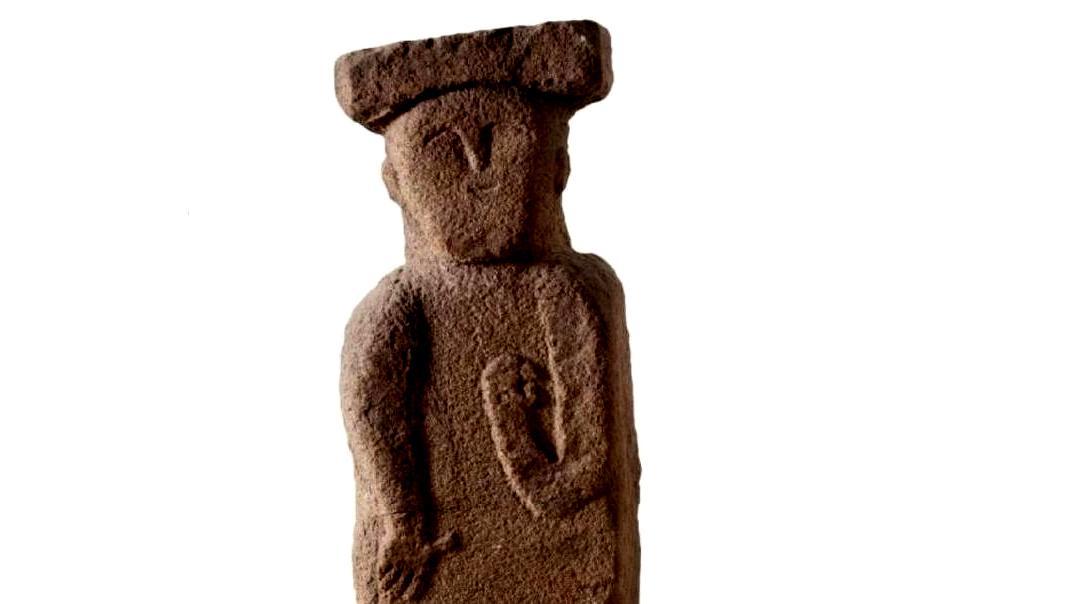
In a museum collection in eastern Serbia stands a sandstone figure nearly as tall as a human being. Its face is spare, almost abstract. A rectangular cap crowns the head. One arm bends at the elbow, the other falls stiffly along the body. No inscription. No ornament. Just presence.
The sculpture, measuring 171 centimeters in height, was discovered at the archaeological site of Šareni Potok in the village of Šarkamen, near Negotin. Dating to the 9th or 10th century, it may represent the only known pre-Christian Slavic pagan idol ever found in Serbia.
Though not a recent discovery, the artifact remains largely unknown beyond specialist circles. Yet its significance could extend far beyond regional archaeology.
A Rare Survivor from the Slavic Pagan World
Material representations of early Slavic religion are extraordinarily scarce. Unlike classical civilizations that left temples, inscriptions, and monumental cult statues, early Slavic communities of the Early Middle Ages relied heavily on wooden sanctuaries and perishable ritual objects. Most of these vanished during the Christianization processes that reshaped Central and Eastern Europe between the 9th and 12th centuries.
Stone idols associated with Slavic paganism are exceptionally rare. The most famous example, the Zbruch Idol discovered in present-day Poland, is often cited as one of the very few surviving monumental representations of a Slavic deity.
The Šarkamen sculpture shares certain stylistic features with these rare examples: a rigid, frontal stance; simplified anatomy; and an emphasis on the head and symbolic posture rather than realistic detail.
Between Archaeology and Interpretation
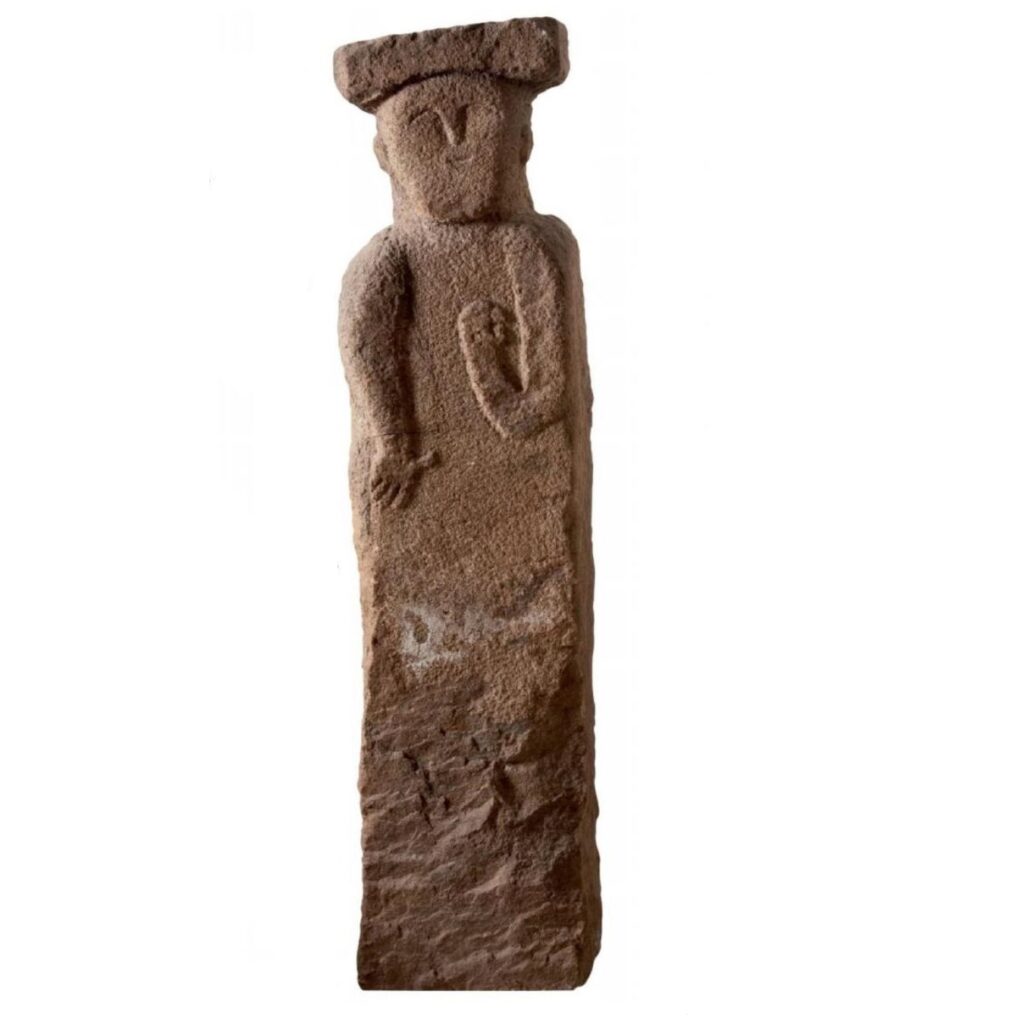
Scholars remain cautious. The figure’s simplicity leaves room for debate. It lacks clear attributes that would definitively identify a specific deity. Yet its scale — nearly human height — and its deliberate anthropomorphic shaping strongly suggest ritual or symbolic significance.
If indeed linked to pre-Christian Slavic belief systems, the sculpture would offer rare material evidence from a period when written sources about Slavic religion were either hostile, fragmentary, or composed centuries later.
Eastern Serbia during the 9th and 10th centuries stood at a cultural crossroads. The region was influenced by Byzantine Christianity local Slavic traditions, and shifting political dynamics across the Balkans. An idol of this size surviving from that transitional moment would illuminate a landscape where belief systems overlapped rather than abruptly replaced one another.
The sculpture is currently preserved in the collection of the Krajina Museum in Negotin. Despite its potential importance, it has received limited international attention — perhaps because it was not uncovered in a dramatic modern excavation, but rather documented and curated quietly.
Why It Matters
If confirmed as a pagan idol, the Šarkamen figure would not only represent a key artifact for Serbian archaeology, but also contribute to the broader study of Slavic religious heritage in Europe. Physical testimonies of early Slavic spirituality are rare. Each example reshapes how historians understand the symbolic world that preceded Christianization.
In a field where absence often defines the narrative, this sandstone figure stands as a rare presence — silent, weathered, and still not fully understood.
Cover Image: Sandstone anthropomorphic statue from Šareni Potok (Šarkamen, Serbia), 9th–10th century CE.
Collection of the Krajina Museum, Negotin.
Photo via ArcheoSerbia (used for editorial purposes).