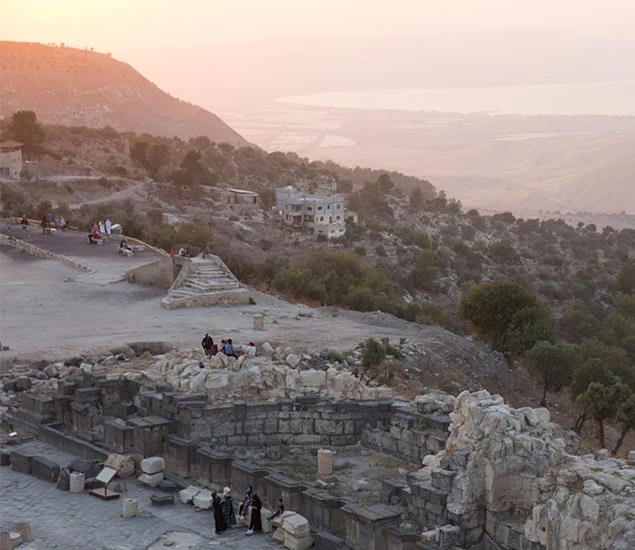
Archaeological research at Abila, one of the ancient Decapolis cities in northern Jordan, is uncovering a long-lost landscape of Byzantine faith, Greco-Roman art, and early Christian devotion. Recent studies led by Professor David Vila of John Brown University have revealed multiple Byzantine basilicas, a monastic complex, and a newly deciphered church inscription dated to 580 AD—marking one of the most significant epigraphic finds from the site in decades.
Located about 20 kilometers east of the Jordan Valley and north of Irbid, Abila was a thriving urban center with an estimated population between 10,000 and 15,000 inhabitants at its peak. The Abila Archaeological Project, launched in 1980, has traced continuous settlement layers from the Early Bronze Age to the Islamic period, documenting over 33,000 ceramic fragments, extensive wine presses, cisterns, animal pens, and burial structures.
Three Basilicas and a Monastic Heart
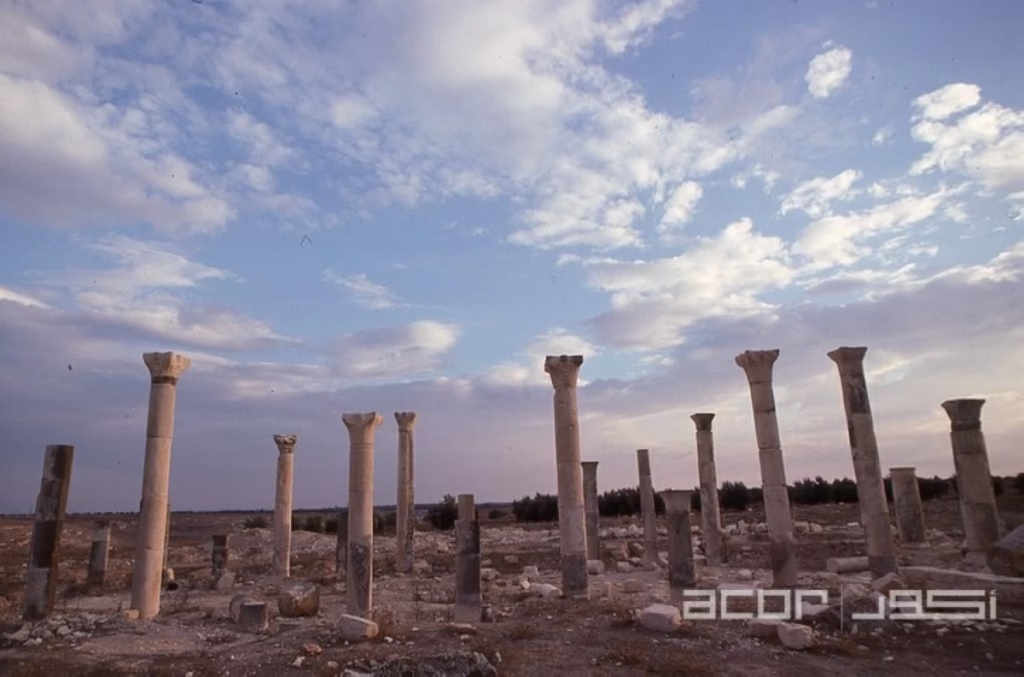
Excavations across the northern and southern tells of Abila have revealed three major basilicas, each representing distinct phases of Byzantine ecclesiastical architecture.
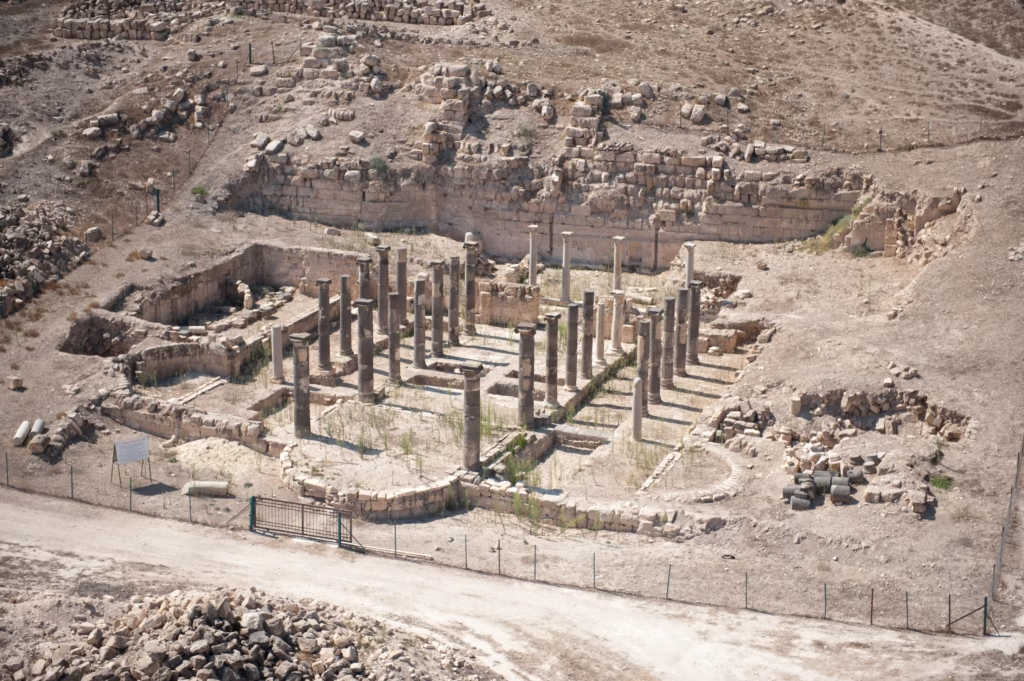
The north tell (Area A), first explored in 1982, yielded a large Byzantine basilica measuring roughly 35 meters in length, complete with a 16 × 20-meter atrium. The same area produced a life-size marble statue of Artemis in 1994, suggesting that an earlier Greco-Roman temple once stood beneath the Christian sanctuary.
Meanwhile, on the southern tell (Area D), archaeologists unearthed another basilica, richly adorned with mosaics depicting baskets of fruit, floral designs, and geometric patterns. This church was severely damaged by the 8th-century earthquake that struck the region, yet its artistry remains a testament to the vibrant religious life of Byzantine Abila.
A Message from 580 AD
Perhaps the most remarkable recent discovery comes from Area G, where researchers uncovered a church inscription that reads:
“During the time of our holy father Epyphanios, the bishop, created from foundation and adorned with green, in the month of April 13th, in the year 580 AD. Lord, be glory to you.”
This dedicatory inscription, carved on limestone and now undergoing conservation, sheds light on Abila’s bishopric hierarchy and provides a rare fixed date for one of its ecclesiastical structures—an invaluable anchor for sequencing the site’s complex construction phases.
A City Between Temple and Basilica
Abila’s layered identity bridges Roman polytheism and Byzantine Christianity.
Coins minted between the 2nd and 3rd centuries AD depict a grand Roman temple—possibly the same sanctuary later transformed into the basilica where the Artemis statue was found. Such evidence highlights Abila’s transformation from a classical city of the Decapolis into a Byzantine pilgrimage hub, mirroring the wider religious evolution of the region.
Professor Vila emphasized that while “much has been revealed, Abila still holds secrets beneath its soil,” noting that ongoing excavations will require “at least two more seasons” to complete current work in the newly uncovered church sector.