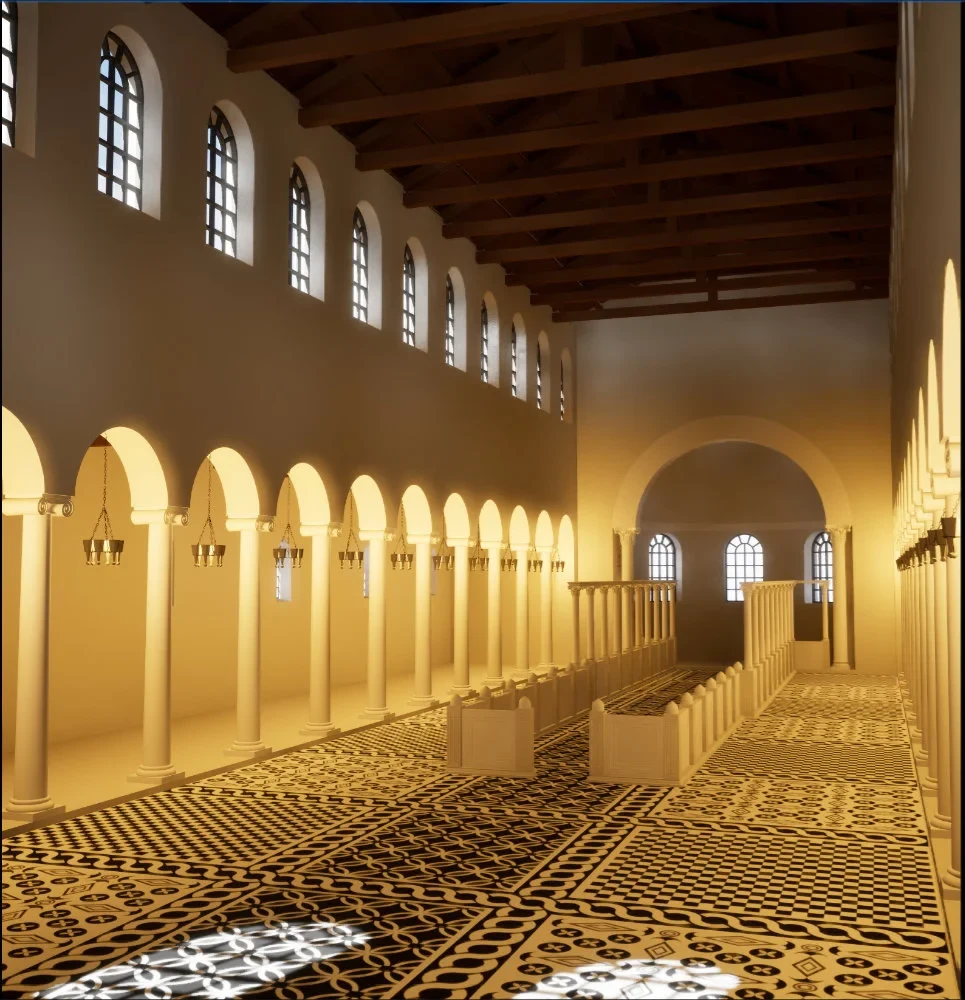
Just centimeters below plowed earth on the outskirts of Rome, archaeologists have uncovered a discovery that quietly redraws the map of early Christian power: a monumental church complex and an opulent bishop’s palace dating to the fourth century.
The excavation, led by the University of Bonn in cooperation with German and Italian institutions, is revealing what may be one of the earliest and most architecturally ambitious episcopal centers in Late Antiquity—a complex that transforms how scholars understand Christian self-representation after the faith’s imperial legalization.
A Church Hidden in Plain Sight
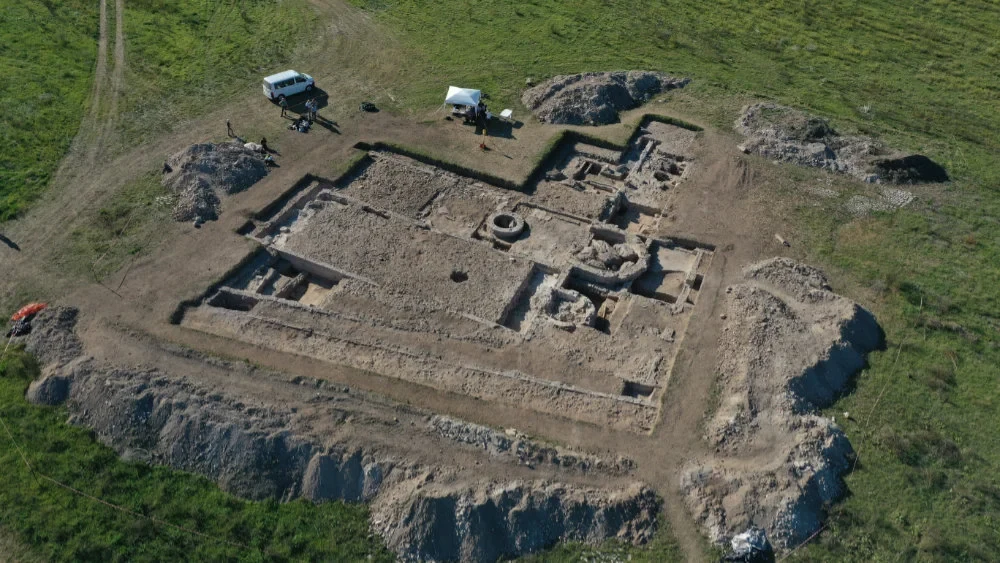
For generations, farmland protected what modern construction might have erased. Plows skimmed the surface without cutting deep enough to destroy the buried architecture. That agricultural continuity preserved an unusually intact early Christian complex within the Archaeological Park of Ostia Antica.
In antiquity, Ostia was Rome’s maritime lifeline. When silting gradually choked the harbor, the city’s commercial role diminished. Yet Christianity followed a different trajectory. After the Edict of Milan in 313 AD and especially once Christianity became the empire’s official religion in 380 AD, monumental church construction reshaped urban identities across the Mediterranean.
What lay beneath this field dates to around 330 AD, during the reign of Constantine the Great. The church appears to have functioned as an architectural prototype for later cathedral traditions that would eventually culminate in Gothic giants such as Cologne Cathedral and Ulm Minster.
And yet, until recently, there was almost nothing visible above ground to suggest its scale.
From Geophysics to Full Excavation
Credit: Ostia Project Archive
In 1996, surveys conducted by the German Archaeological Institute identified a massive anomaly—roughly 50 by 80 meters—at the southeastern edge of the ancient city. Still, large-scale excavation had to wait decades.
Backed by funding from the German Research Foundation (DFG), campaigns in 2023 and 2024 began exposing walls built partly over a former Roman insula. Since 2022, the project has been jointly directed by Prof. Dr. Sabine Feist (University of Bonn), Prof. Dr. Michael Heinzelmann (University of Cologne), and Prof. Dr. Norbert Zimmermann of the German Archaeological Institute, alongside specialists from La Sapienza University of Rome.
What they found in 2025 shifted the narrative entirely.
A Bishop’s Hall Without Parallel
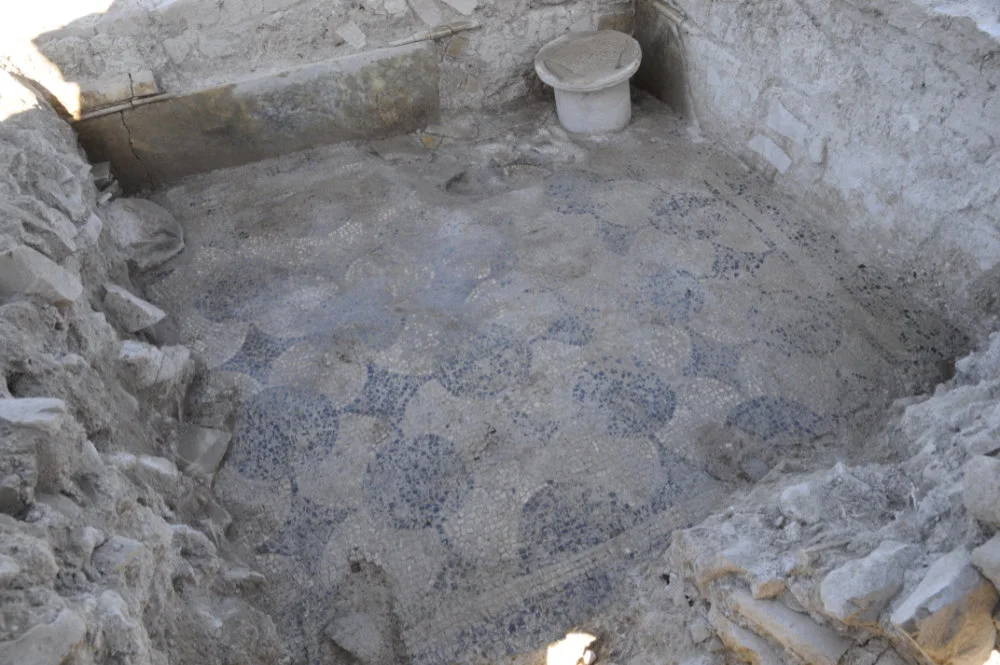
Attached to the episcopal residence, archaeologists uncovered a monumental ceremonial hall—an aula measuring roughly 8 by 20 meters and rising at least eight meters high. Marble wall cladding. Mosaic floors. Architectural scale more commonly associated with imperial or aristocratic settings.
“We have nothing comparable from the Constantinian period,” said Prof. Sabine Feist. “Bishops were a newly rising elite, and they adopted the architectural language of power.”
Credit: Ostia Project Archive
The contrast is striking. A relatively conventional basilica stands beside an exceptionally lavish episcopal hall. The message seems deliberate: the bishop was not only a spiritual authority but also a civic and political presence embedded in urban life.
In Late Antiquity, the Bishop of Ostia held a uniquely prestigious position as Cardinal Dean, responsible for convening papal conclaves. The long-missing location of this episcopal seat may now finally be identified.
A Thousand Years of Life
Perhaps most remarkable is the site’s longevity. While other sectors of Ostia were gradually abandoned, this complex remained active into the early Middle Ages.
“This area was inhabited longer than any other part of Ostia,” Feist noted. “Here we can study nearly a millennium of continuous settlement.”
That continuity offers a rare opportunity to observe how Christian institutions adapted to economic decline, political transition, and shifting urban realities. The coexistence of modest basilical space and elite ceremonial architecture invites new questions about social hierarchy, representation, and the visual language of authority in the fourth and fifth centuries.
What Comes Next
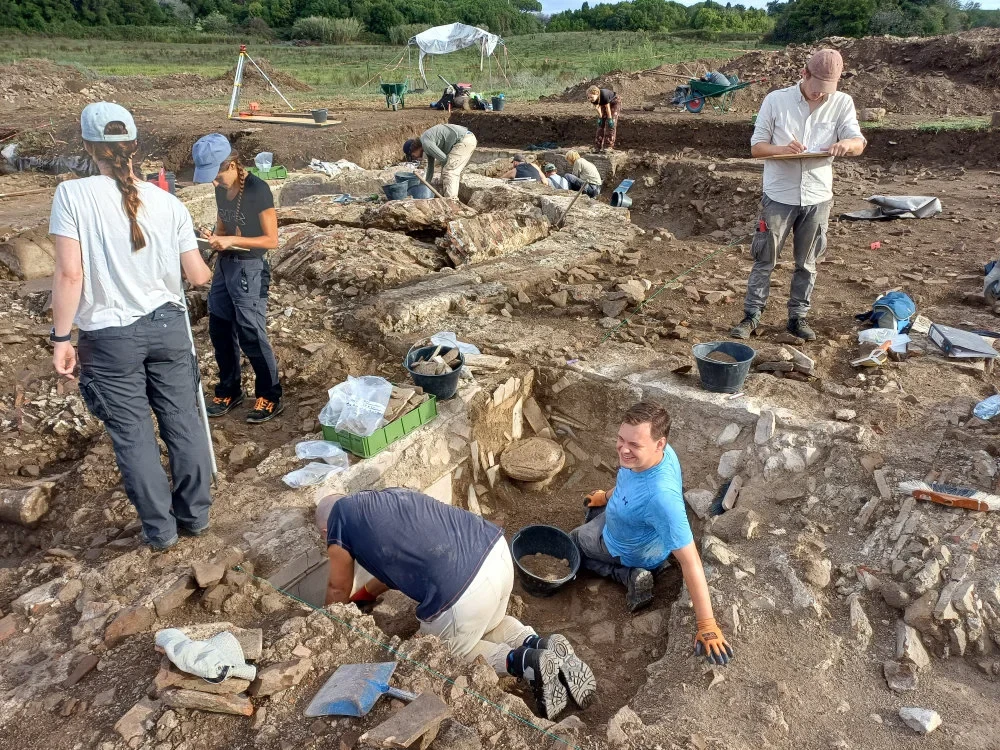
Much of the complex remains buried. With new funding secured for a three-year continuation project, another six-week excavation campaign is planned for autumn 2026.
Under the Italian sun, the routine is relentless—fieldwork beginning before 8 a.m., documentation stretching late into the evening with drones, drawings, and detailed recording. But for the team, the reward lies in incremental revelation.
A trowel. A mosaic fragment. A marble panel emerging from soil.
Each layer brings us closer to understanding how early Christianity transitioned from persecuted sect to architectural power—literally reshaping the cityscape of the Roman world.
Cover Image Credit: Reconstruction of the Bishop’s Church based on the excavation results from 2023 and 2024. Reconstruction: Daniel Hinz