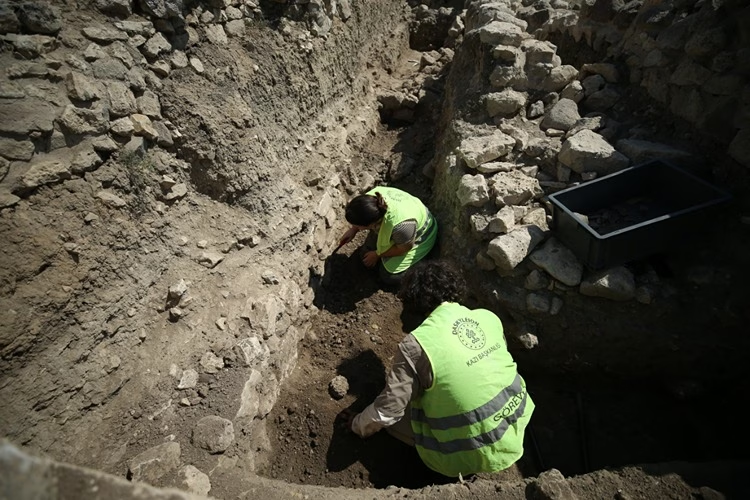
Excavations at the ancient city of Daskyleion, located on the shores of Lake Manyas in northwestern Anatolia, have uncovered striking new details about daily life 2,600 years ago. Archaeologists working in the so-called “Lydian kitchen” unearthed two additional hearths, along with seeds, fish bones, and animal remains. The most surprising evidence comes from dog bones bearing cut marks, confirming that dog meat was consumed in this region during the Iron Age.
A Kitchen at the Heart of Daily Life
Around the newly exposed hearths, researchers identified large quantities of fish vertebrae and spines, pointing to intensive fishing activities in Lake Manyas. Hundreds of charred seeds were also retrieved, suggesting that cereals and plant resources played a central role in food preparation.
Dog Bones Challenge Assumptions
Among the finds, the butchered dog bones stand out as the most controversial. While rare in the archaeological record, evidence of dog consumption has surfaced before in Daskyleion. The new finds reinforce the interpretation that dog meat was indeed part of the local diet—whether due to ritual practice, food scarcity, or deliberate culinary choice remains a subject of debate.
Destroyed by Fire, Rebuilt Twice
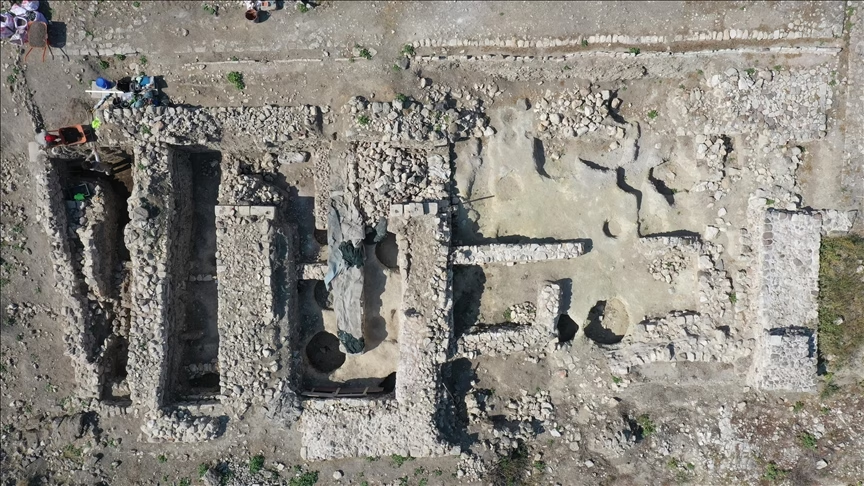
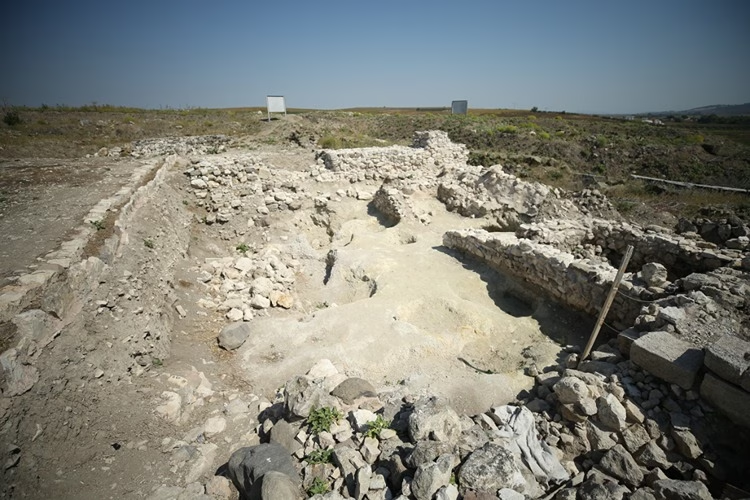
Excavation layers revealed that the kitchen was destroyed by fire at least twice: first at the end of the 7th century BCE, and again in the mid-6th century BCE. Each time, it was rebuilt, only to be overlain later by a monumental three-room structure from the Persian (Achaemenid) period. This sequence highlights both the resilience of the settlement and its transformation into the administrative center of Hellespontine Phrygia under Persian rule.
A Forensic Excavation Process
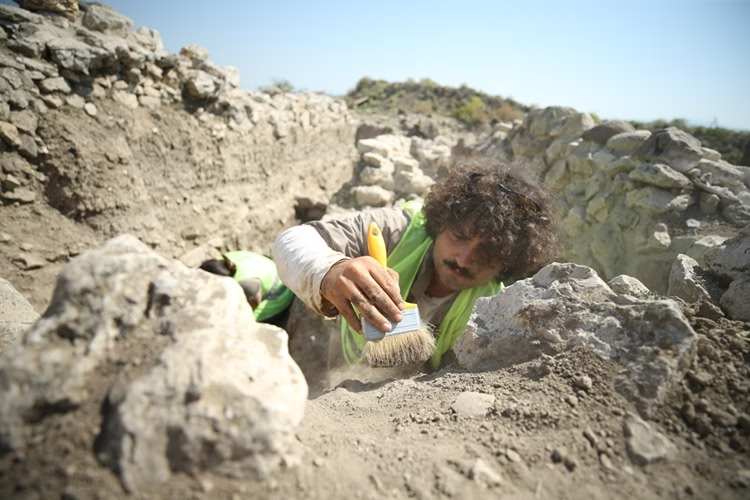
Archaeologists are excavating with surgical precision, using fine tools such as tweezers and spatulas. Every bucket of soil is transported to the dig house, where flotation techniques recover even the tiniest seeds and micro-bones. This meticulous approach is helping to reconstruct the daily diet and environment of ancient Anatolia in unprecedented detail.
Why Daskyleion Matters
Daskyleion was more than a local settlement: under the Lydians and later the Persians, it became a key political and economic hub in western Anatolia. Today, its multi-layered remains are rewriting our understanding of Iron Age food practices, cultural transitions, and imperial administration in the eastern Mediterranean.
Cover Image: Excavation area of the Lydian kitchen at Daskyleion showing hearths, fish bones, and animal remains. Credit: Miraç Kaya/AA