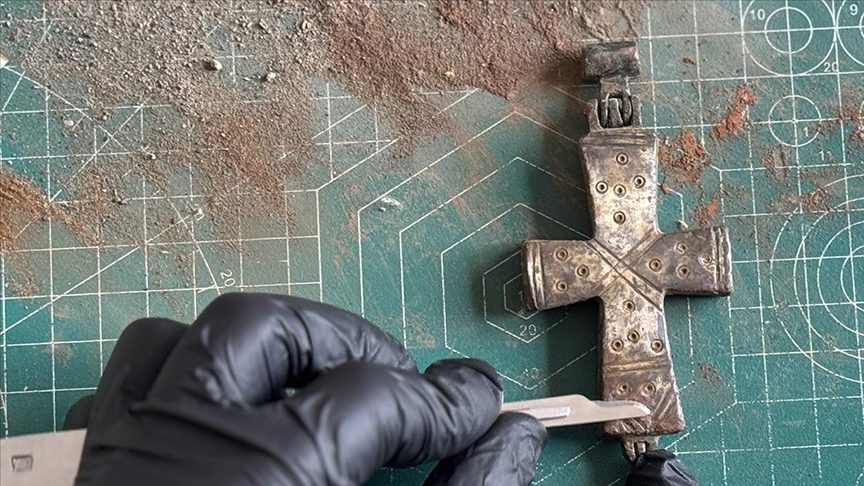
Archaeologists working in central Anatolia have uncovered a rare Christian artifact at Ancient Lystra—a sealed bronze reliquary cross, preserved exactly as it was closed nearly a millennium ago. The object was found during excavations in the church area of the ancient city, a site closely associated with the missionary journeys of Saint Paul
Dating to between the 9th and 11th centuries, the cross stands out not for elaborate decoration, but for its condition and construction. Unlike most reliquaries uncovered in archaeological contexts, this example was discovered fully sealed, riveted shut at the time of its manufacture and never reopened.
Lystra’s Place in Early Christianity
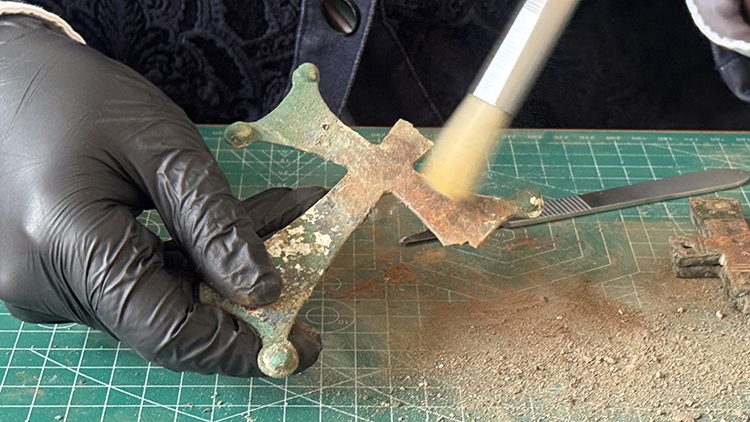
Lystra occupies a distinctive position in early Christian history Ancient textual sources identify the city as one of the Anatolian communities visited by Saint Paul during his missionary activity, making it part of the earliest landscape of Christianity beyond the Levant.
This historical backdrop gives particular significance to the new discovery. The reliquary was found within a burial context associated with a church structure, alongside other crosses and metal personal items, suggesting a community where Christian identity and devotional practice were firmly established by the medieval period.
An Object Meant to Remain Closed
Reliquaries were designed to contain relics—physical remains of saints or objects believed to hold spiritual power through contact with holy individuals. In medieval Christianity, such objects were often worn on the body, serving both as expressions of faith and as protective symbols.

According to excavation director İlker Mete Mimiroğlu of Necmettin Erbakan University, the Lystra cross represents a rare category:
“Most reliquary crosses are found broken, opened, or incomplete. This one was discovered sealed as it was originally made. It was permanently closed using rivets, with no mechanism intended for reopening. That feature alone makes it exceptional.”
The two-part bronze cross is decorated with simple geometric motifs and notably note lacks figural imagery. Its restrained design suggests a focus on personal devotion rather than public display.
What It Contains Remains Unknown
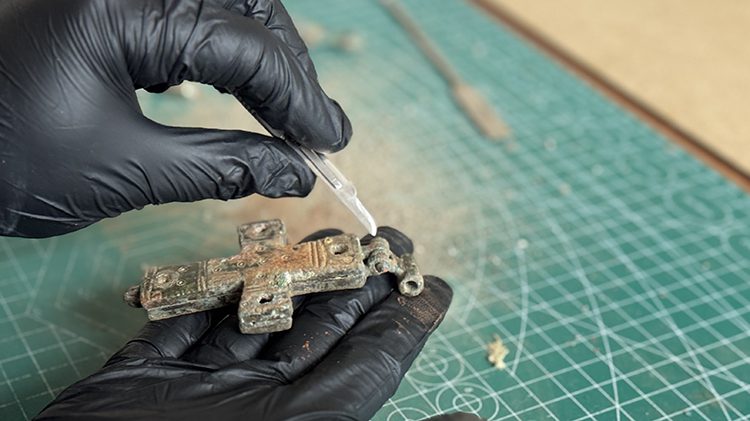
Because the cross was intentionally sealed, conservators have chosen not to open it. A limited visual inspection through a narrow gap revealed no clearly identifiable relic material, though traces of textile—possibly a fragment of burial cloth—were observed on the surface.
“The act of sealing itself was meaningful,” Mimiroğlu explained. “Whatever was placed inside—if anything—was meant to remain enclosed. The object’s spiritual value did not depend on visibility.”
A Quiet Testament to Medieval Faith
Now conserved at the Konya Archaeology Museum, the sealed reliquary cross offers rare material evidence of medieval Christian belief in Anatolia, where faith was often expressed through small, personal objects rather than monumental art.
In a city shaped by the earliest spread of Christianity, the Lystra reliquary stands as a silent witness to a deeply personal form of devotion—one that was carried, sealed, and ultimately entrusted to the earth.