For decades, archaeologists believed that prehistoric Ireland lacked large, densely populated settlements, and that such complex communities only emerged with the arrival of the Vikings in the early medieval period. New research from southern Ireland is now fundamentally challenging that long-standing view.
At Brusselstown Ring, a massive hilltop enclosure in County Wicklow, researchers have identified what may be the largest prehistoric nucleated settlement ever recorded in Ireland and Britain—dating back more than 3,000 years.
A settlement on an unexpected scale
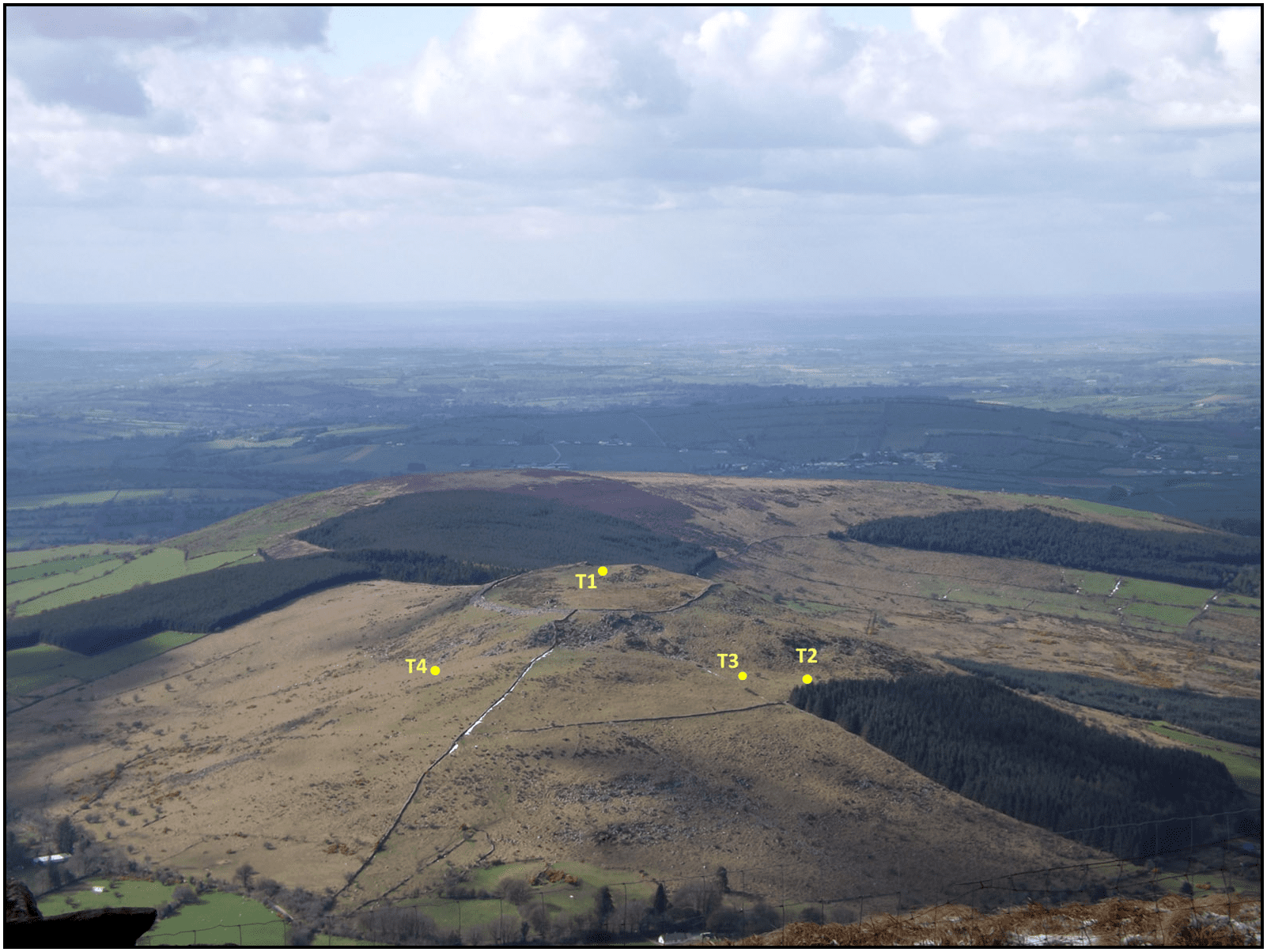
Using high-resolution aerial photography and LiDAR data, archaeologists mapped over 600 circular house platforms spread across a fortified hilltop covering more than 40 hectares. The density and extent of these structures suggest not a temporary gathering place, but a permanently occupied community of unprecedented size for the Late Bronze Age and Early Iron Age.
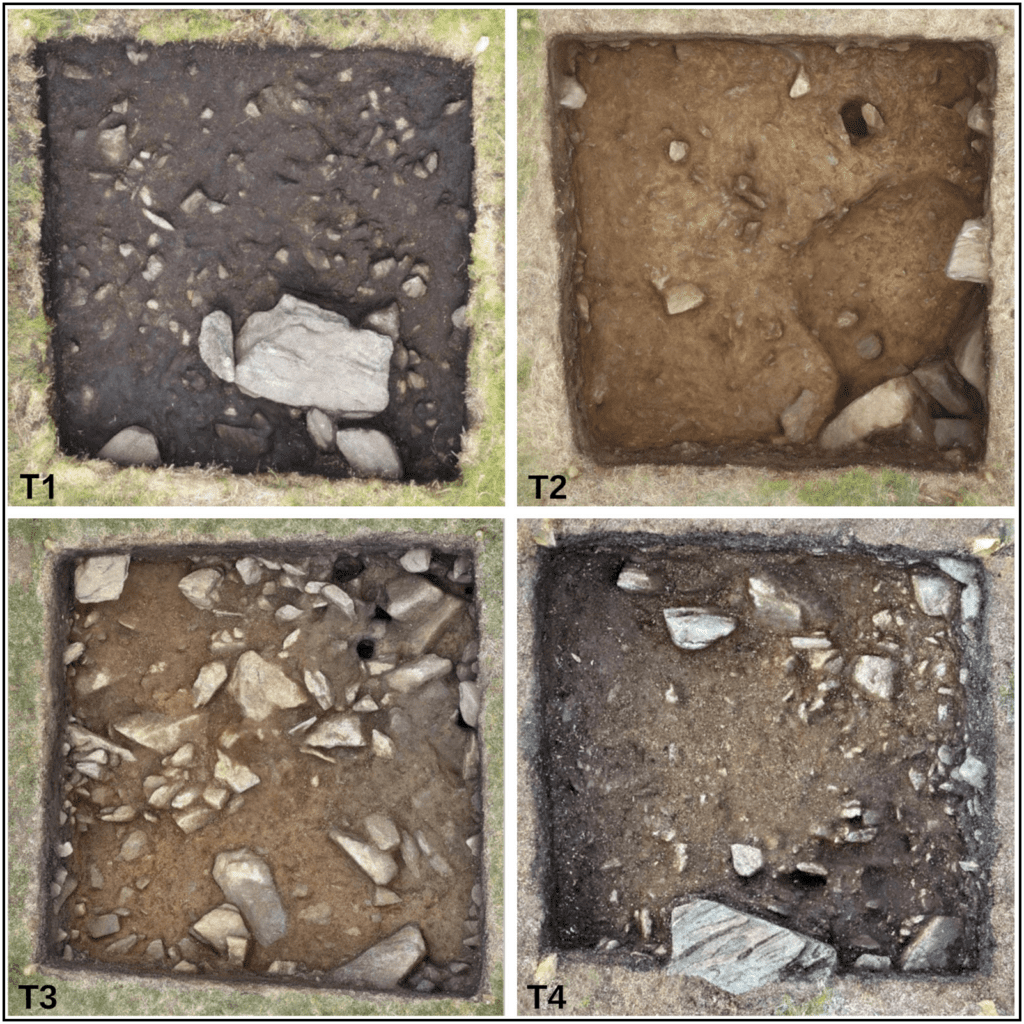
Radiocarbon dating from targeted excavations places the main occupation between approximately 1200 and 400 BCE, centuries before any known Viking presence on the island.
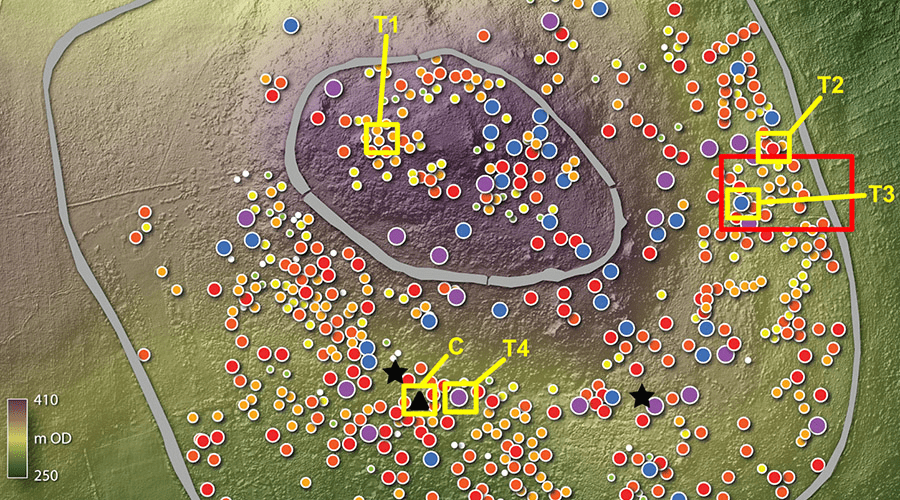
Dirk Brandherm et al., Brusselstown Ring: a nucleated settlement agglomeration in prehistoric Ireland, Antiquity (Cambridge University Press), 2025.
Beyond villages: early large-scale community life
Prehistoric Ireland has traditionally been understood as a landscape of scattered farmsteads and small rural groups. The evidence from Brusselstown Ring paints a very different picture—one of large populations living together in closely spaced households, within a clearly organized and defended space.
Importantly, the settlement shows little sign of strong social hierarchy. While house sizes vary slightly, researchers found no clear markers of elite residences or centralized authority structures. This suggests a form of large-scale community living that may have been relatively egalitarian, rather than dominated by powerful elites.
An unusual feature: water management at the hilltop
Among the most striking discoveries is a stone-lined feature interpreted as a water cistern—an extremely rare element in Irish hillfort archaeology. Its presence implies careful planning and long-term occupation, as managing water resources would have been essential for sustaining such a large population on elevated terrain.
This feature alone raises new questions about the technological knowledge and environmental adaptation strategies of Late Bronze Age communities in northwest Europe.
Rethinking “urban” life before the Vikings
The findings do not suggest a city in the classical sense, but they do point to a proto-urban form of settlement—a densely inhabited center functioning as a social, economic, and possibly ritual hub.
Until now, early urbanization in Ireland has largely been associated with Viking towns such as Dublin or Waterford. Brusselstown Ring demonstrates that complex, large-scale settlement organization existed many centuries earlier, forcing scholars to reconsider how and when communal living intensified in Atlantic Europe.
A broader European context
The research, published in Antiquity, positions Brusselstown Ring as a key case study for understanding prehistoric population aggregation across Europe. Comparable sites of similar size are rare even on the continent, making this discovery significant well beyond Ireland.
As further analysis continues, the site is expected to reshape discussions around social organization, resilience, and settlement planning in later prehistoric societies.
Cover Image: Aerial view of the Brusselstown Ring hillfort in County Wicklow, Ireland, showing the extent of the prehistoric enclosure and the locations of test trenches (T1–T4). Credit: Dirk Brandherm et al. / Antiquity (Cambridge University Press), 2025.