
Beneath the windswept uplands of southern Scotland, archaeologists have uncovered chilling evidence of a single, sudden catastrophe that struck a Bronze Age community more than 3,300 years ago. Newly published research points to what experts describe as a “mysterious mass burial event”, raising the possibility of famine or another extreme crisis that wiped out multiple people within a very short time.
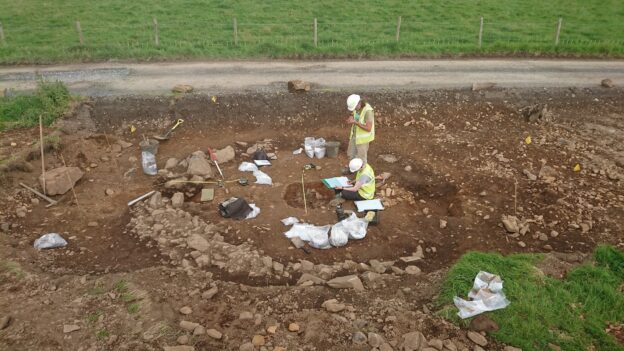
The discovery was made near Sanquhar, in Dumfries and Galloway, during archaeological excavations conducted in 2020 and 2021 by Guard Archaeology. The work was required ahead of construction of the Twentyshilling Wind Farm, now fully operational.
Five urns, one moment in time
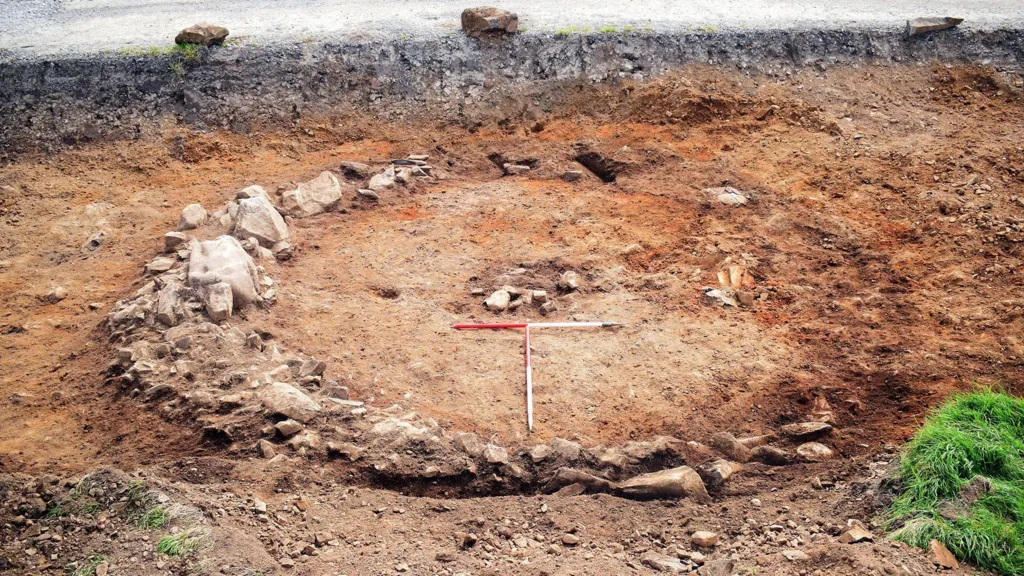
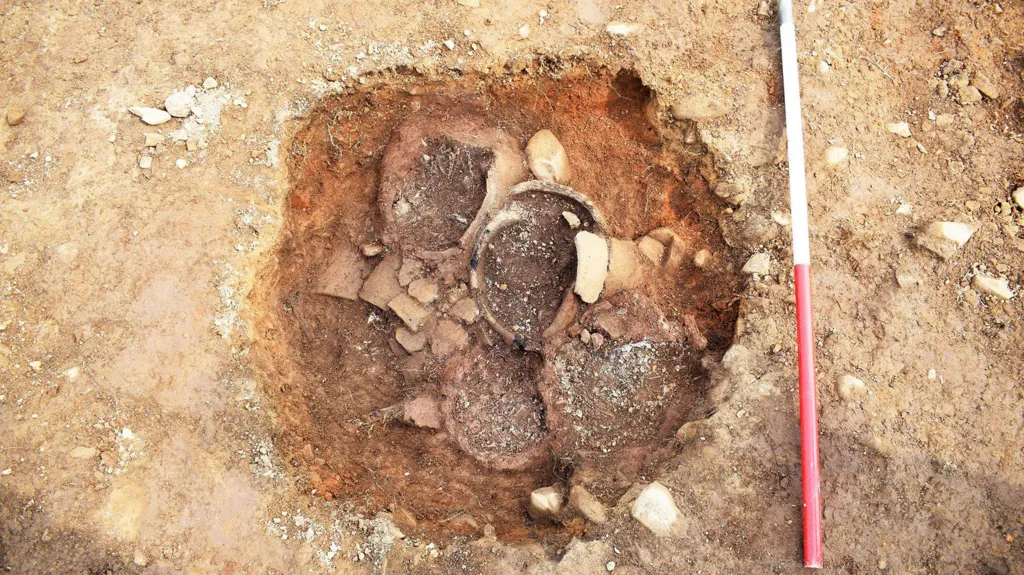
At the center of the site lies a Bronze Age barrow, an earthen burial mound containing five ceramic urns packed tightly together in a single pit. Inside were the cremated remains of at least eight individuals, all dating to a narrow window between 1439 and 1287 BC.
This clustering is not accidental.
According to excavation director Thomas Muir, both the physical arrangement of the urns and the radiocarbon dates indicate that they were deposited simultaneously, not over generations.
“The urns were deposited at the same time, packed tightly within the pit, and all fall within the same 15th to 13th century BC date range,” Muir explained.
That makes Twentyshilling highly unusual when compared with most Bronze Age burial practices in the region.
A burial that broke Bronze Age tradition
What most startled archaeologists was not only the number of individuals, but the speed of the burial process itself.
The bodies were cremated and buried almost immediately.
This sharply contrasts with a well-known Bronze Age tradition in Britain, where bodies were often left exposed for a period before final burial, or where burial monuments were reopened and reused repeatedly.
Muir drew a direct comparison with another site at Broughton in the Scottish Borders, where a burial monument served an entire community over a long span of time.
“That site was reopened several times and reused. It reflects long-term, communal burial traditions,” he said.
“What we have at Twentyshilling is very different.”
“Some sort of horrible event”
The evidence points to a single traumatic episode rather than routine funerary practice.
“Some sort of horrible event must have happened to the community,” Muir said.
“Possibly famine, with a lot of people dying within a very short period.”
The idea of famine is not speculative guesswork.
Other Bronze Age burial sites across southern Scotland show signs of stress, abandonment, and nutritional hardship, suggesting that this period may have been one of exceptional difficulty.
Taken together, the Twentyshilling burials fit a broader regional pattern of crisis.
Earlier lives beneath the tragedy
The site also revealed a much older layer of human activity. A small group of pits north of the barrow contained material dating to the late Neolithic period (2867–2504 BC).
While unrelated to the mass burial, these remains confirm that the landscape had been inhabited and used for millennia—making the sudden Bronze Age collapse even more striking by contrast.
A prehistoric disaster revealed by modern development
The archaeological investigation was carried out as a condition of planning consent for the wind farm, highlighting how renewable energy projects can unexpectedly expose deep human histories.
What emerged at Twentyshilling is not just a burial site, but a frozen moment of collective loss.
Eight people—possibly members of the same family or close-knit group—were cremated and laid to rest together, their deaths marking a rare archaeological trace of sudden catastrophe in prehistoric Britain.
For researchers, the site offers a stark reminder that Bronze Age communities were vulnerable, shaped not only by ritual and tradition, but also by environmental and social shocks capable of devastating entire groups in a single generation.