
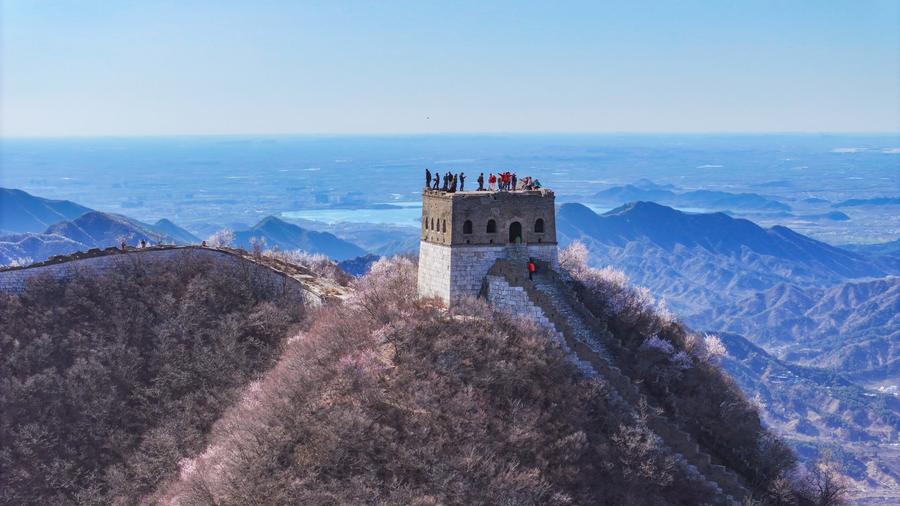
Archaeologists working along the Jiankou section of the Great Wall, just north of Beijing, have announced the discovery of an exceptionally large cannon dating to the late Ming Dynasty—a find that significantly deepens our understanding of how heavy artillery was deployed along China’s imperial frontier.
The announcement followed a year-long excavation campaign focused on three beacon towers and the wall segments connecting them, an area long recognized as one of the most strategically demanding stretches of the Great Wall. Archaeologists recovered a wide range of material, including weapons, architectural components, and objects of daily life, reflecting sustained military presence rather than episodic occupation.
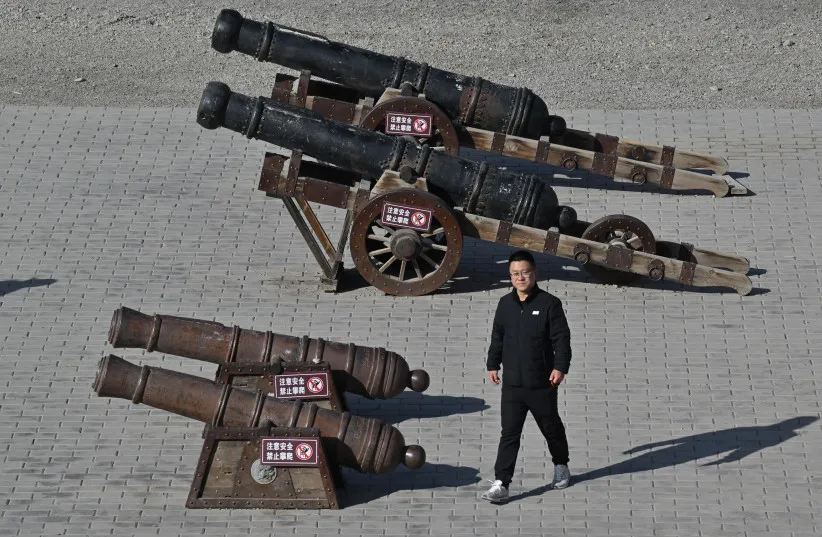
The image shows large cannons from the Ming Dynasty used here as visual reference. The exceptionally heavy cannon recently uncovered at the Jiankou section of the Great Wall has not yet been publicly photographed.
Credit: Getty Images
A record-setting artillery discovery
Among these finds, one object clearly dominates the archaeological record.
The cannon, cast during the late Ming period (1368–1644), measures 89.2 centimeters in length and weighs 112.1 kilograms, making it the largest artillery piece ever documented at the Jiankou section of the Great Wall. Its scale alone sets it apart from previously known examples in this rugged sector.
Even more significant is its condition. The inscriptions on the cannon are remarkably well preserved, providing rare and direct evidence for firearms production, standardization practices, and technological knowledge during the Ming period. Such inscriptions are invaluable for historians tracing military technology exchange and manufacturing systems in early gunpowder warfare.
Artillery and the logic of frontier defense
Jiankou’s steep slopes and narrow passes demanded more than symbolic fortifications. The presence of a cannon of this size suggests a deliberate investment in heavy firepower, likely intended to control movement through critical mountain corridors and to reinforce the signaling and surveillance functions of nearby beacon towers.
Although no official photographs of the newly unearthed cannon have yet been released, its documented dimensions already indicate that this was not a marginal or experimental weapon, but a purpose-built component of Ming frontier defense strategy.
Turquoise finds reveal much older exchange networks
The press briefing also highlighted a second, chronologically distant discovery from the Xingong site, located within Beijing’s modern urban area. Excavations there revealed a rare settlement dated to the Xia and Shang periods, complete with burial grounds, moats, and residential remains.
Most striking among these finds were 28 turquoise artifacts. Scientific analysis shows that the raw material likely originated from mining regions at the junction of today’s Hubei, Henan, and Shaanxi provinces. This evidence points to long-distance material exchange taking place in northern China more than three millennia ago, well before the rise of imperial infrastructure.
From Bronze Age exchange to Ming military power
Viewed together, the Jiankou cannon and the Xingong turquoise assemblage reveal a long continuum of connectivity and organization in the Beijing region—from early interregional exchange networks to the highly engineered military systems of the Ming Dynasty.
The newly identified cannon, in particular, adds a crucial data point to the archaeology of gunpowder warfare, reinforcing the idea that the Great Wall functioned not only as a boundary, but as an active, technologically sophisticated military landscape.
Cover Photo: Visitors walk along the Jiankou section of the Great Wall near Beijing in a drone photograph taken on April 5, 2025.
Credit: Xinhua / Chen Yehua