
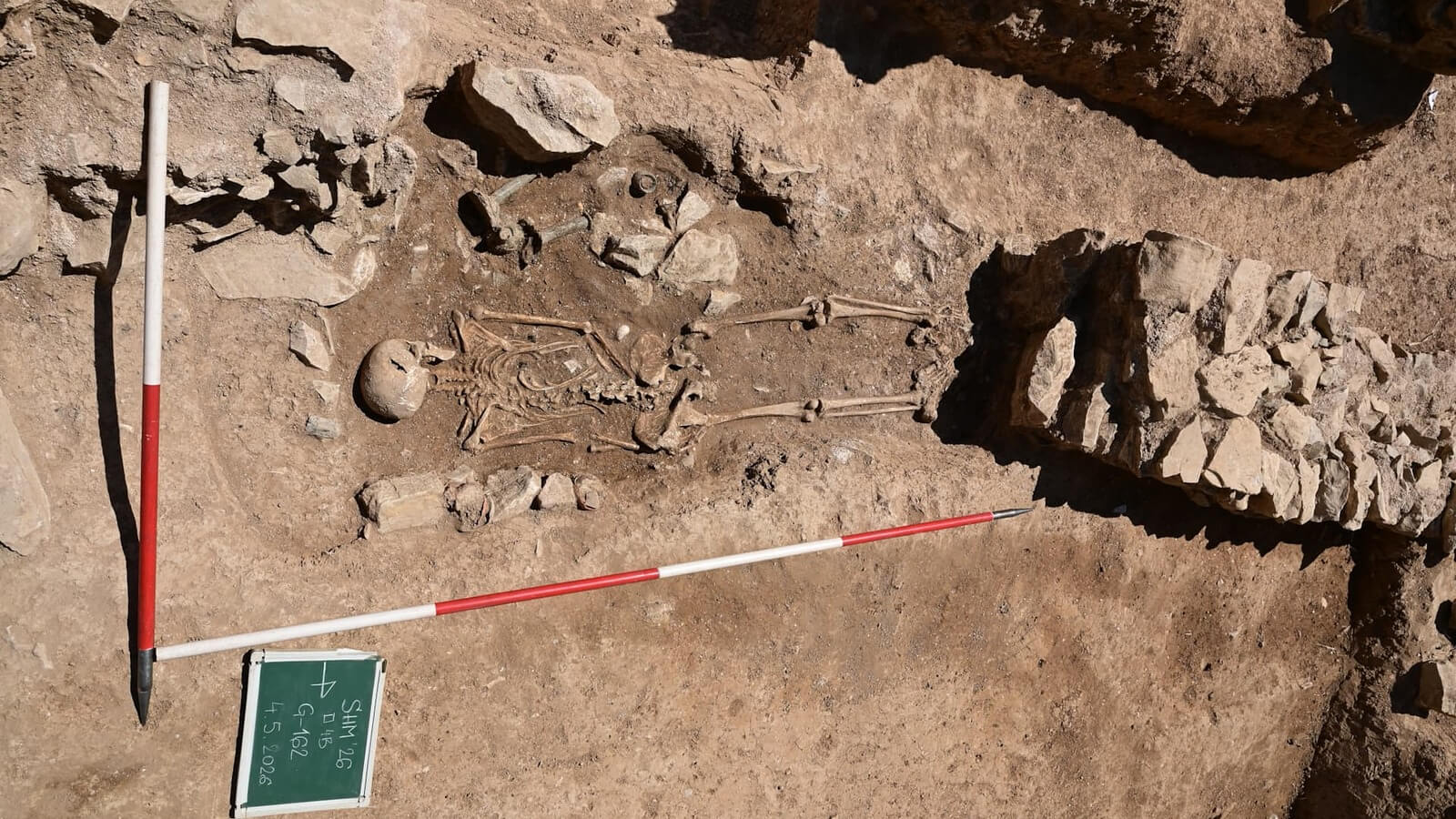
Archaeologists working in the western necropolis of ancient Salona have uncovered a face-down Roman burial in Croatia containing eleven glass and ceramic vessels and two gemstones. The unusual position of the deceased and the number of objects placed in the grave made it one of the most notable burials investigated during the 2026 excavation season.
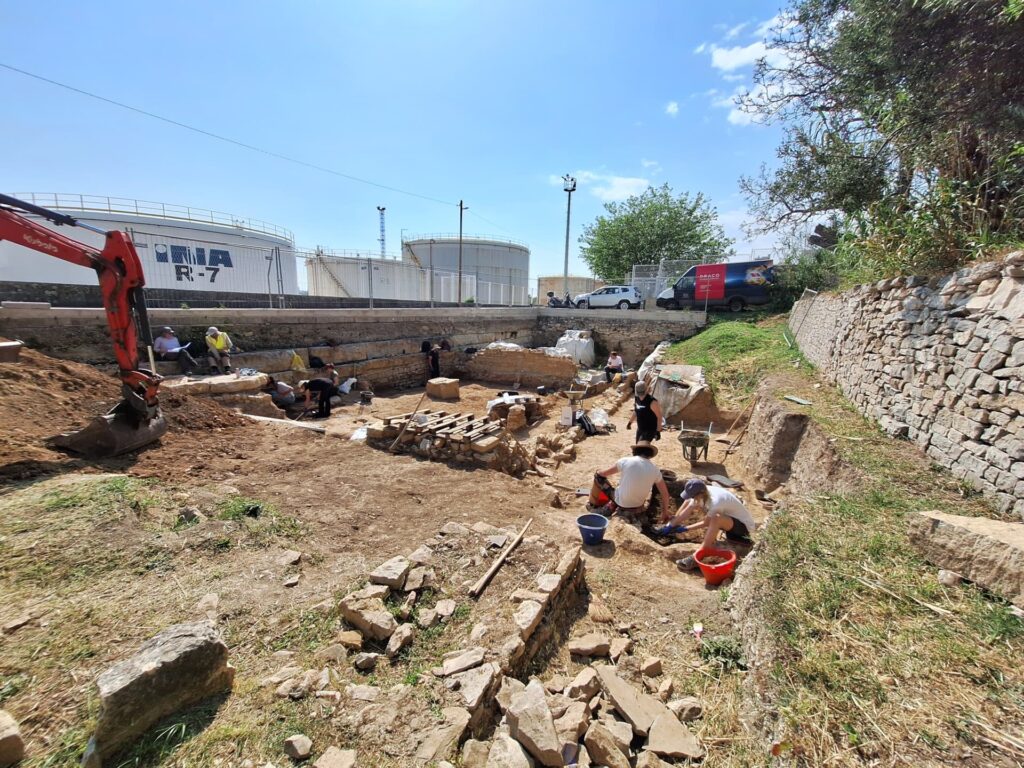
The Archaeological Museum in Split and the Croatian Conservation Institute conducted the fifth season of research at the cemetery known as Hortus Metrodori. The team examined 32 graves this year—16 cremation burials and 16 inhumations—bringing the total number investigated during the project to 152.
Eleven vessels accompanied the deceased
Recorded as Grave 162, the burial stands out for both its collection of grave goods and the position of the body. The deceased had been placed on the stomach rather than in the face-up position more commonly encountered in Roman-period graves.
The burial contained three glass bottles, a small glass vessel, three glass balsamaria and four ceramic vessels. Balsamaria were small containers commonly used in the Roman world to hold perfume, scented oils or ointments. One example from the grave resembles a date fruit.
Archaeologists also recovered two gemstones, known as gems, together with fragments of a bronze object. Gems in the Roman world were frequently mounted in jewellery or rings, although the museum has not yet provided details about the decoration or original use of the two examples found in Grave 162.
The excavation team has not identified the deceased or explained why the body was placed face down. The available evidence therefore does not support linking the burial to punishment, social exclusion or a specific ritual. Bioarchaeological analysis may provide further information about the individual’s age, biological sex and health.
The grave lay over an earlier demolished wall
Grave 162 occupied the site of a wall that had already been demolished when the burial took place. Archaeologists had previously interpreted this structure as the northern boundary of a burial plot, while a long stone construction known as the murazzo marked its southern side.
The presence of first-century graves over the abandoned wall now suggests that the structure may predate the murazzo. The discovery could therefore help researchers reconstruct how Salona’s western necropolis was planned and reorganized as its burial grounds developed.
The murazzo consisted of two parallel walls running alongside the Roman road. It supported the roadway while also marking the boundary of enclosed burial plots. Earlier research dates this monumental arrangement to the opening decades of the first century AD.
Cremation and inhumation existed side by side
Among the 16 inhumations excavated this season, 12 occupied simple grave pits. Some had stone borders or covers made from stone slabs. The team also documented two amphora burials and two masonry tombs.
In 12 of the cremation graves, mourners had deposited the burned remains directly into pits. Three other burials used ceramic urns, while one contained a stone urn. Upright worked stones frequently marked the locations of these graves.
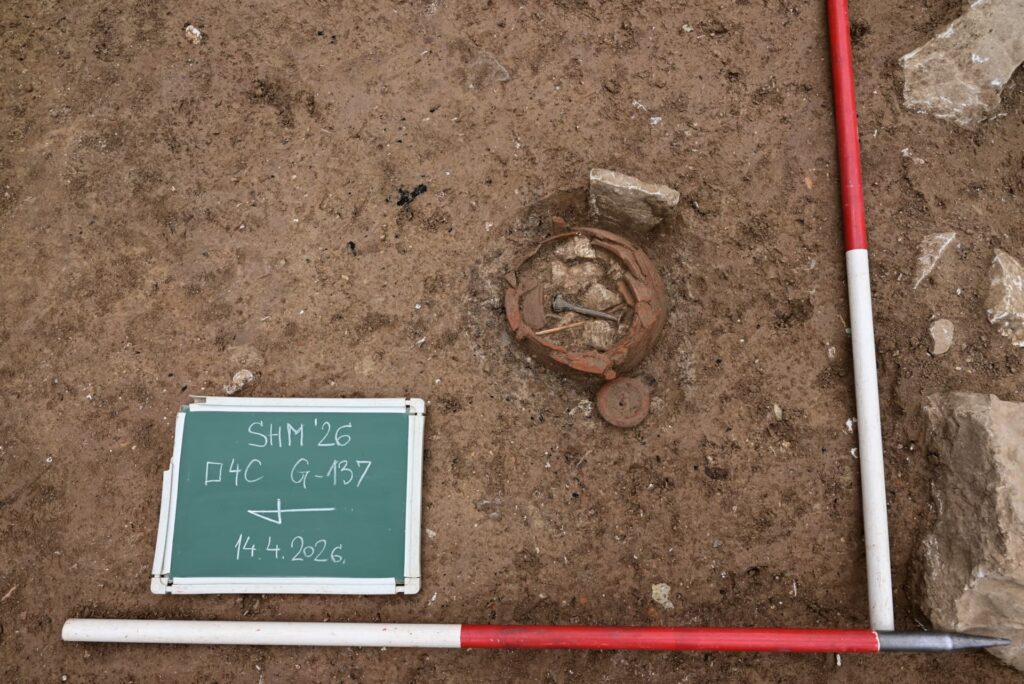
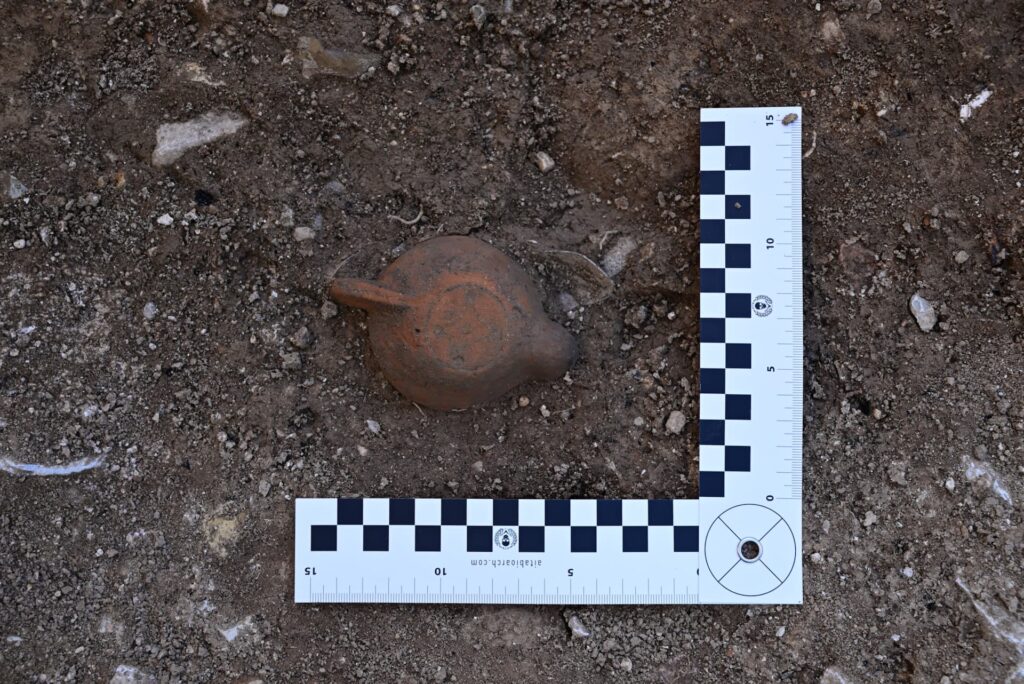
Grave 137 was the most notable cremation burial. It contained a glass balsamarium, a bone pin and a ceramic oil lamp. Together, the graves demonstrate the variety of funerary practices used by Salona’s inhabitants and the different objects selected to accompany the dead.
A cemetery beside the road from Salona
Located in present-day Solin, near Split, Salona became the capital of the Roman province of Dalmatia and one of the most important cities on the eastern Adriatic coast. Its western necropolis developed beside the road leading toward Tragurium, modern Trogir.
Roman customs and laws generally restricted burial within inhabited urban areas, encouraging cemeteries to grow along roads outside city boundaries. At Salona, enclosed family burial plots known as horti lined both sides of the western road. A principal funerary monument probably stood at the center of each plot, surrounded by the graves of relatives.
The name Hortus Metrodori comes from a funerary inscription discovered in the area containing the words in horto Metrodori, meaning “in the garden of Metrodorus.” The western necropolis remained in use from the first century until the beginning of the fourth century AD.
The grave goods offer a tangible connection to the individual buried at Salona, but the most striking question remains unanswered. Further analysis will be needed to determine whether the face-down position reflected a deliberate funerary practice or circumstances unique to this burial.
Cover Image: Grave 162 at the western necropolis of ancient Salona, where the deceased was buried face down with numerous glass and ceramic vessels. Credit: Archaeological Museum in Split