In a groundbreaking study, scientists have uncovered evidence that could overturn our understanding of where spiders—and their arachnid relatives—originated. A 500-million-year-old fossil from the Cambrian period reveals that the ancestors of today’s spiders may have first evolved in the oceans, not on land.
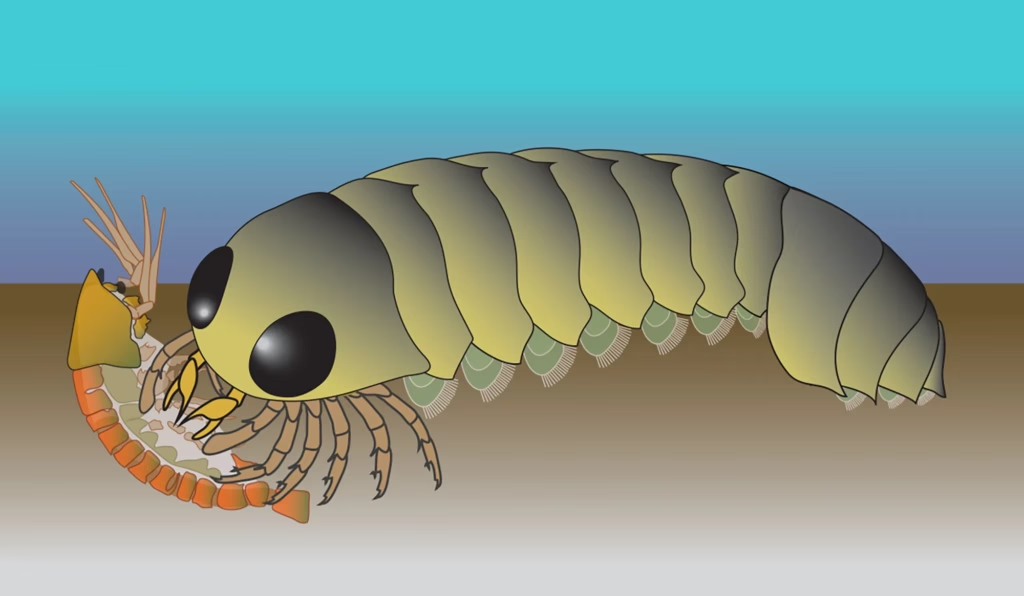
Arachnids, a group that includes spiders, scorpions, and ticks, are often celebrated as masters of terrestrial life. Yet new research, published in Current Biology, shows that their evolutionary roots may lie beneath ancient seas. The surprising conclusion comes from an exceptionally well-preserved fossil of Mollisonia symmetrica, a marine arthropod whose brain bears an unmistakable resemblance to that of modern arachnids.
A Brain from the Dawn of Animal Complexity
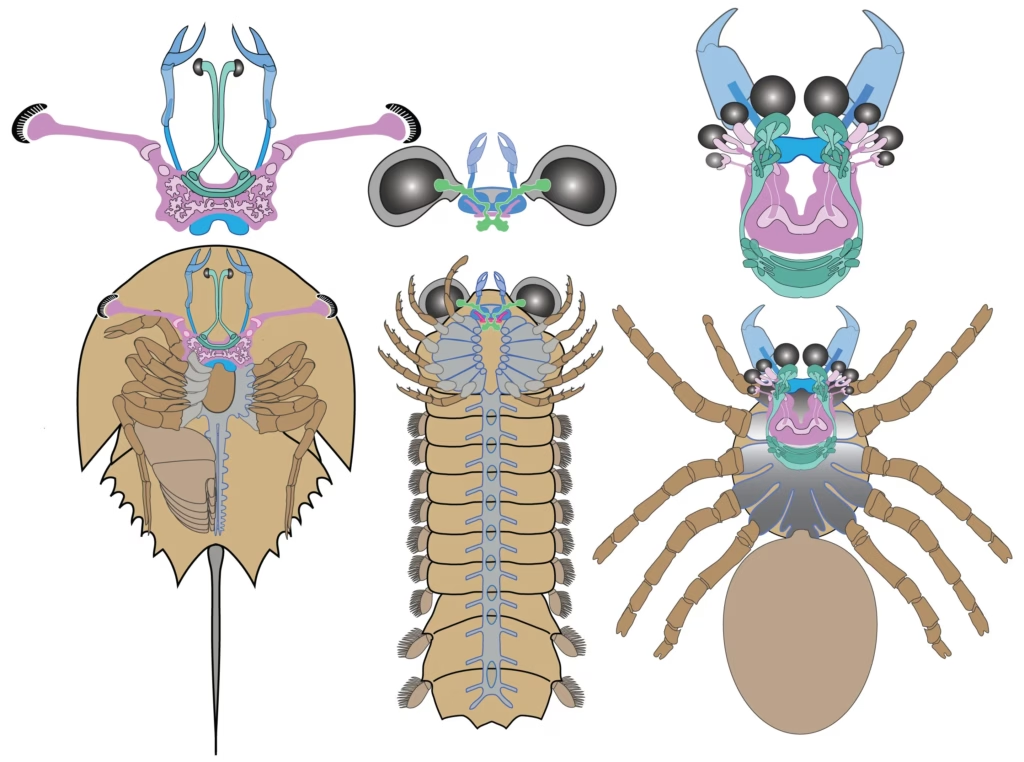
The research team, led by Nicholas J. Strausfeld of the University of Arizona, used advanced imaging techniques to examine the fossilized neural tissues of M. symmetrica. What they found was startling: the brain’s structure was not similar to that of horseshoe crabs—the long-assumed ancestors of arachnids—but instead matched the unique neural layout of modern spiders and scorpions.
A hallmark of arachnid neuroanatomy is a “backward-folded” brain, in which the deutocerebrum—the part controlling the mouthparts called chelicerae—is positioned at the front, ahead of the protocerebrum and prosocerebrum. This reversal is unlike the linear brain arrangement seen in other arthropods. It provides a direct and efficient connection between sensory centers and motor circuits, potentially enhancing speed, precision, and predatory skill.
Remarkably, this same brain layout appears in M. symmetrica, suggesting that this sophisticated neural arrangement evolved far earlier than previously thought—over half a billion years ago.
Marine Hunters with Advanced Brains
The fossil, housed at Harvard University’s Museum of Comparative Zoology, shows that M. symmetrica had a prosoma (head and thorax) equipped with six pairs of limbs, including robust chelicerae for seizing prey. Phylogenetic analysis places it as an “upper stem arachnid”—a close relative of the earliest true arachnids—living in a marine environment during the mid-Cambrian period.
This finding has sweeping implications. If arachnids began their evolutionary journey in the ocean, their migration to land may have occurred much earlier than current models suggest. This shift could have had profound effects on other animal groups. For example, the appearance of agile, visually adept arachnid predators may have pressured early insects to develop flight as a means of escape.
Why the Arachnid Brain is Special
Modern spiders are celebrated for their hunting skills, whether spinning intricate webs or ambushing prey with lightning speed. The unique backward-folded brain may be the secret to this success.
By reversing the order of brain regions, arachnids may have gained more direct neural pathways between sensory input and motor output. This architecture enables rapid processing and reaction times—a critical advantage for predators relying on stealth and split-second attacks.
The discovery that M. symmetrica already possessed this brain design suggests it was a key innovation that shaped the evolutionary dominance of arachnids.
Rewriting the Arachnid Family Tree
Previous studies placed Mollisonia and related Cambrian arthropods as early stem chelicerates, closer to horseshoe crabs than to spiders. However, Strausfeld’s team compiled a detailed dataset of 115 anatomical traits, with a focus on neural structures, and used multiple phylogenetic methods to test evolutionary relationships.
All analyses consistently positioned M. symmetrica at the base of Arachnida, closely related to modern sea spiders and horseshoe crabs but already showing the defining brain traits of true arachnids. This challenges the long-held idea that arachnids originated solely from land-dwelling ancestors.
A Window into the Distant Past
The preservation of soft nervous tissue in fossils is extraordinarily rare. Cambrian “Burgess Shale-type” deposits provide one of the few windows into the brains of early animals, allowing researchers to trace the origins of complex neural systems.
According to Strausfeld, “The unique organization of the arachnid brain has remained essentially unchanged for half a billion years. This tells us that once this design appeared, it was so effective that it needed no major rewiring.”
Implications for Evolutionary Biology
The study not only challenges the terrestrial origin theory of arachnids but also raises new questions about the broader evolutionary history of arthropods. Did arachnids make multiple transitions from sea to land, or was there a single, ancient terrestrialization event? How did these neural adaptations influence ecological interactions during the Cambrian explosion, when animal life diversified at an unprecedented pace?
With every new fossil discovery, the evolutionary picture grows more complex—and more fascinating. For now, Mollisonia symmetrica stands as a remarkable reminder that the roots of our planet’s most successful land predators may reach deep into ancient seas.
Strausfeld, N. J., Abdrewet, D.R., Hirth, F. (2025). Cambrian origin of the arachnid brain. Current Biology, 35(15), 3777–3785.e2.
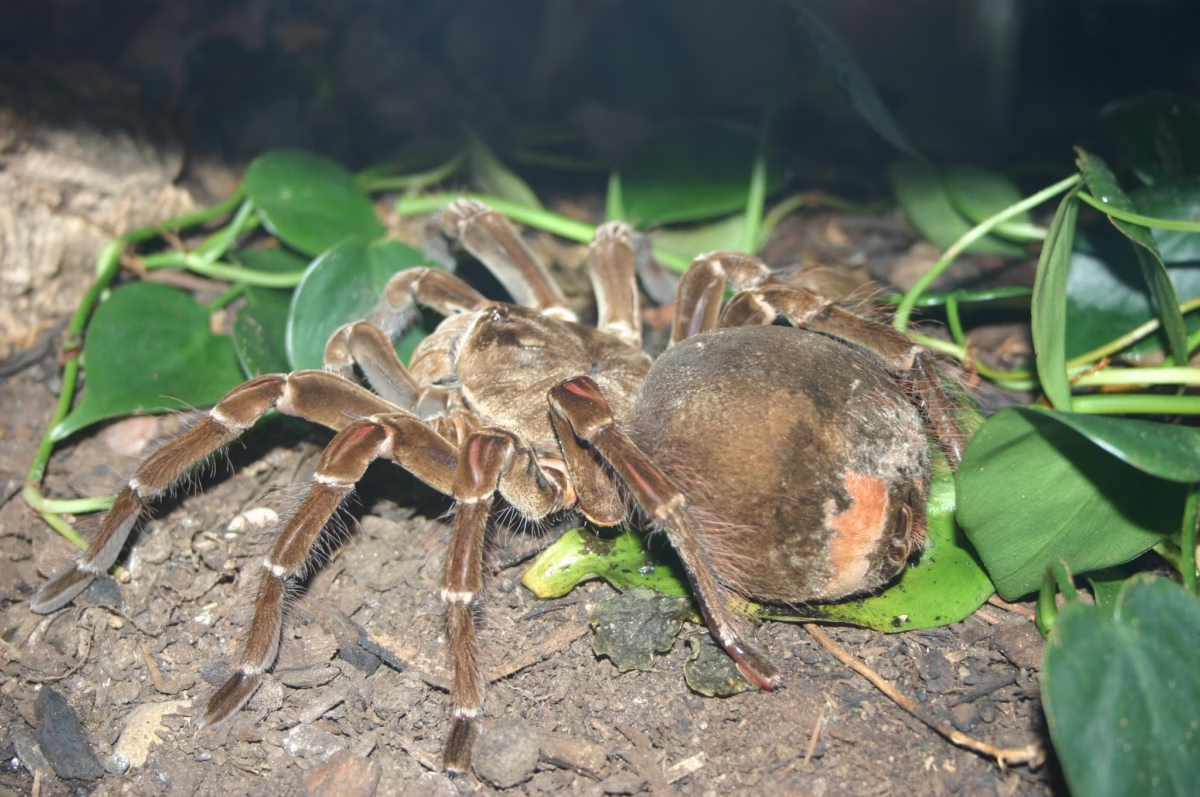
Cover Image Credit: The Goliath Bird-Eater, the World’s Largest Spider. Public Domain