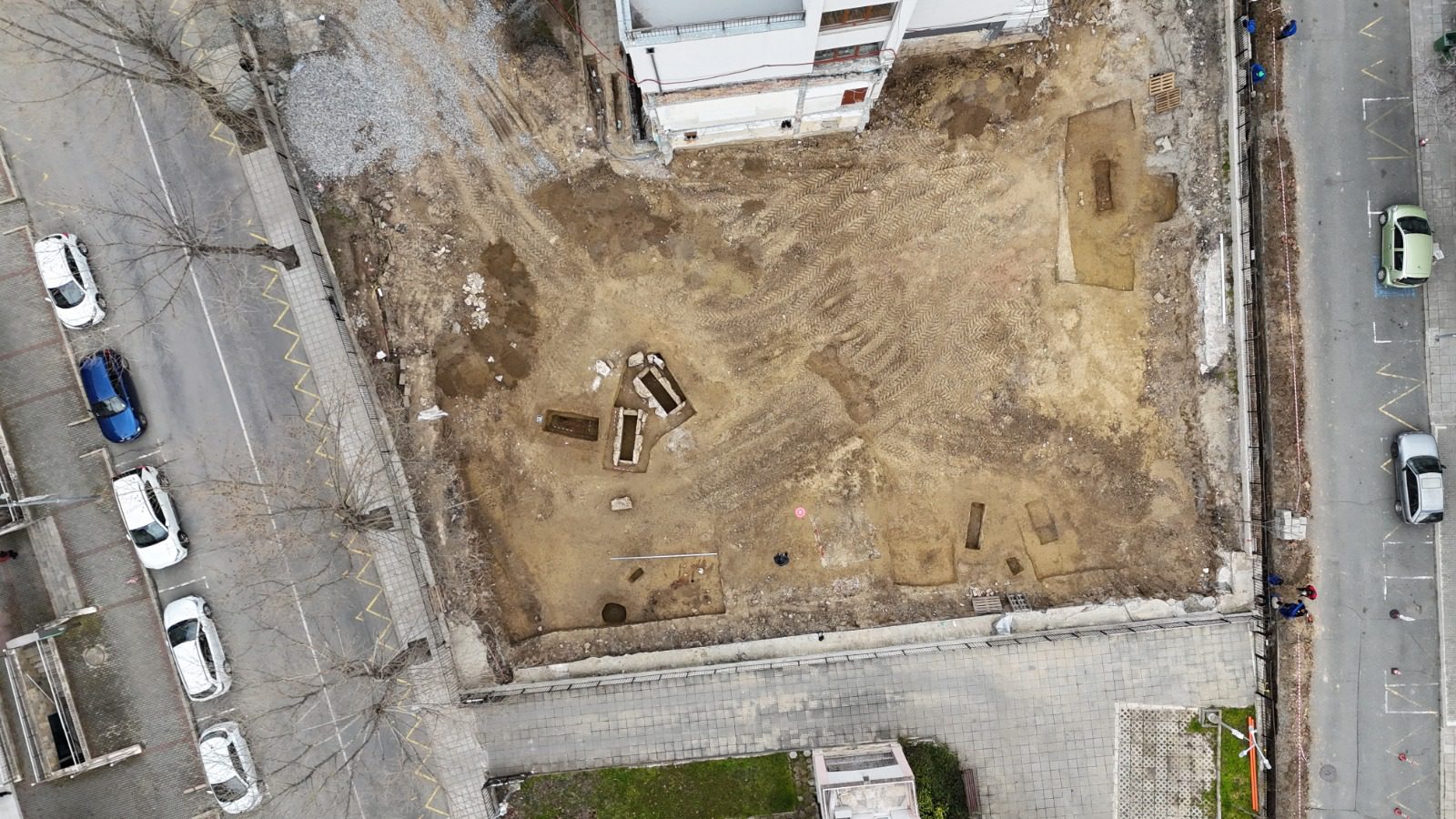
A stretch of Bulgaria’s Black Sea coast has quietly revealed a remarkable chapter of ancient life—and death. Archaeologists working in Nessebar have uncovered a group of Hellenistic tombs dating to the 3rd–2nd centuries B.C., including an unusual stepped burial pit containing a finely crafted gilded bronze wreath.
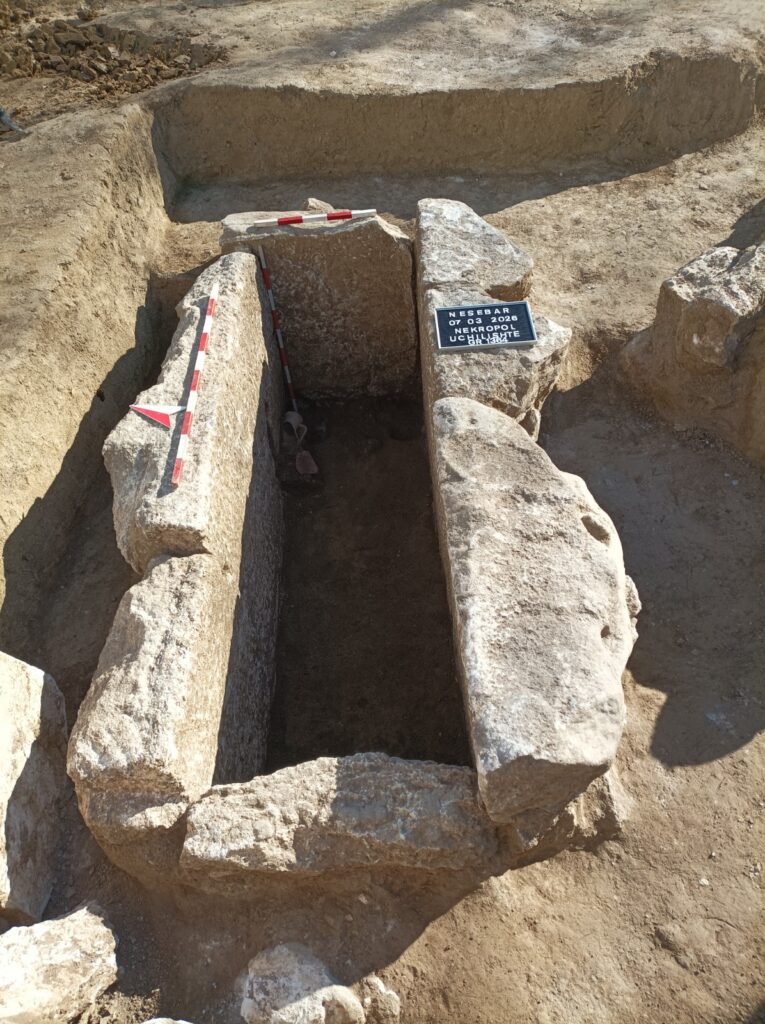
The discovery was made within the necropolis of ancient Mesambria, a Greek colony that once stood as one of the most active trade centers along the western Black Sea. While burial grounds in the region are not uncommon, the structure uncovered here introduces a rare and carefully arranged funerary context that stands apart from typical graves of the period.
A Rare Burial Structure Emerges
At the center of the excavation lies a stepped pit, a feature rarely documented in Mesambria’s archaeological record. Its construction suggests deliberate planning rather than a standard interment, raising questions about the identity and status of the individual buried within.
Inside the pit, archaeologists uncovered a gilded bronze wreath, an object that immediately signals prestige. Such wreaths, often designed to imitate laurel or olive leaves, were closely associated with honor, victory, and symbolic immortality in the Greek world. Its presence strongly suggests that the burial belonged to someone of elevated social standing.
Near the wreath, a small silver coin was also found. This was likely placed as Charon’s obol, the traditional payment believed to ensure safe passage for the soul into the underworld. The inclusion of this coin reflects a belief system deeply embedded in Greek funerary practices.
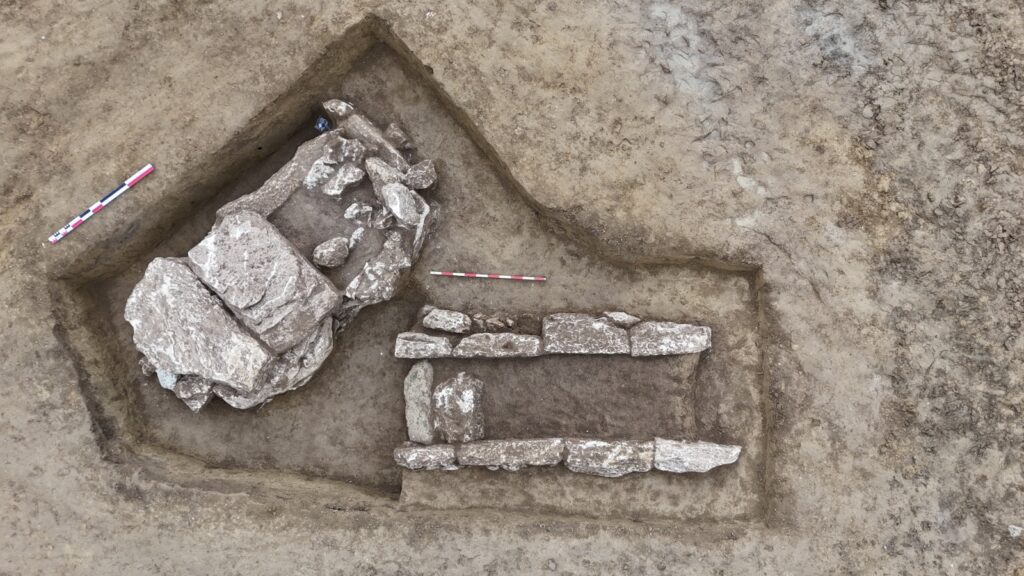
The burial assemblage continues to offer insight into daily life as well as ritual behavior. A ceramic jug, possibly used for libations, was recovered alongside a strigil, a curved metal tool used in bathing and athletic routines. The presence of such an object hints at the cultural importance of physical care and identity, even beyond death.
Perhaps most intriguing is the discovery of small animal bones interpreted as game pieces. Whether these objects carried symbolic meaning or reflected aspects of leisure in the deceased’s life remains uncertain, but their inclusion adds an unexpectedly human dimension to the burial.
A Necropolis Reflecting a Prosperous City
Additional finds across the necropolis reinforce the impression of a well-developed and culturally active community. Archaeologists recovered silver and bronze coins, decorated drinking vessels, glass beads, and a range of ceramic containers. Some of these small vessels are often associated with oils or perfumes, although their exact function continues to be debated among scholars.
Together, these objects point to a society that placed strong emphasis on both ritual and everyday identity. The combination of personal items and symbolic offerings suggests that burial practices in Mesambria were not merely functional, but deeply expressive.
Mesambria’s Role in the Ancient Greek World
The significance of the discovery becomes clearer when placed within the broader history of Mesambria. Founded in the 6th century B.C., the city grew into a major commercial hub connecting the Greek world with inland regions of Thrace. Its strategic position allowed it to thrive economically, and over time it became part of wider political networks, including alliances linked to Athens.
During the Hellenistic period, Mesambria reached a peak of prosperity. The city minted its own coins, including gold issues, and developed an urban landscape marked by monumental architecture. Public spaces such as temples, marketplaces, and fortified zones reflected both wealth and cultural ambition.
The necropolis uncovered in Nessebar belongs to this flourishing phase, offering a more intimate perspective on how the inhabitants of the city understood death, memory, and status.
Conservation and Future Exhibition
All recovered artifacts have been transferred to the Archaeological Museum of Nesebar, where conservation work is now underway. Specialists are carefully stabilizing the materials, particularly metal objects and fragile ceramics affected by long-term burial conditions.
Some of the damaged pieces will undergo restoration in preparation for a future exhibition dedicated to the necropolis discoveries. This planned display is expected to provide a more comprehensive understanding of the site and its broader historical context.
A Burial That Raises New Questions
What sets this discovery apart is not only the quality of the artifacts, but the deliberate way in which they were arranged. The stepped pit, combined with objects that reflect both ritual belief and everyday life, suggests a burial that was carefully constructed to convey meaning.
The gilded wreath stands as the most visible symbol of status, yet it is the combination of elements—the coin, the strigil, the game pieces—that creates a fuller picture. Together, they point to an individual whose identity was preserved not just through wealth, but through a layered expression of culture and belief.
Cover Image Credit: Nessebar Municipality