For a civilisation that ruled much of Anatolia more than three millennia ago, the Hittites were far less indifferent to dirt than modern stereotypes might suggest. New research shows that cleanliness in Hittite society was not accidental, symbolic, or secondary—but carefully structured, widely practiced, and socially meaningful.
A recent study published in Anatolian Studies, authored by Ana Arroyo of the Complutense University of Madrid, brings together cuneiform texts and archaeological data to reconstruct how hygiene functioned in Late Bronze Age AnatoliaThe picture that emerges challenges long-held assumptions about everyday life in ancient societies.
Cleanliness as a Social and Religious Requirement

According to the study, the Hittites did not treat hygiene as a single, universal concept. Cleanliness operated at several levels at once—physical, social, and religious. Washing was not only about removing visible dirt; it was about becoming fit to interact with others, with authority, and with the divine.
Cuneiform texts repeatedly describe acts of washing, rinsing, and bathing, using water as the primary cleansing agent. In some contexts, water itself was described as inherently “clean,” capable of restoring order after contamination. This applied both to daily life and to moments of ritual preparation.
Unlike modern hygiene, which is closely linked to disease prevention, Hittite cleanliness focused on maintaining an acceptable state—free from dirt, disorder, and impurity—within a tightly regulated social world.
Soap Before Soap: Ash, Natron, and Plant-Based Cleansers
One of the most striking conclusions of the research concerns cleaning agents. The Hittites did not rely on water alone. Textual evidence documents the use of substances such as natron, ash, and plant-based materials comparable to soapwort—ingredients known to improve water’s ability to remove grease and dirt.
These mixtures were used to wash clothing, household items, ritual objects, and even people. Some ritual texts describe dirty linen being transformed into bright white fabric after washing—language that points not merely to symbolism, but to effective, practical cleaning.
The terminology used in these texts suggests familiarity with the material results of washing, not just the ritual act itself.
Archaeological Evidence of Bathrooms and Bathtubs
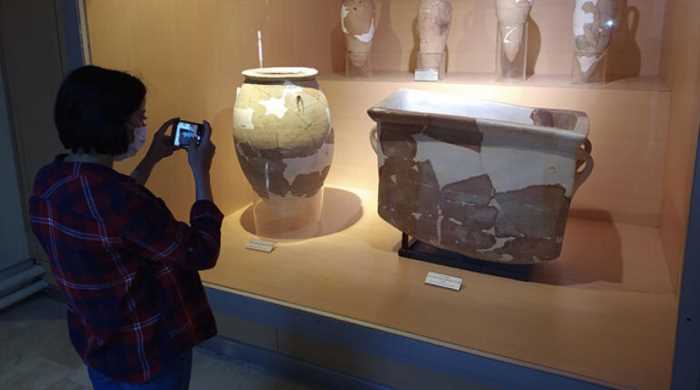
Excavations across central and southern Anatolia reinforce the written sources. Ceramic bathtubs have been uncovered at major Hittite sites, including Hattusa, Sarissa, Oymaağaç, and Tarsus.
These tubs were not crude or improvised. Many were carefully shaped, large enough for seated bathing, and placed in rooms with waterproof floors and drainage systems. Some featured handles for emptying water and traces of surface treatment, indicating repeated use.
Nearby vessels—likely used for pouring water or storing oils—strengthen the interpretation of these spaces as dedicated washrooms. In some settlements, researchers suggest that bathtubs may have been present in most houses, a remarkable claim for a Late Bronze Age society.
Hygiene and Hierarchy
Cleanliness was not evenly distributed across society. Social rank mattered. Elite and royal contexts featured washbasins made from copper, bronze, and even silver—heavy, functional objects intended for daily use, not ceremonial display.
Texts from palace environments reveal an intense sensitivity to contamination. In one account, a Hittite king reportedly became furious after discovering a single hair in his wash water, ordering stricter filtering measures. The episode highlights how cleanliness was tied directly to royal dignity, authority, and control.
To be unclean was not merely uncomfortable; it could be socially destabilising.
Washing Before the Gods
Religious life imposed the strictest hygiene requirements. Priests, temple workers, and even those preparing food offerings for the gods were expected to bathe, groom themselves, trim hair and nails, and wear freshly cleaned garments.
Before rituals, kings and queens followed prescribed sequences of washing and drying their hands with cloths. These actions were mandatory. Physical uncleanliness could disqualify a person from approaching the divine.
At the same time, the study draws an important distinction: being clean did not always mean being ritually pure. Cleanliness was a prerequisite, but certain actions or exposures still required additional ritual procedures to restore full purity.
Rethinking Ancient Hygiene
Taken together, the evidence points to a society with a sophisticated understanding of hygiene—one that blended practical cleaning methods with symbolic meaning. The Hittites filtered water, used detergent-like substances, constructed bathrooms, and enforced strict cleanliness rules.
Rather than viewing ancient hygiene as primitive or purely ritualistic, this research invites a reassessment. The Hittites cared deeply about cleanliness, and they organised their homes, rituals, and hierarchies around it.
As this study makes clear, ancient Anatolia was not only a land of treaties, gods, and kings—but also of baths, cleansers, and a surprisingly modern concern for staying clean.
Arroyo A. Hittite cultural conventions on hygiene. Anatolian Studies. 2025;75:29-45. doi:10.1017/S0066154625000055
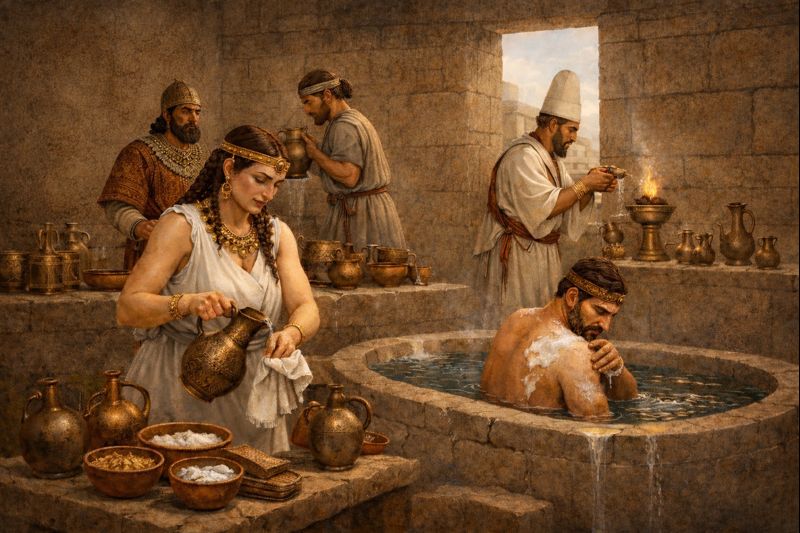
Cover Image: This visual is a digital reconstruction created using artificial intelligence to support the article. It is an interpretative illustration inspired by archaeological and textual evidence from Hittite Anatolia and does not represent a specific historical scene or excavation context.