
For more than a century, archaeology taught a simple rule: pottery belonged to farmers. Clay vessels were seen as a technological by-product of agriculture, sedentary life, and the rise of early civilizations.
That rule is now collapsing — not because the evidence is new, but because archaeology is finally catching up to it. Long before crops were planted or villages were built, hunter-gatherers in East Asia were already firing clay to make vessels.
Recent research emerging from the Far East, particularly Japan, is forcing a fundamental reassessment of how and why one of humanity’s most transformative technologies first appeared. Pottery, it turns out, did not begin with farming at all.
Pottery Beyond Agriculture
Pottery has long been treated as a practical innovation tied to food storage, surplus, and settled life. In European archaeological traditions especially, ceramic technology was believed to have been invented by early agricultural communities in the Middle East and then spread westward, reinforcing the trajectory toward civilization.
This narrative shaped not only academic models, but also broader assumptions about technological progress: agriculture first, pottery second.
“Pottery is not merely a household object,” explains Fujiyama Ryuzo of Meiji University.
“It is a witness to how humans experimented, adapted, and responded to their environments long before farming existed.”
A Technology Older Than Farming
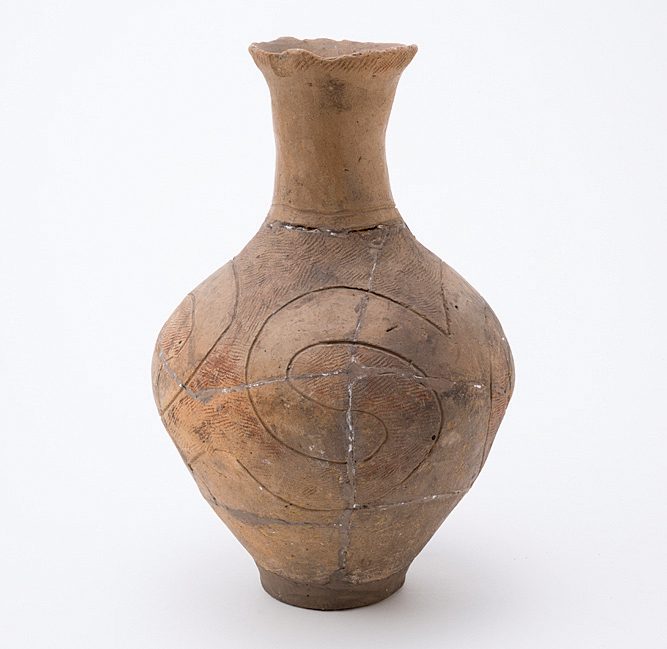
Over the past 25 years, archaeological discoveries across Japan, southern China, and the Russian Far East have revealed ceramic vessels dating back more than 16,000 years — well before the widespread adoption of agriculture.
These early pots were produced by mobile hunter-gatherer societies, not sedentary farmers. Without potter’s wheels, they shaped vessels by stacking coils of clay, carefully controlling firing conditions such as temperature and oxygen levels. Variations in clay composition, temper materials, and surface treatment demonstrate a sophisticated understanding of materials rather than crude experimentation.
In other words, pottery was independently invented as a hunter-gatherer technology, unrelated to farming, and only later incorporated into agricultural lifeways.
Why Archaeology Took So Long to Notice
What changed was not the past itself, but the circulation of knowledge. For much of the 20th century, archaeological data from East Asia, Siberia, and large parts of China remained poorly integrated into Western scholarship. Cold War divisions, language barriers, and limited academic exchange meant that discoveries challenging European models were often sidelined.
Only in recent decades has global archaeology begun to catch up with findings long known — but rarely acknowledged — in the Far East.
In Japan, doubts about the “pottery equals agriculture” model were raised as early as the 1950s. Excavations at the Natsushima Shell Midden near modern Tokyo revealed ceramic assemblages that would later be recognized as among the oldest in the world. Japanese scholars proposed, decades ahead of international consensus, that pottery had emerged independently among hunter-gatherers.
At the time, these conclusions were largely overlooked.
Pottery as a Measure of Time
Beyond its cultural significance, pottery holds a unique position in archaeology as a tool for measuring time. Changes in vessel form, manufacturing techniques, decorative styles, and firing methods reflect period-specific trends.
By analyzing these features, archaeologists can often date a pottery fragment only a few centimeters wide to within about a century. Few other artifact types allow for such chronological precision.
This makes early pottery not only evidence of technological innovation, but also one of the most reliable instruments for reconstructing long-term human behavior.
Japan as a Global Archaeological Laboratory
Japan’s archaeological record gives this reassessment exceptional depth. The archipelago contains approximately 470,000 documented archaeological sites, with nearly 8,000 excavations conducted annually — an extraordinary density for a relatively small landmass.
Pottery dating back 12,000 to 16,000 years appears across dramatically different environments, from subarctic Hokkaido to subtropical Okinawa. This environmental diversity allows researchers to trace how pottery-making spread and adapted among hunter-gatherers under varying ecological conditions.
“Japan functions like a high-precision laboratory for studying human innovation,” Fujiyama notes.
“It allows us to observe multiple technological pathways within a confined geographic space.”
Rethinking the Path to Civilization
The implications extend far beyond ceramics. If pottery — one of humanity’s foundational technologies — did not originate with farming, then civilization itself did not follow a single universal path.
Instead, different societies developed complex technologies in response to local needs, knowledge systems, and environments. The Far East was not a peripheral recipient of innovation, but an independent center of technological creativity.
Pottery did not wait for agriculture to appear.
Archaeology, however, took much longer to recognize it.
Cover Image: Nozawa-type pottery jar with a stylized human face ornament, dating to the Middle Yayoi period. Discovered at the Nozawa site in Tochigi Prefecture, Japan. Height: 18 cm.
Photo credit / Source:
Courtesy of The University Museum, The University of Tokyo (UMUT Openlab Digital Library)
This article is based on research by Prof. Ryuzo Fujiyama of Meiji University. The full academic paper can be Prof. Ryuzo Fujiyama of Meiji University