
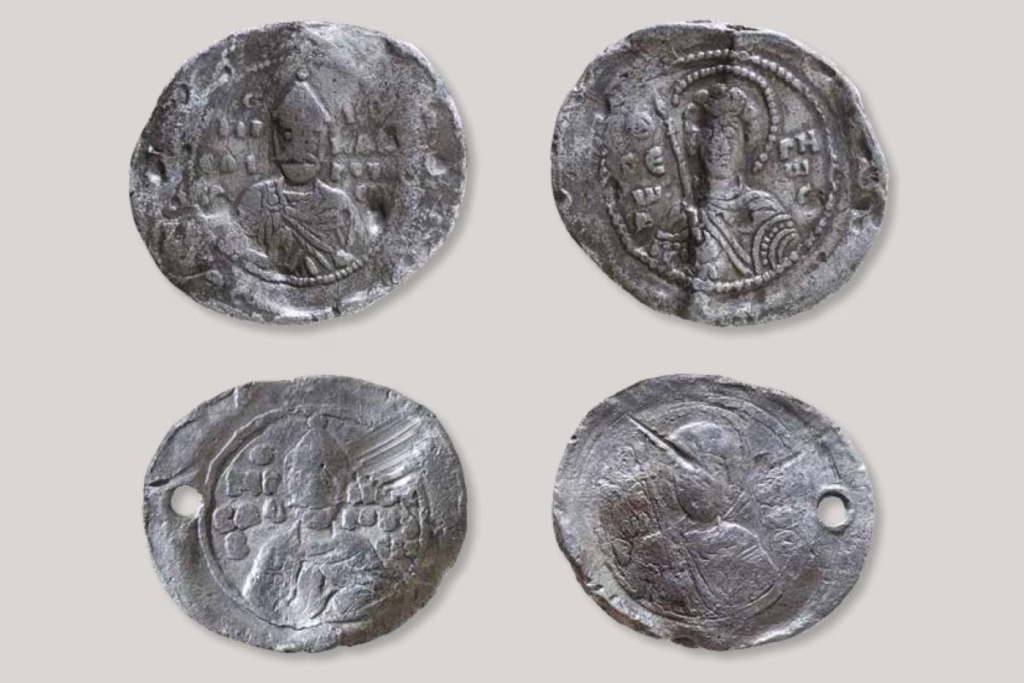
Archaeologists in Veliky Novgorod have unearthed a rare lead seal dating back more than a millennium, bearing the image of Saint George with a spear. The discovery, linked to the reign of Grand Prince Yaroslav the Wise (978–1054), sheds new light on the political and religious symbolism of early medieval Rus.
The seal, found during rescue excavations at Yaroslav’s Court (Yaroslavovo Dvorishche), depicts Saint George on one side and Yaroslav’s dynastic emblem, a trident with a small circle at its tip, on the other. Around the trident are traces of a partially preserved Greek inscription, emphasizing the Byzantine influence on early Rus authority.
First Seal from Yaroslav’s Novgorod Rule
This is the first known seal from Yaroslav’s Novgorod period (1010–1019). Until now, only one other example connected to the prince had been discovered in Novgorod, at the Troitsky excavation in 1994. That seal carried a portrait of Yaroslav himself alongside Saint George.
According to Dr. Petr Gaydukov, deputy director of the Institute of Archaeology of the Russian Academy of Sciences:
“This seal is among the earliest written symbols of Rus authority. It offers direct evidence of Yaroslav’s administrative activity in Novgorod and provides invaluable context for the city’s 11th-century history, which is poorly reflected in chronicles.”
Parallels with Rare Silver Coins
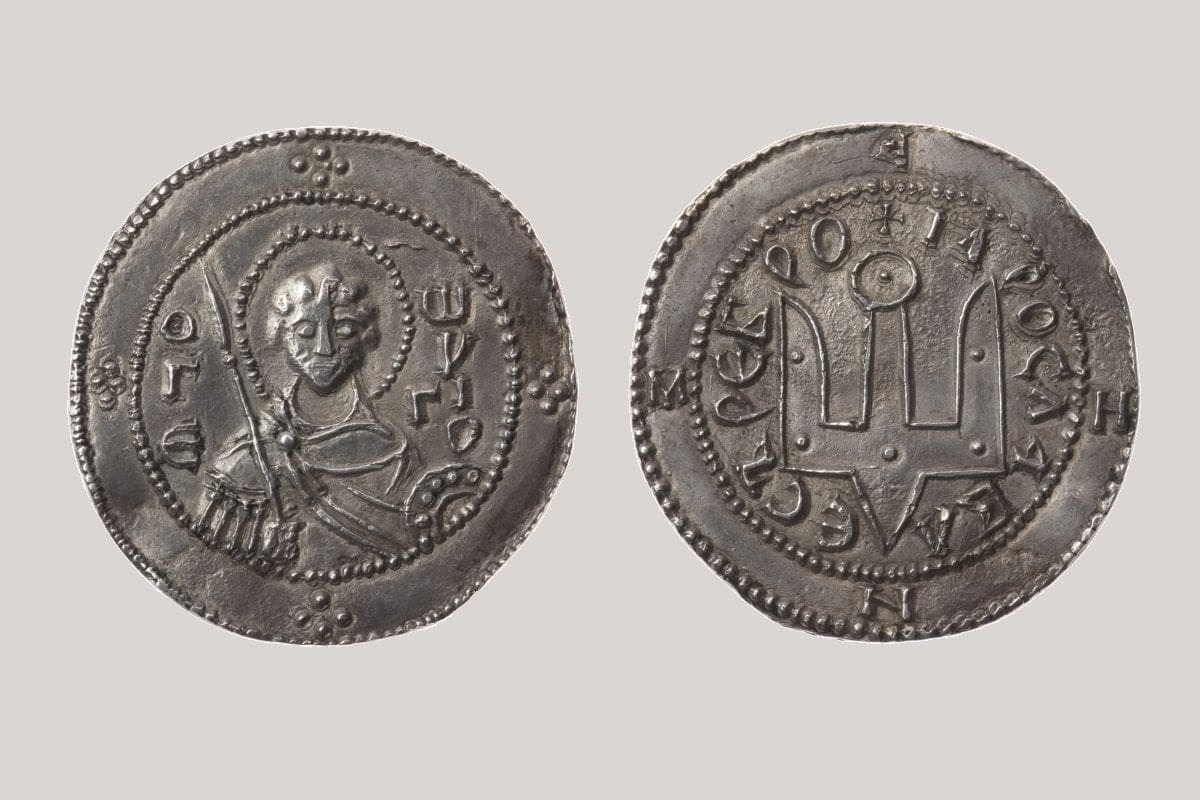
The imagery closely resembles Yaroslav’s “srebreniks”, silver coins minted in Novgorod in the early 11th century. Only eight examples of these coins survive today, each celebrated for their refinement and rarity.
Remarkably, Russian numismatist Count Ivan Tolstoy predicted the existence of such a seal in 1891. He suggested that Yaroslav would have used a Byzantine-style seal featuring Saint George. The new find confirms much of his theory, though instead of a simple prayer, Yaroslav placed his dynastic trident symbol on the reverse.
Unlocking Yaroslav’s Court
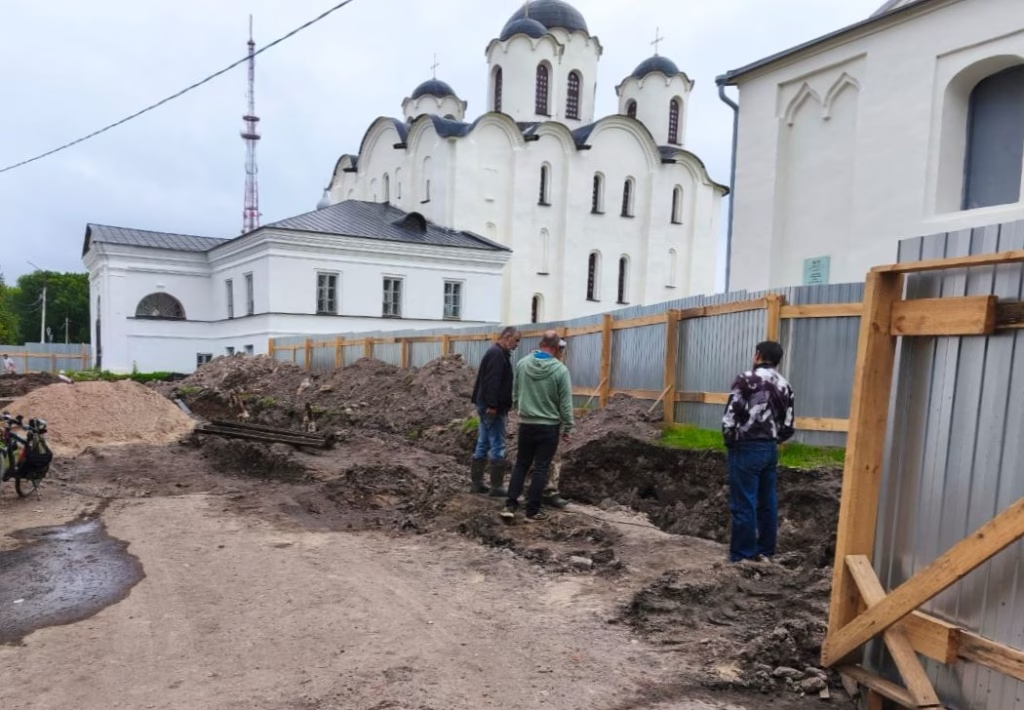
Yaroslav’s Court, where the seal was discovered, is one of Novgorod’s most important medieval centers. Chronicles first mention it in 1113, yet archaeological traces from the 11th century have long been elusive. The seal now provides strong evidence that this site functioned as a genuine administrative hub during Yaroslav’s rule.
Dr. Gaydukov emphasized that the find not only enriches the city’s early history but also demonstrates the value of rescue archaeology: “Each discovery underscores how modern urban excavations can illuminate the medieval origins of Russia’s oldest cities.”