
High in the Andes, where thin air and freezing temperatures preserve the past with brutal clarity, the bodies of sacrificed Inca children have long been seen as silent witnesses to a single moment of ritual death. New research suggests that this assumption may be wrong.
A bioarchaeological study led by Dagmara Socha at the University of Warsaw indicates that some victims of the Inca capacocha ceremony were not only killed, but later handled, altered, and possibly reburied. In at least one case, a child’s body appears to have been deliberately modified after death—marking the first known example of intentional mummification linked to this ritual.
When death was not the end of ritual
Capacocha was among the most politically and theologically charged ceremonies of the Inca Empire, involving the sacrifice of children to powerful deities. Spanish chroniclers described the rite in detail after the conquest, yet physical evidence has remained rare and fragmentary.
The best-known archaeological examples surfaced in the 1990s, when frozen child mummies were discovered on remote Andean summits by Johan Reinhard. Preserved by altitude, cold, and isolation, these remains offered an unprecedented glimpse into Inca ritual violence. Until now, however, their internal condition remained largely unexplored.
Seeing inside the mountain dead
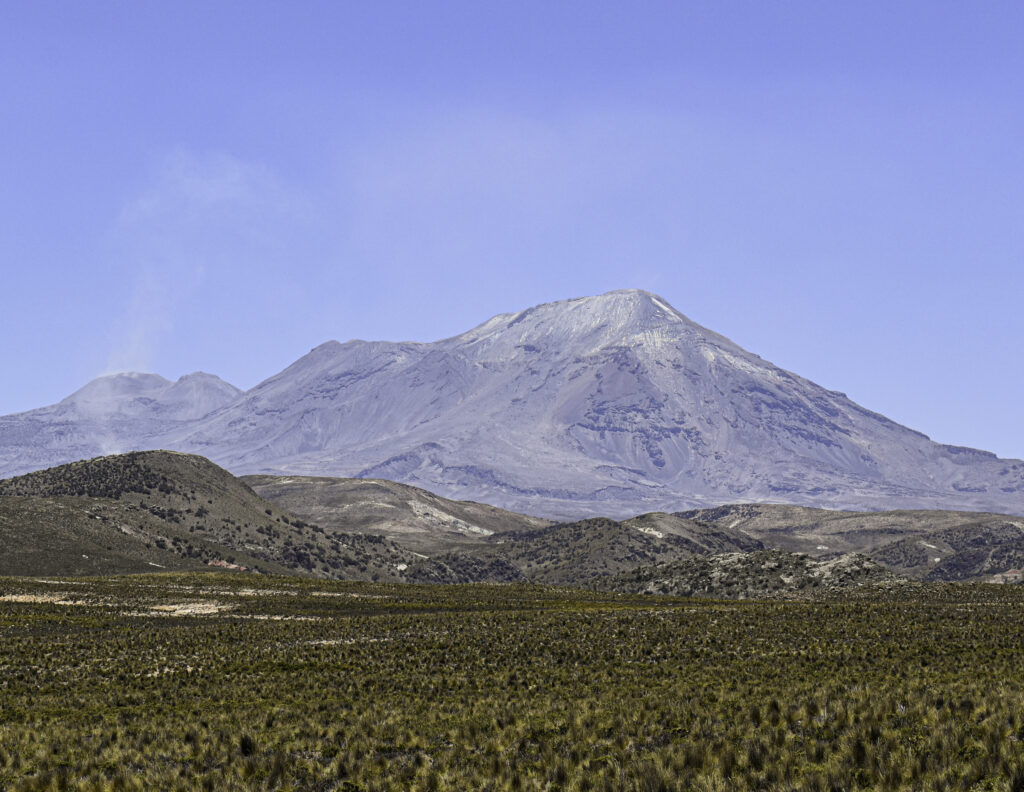
In the new study, published in Journal of Archaeological Science: Reports, researchers applied high-resolution CT scanning to four naturally mummified children recovered from the volcanoes Ampato and Sara Sara in southern Peru.
The scans revealed details impossible to detect through traditional examination. All four children died from fatal blows to the head. In one case, an eight-year-old girl showed a clear intracerebral hemorrhage—direct evidence of violent death rather than exposure or poisoning, which had previously been debated.
Illness before sacrifice
Beyond trauma, the scans exposed signs of disease that complicate long-standing assumptions about capacocha victims. One child displayed pathological changes consistent with Chagas disease, including an enlarged esophagus and calcifications in the lungs.
These findings undermine the common belief—repeated in ethnohistorical sources—that only perfectly healthy children were selected for sacrifice. Instead, the evidence suggests that symbolic, social, or political criteria may have mattered more than physical condition.
Even the famed mummy known as the Lady of Ampato, or Juanita, showed previously undocumented injuries to the chest and pelvis, further emphasizing that these bodies still have stories left to tell.
A body deliberately “repaired”
The most unexpected discovery came from a mummy identified as Ampato 4. CT scans revealed a disturbed internal anatomy: missing bones, stones placed inside the abdominal cavity, and probable textile fragments inserted among the remains.
According to the researchers, this configuration cannot be explained by natural processes. It represents the first documented case of deliberate post-mortem modification of a capacocha victim.
The team suggests that the child may have been sacrificed elsewhere and later transported. During this process, her physical integrity appears to have been symbolically reconstructed—an act that resonates with known Inca practices involving the movement of sacred objects and ancestral mummies.
Children as enduring sacred agents
In the Inca world, ritual power did not necessarily end with death. Communities relocated by the state—known as mitimaes—often carried ancestral mummies with them, using these remains to establish spiritual legitimacy in new landscapes.
The study proposes that some capacocha victims may have fulfilled a similar role. Evidence for secondary burial and continued manipulation suggests that these children remained active participants in the sacred geography of the empire, long after their lives ended.
Rather than static offerings abandoned on mountaintops, they may have functioned as enduring mediators between humans, gods, and the landscape itself.
The research forms part of a larger project funded by Poland’s National Science Centre under an OPUS grant. Since 2024, the team has also resumed high-altitude fieldwork in the Andes—raising the possibility that more of these complex ritual biographies may yet come to light.