Some archaeological discoveries impress by their scale. Others by their beauty.
What archaeologists encountered at Hala Sultan Tekke in 2025 was different. These tombs mattered because they were left alone.
For more than three thousand years, two Bronze Age burial chambers lay sealed after their stone ceilings collapsed in antiquity. No later burials. No looting. No reshuffling by chance or tradition. When excavation teams finally reached them, they were stepping into spaces that still reflected how an elite community once understood wealth, memory, and power.
That kind of preservation is rare. And for Cyprus’ Late Bronze Age, it is quietly transformative.
A Port City That Lived From the Sea—and From Copper
Hala Sultan Tekke was never an isolated settlement. During the Late Bronze Age, it functioned as one of the eastern Mediterranean’s most active harbor cities, positioned beside what was then a navigable coastal inlet near today’s Larnaca Salt Lake. Its rise coincided with Cyprus’ emergence as a primary supplier of copper, the metal that powered Bronze Age economies from the Aegean to the Near East.
The raw material came from the Troodos Mountainsbut the transformation happened in the city itself. Archaeological traces of furnaces, slag heaps, crucibles, and ore fragments point to large-scale, organized metal production embedded within an urban setting. This was not peripheral craftsmanship. It was the backbone of the city’s prosperity.
For centuries, ships leaving this harbor carried copper across the Mediterranean. What returned, as the tombs now show, was far more than payment.
Tombs Preserved by Collapse, Not Intention
The 2025 excavation campaign focused on the city’s extramural cemetery. Among its discoveries were two chamber tombs dating to the 14th century BC, their entrances long blocked by collapsed stone ceilings. Geological work nearby also identified an abandoned well, likely rendered unusable by rising salinity—a small reminder that environmental shifts shaped daily life here as much as trade did.
Inside the tombs, archaeologists found burial contexts that were damaged but still coherent. Objects remained close to where they had last been placed. The result was an unusually legible picture of elite funerary practice.
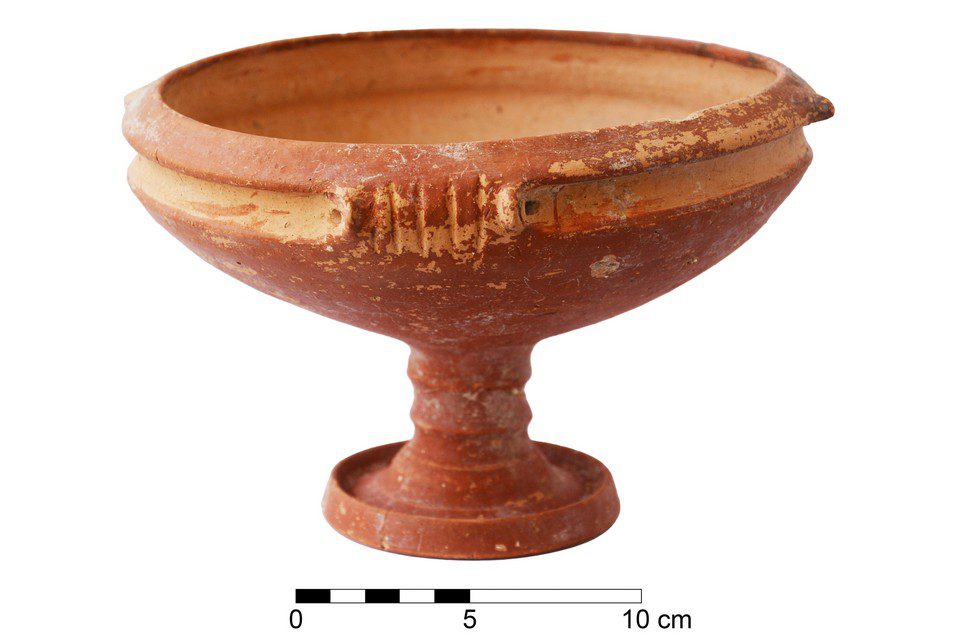
Local Cypriot pottery, tools, and ornaments appeared first. But it was the foreign materials—quietly accumulating around the dead—that told the larger story.
Objects That Traveled Further Than the People Who Owned Them
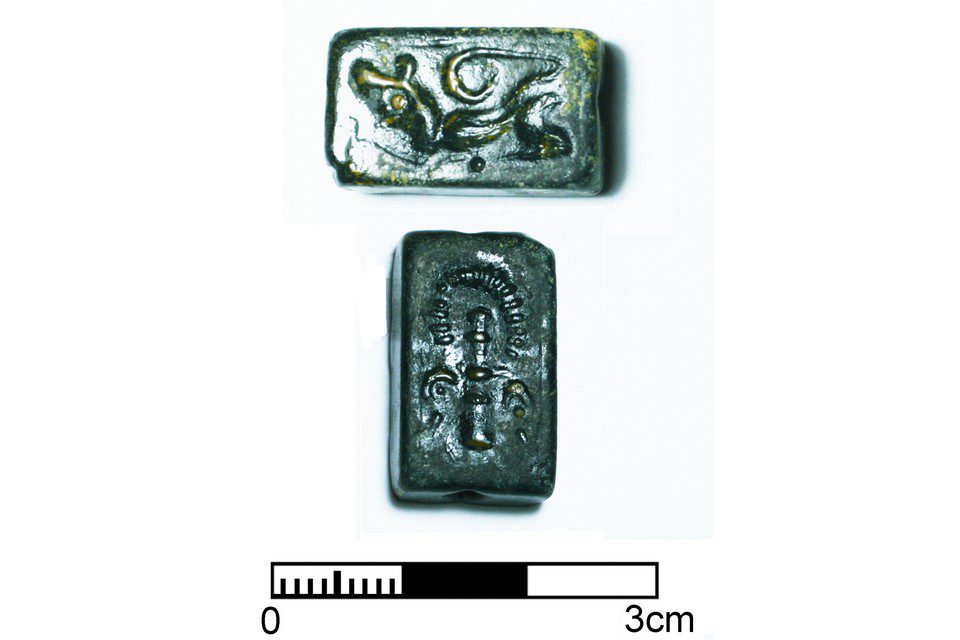
The range of imported items is striking, not because of any single artifact, but because of their combined geography. Mycenaean ceramics link the tombs to mainland Greece. Aegean and Cretan objects echo long-standing maritime routes. Egyptian ivory and stone vessels reflect direct or indirect contact with the Nile world.
More surprising are materials whose sources lie far beyond the Mediterranean. Lapis lazuli traces back to Afghanistan. Carnelian points to western India. Amber—worked into beads and even a scarab—signals connections reaching toward the Baltic. Nuragic pottery from Sardinia reinforces evidence that Cypriot copper circulated deep into the western Mediterranean, often cast in the distinctive oxhide form.
None of this looks accidental. These were not souvenirs. They were the material language of long-distance exchange.
Families, Time, and Controlled Memory
Stratigraphic evidence shows that the tombs were reused across generations. Older remains were carefully rearranged to accommodate new burials, suggesting deliberate management of ancestral space rather than abandonment or neglect. Infants, children, and adults were all interred here, although few individuals appear to have lived beyond forty.
Ongoing bioarchaeological and ancient DNA studies aim to clarify kinship patterns, health conditions, and population structure. What is already clear is that these tombs belonged to families positioned at the intersection of production, trade, and authority.
Cyprus at the Center, Not the Edge
The work, led by Peter M. Fischer of the University of Gothenburg in cooperation with Cypriot authorities, strengthens a conclusion that archaeology has been approaching for decades. Hala Sultan Tekke was not a peripheral harbor feeding larger powers. It was itself a center—economically, culturally, and politically.
As new excavation seasons are planned, the site continues to shift how Cyprus is positioned within Late Bronze Age history. Not as a stepping stone between worlds, but as one of the places where those worlds actively met.
Deputy Ministry of Culture, Republic of Cyprus
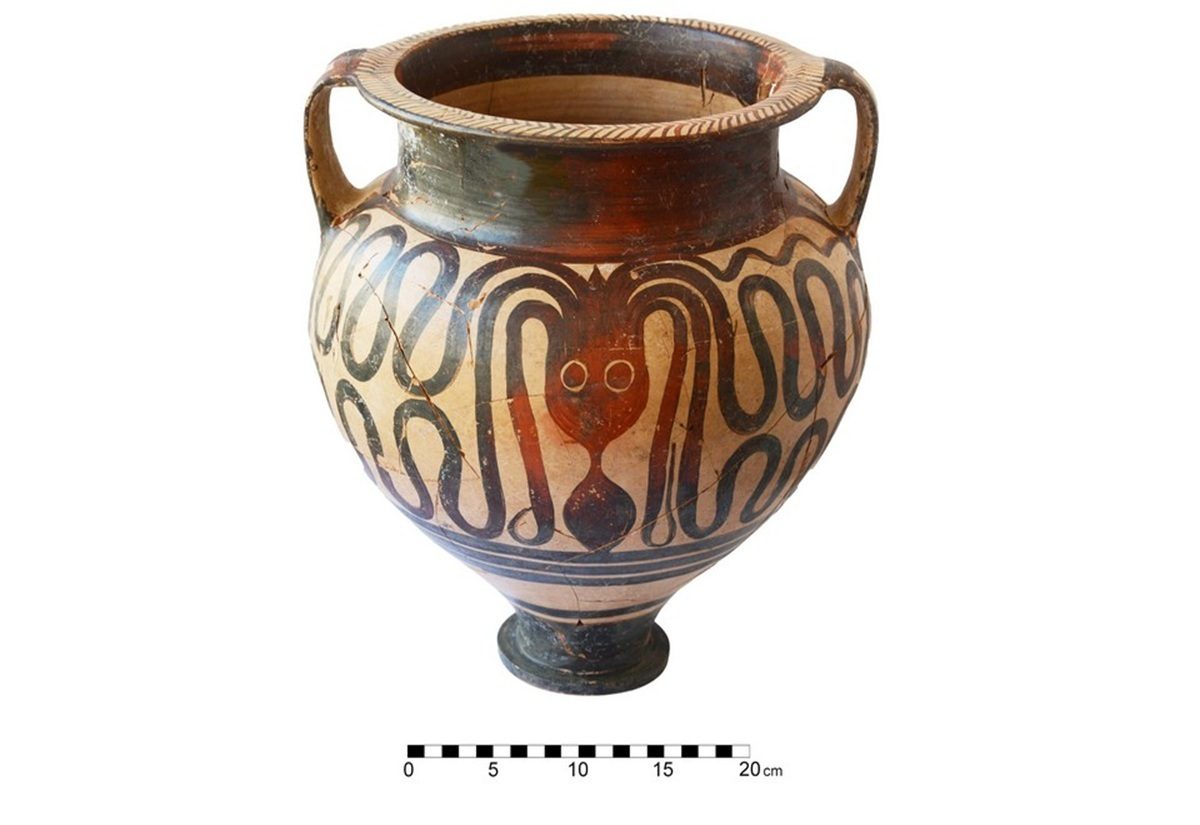
Cover Image Credit: Large Minoan octopus krater. Ministry of Culture of the Republic of Cyprus, Department of Antiquities