
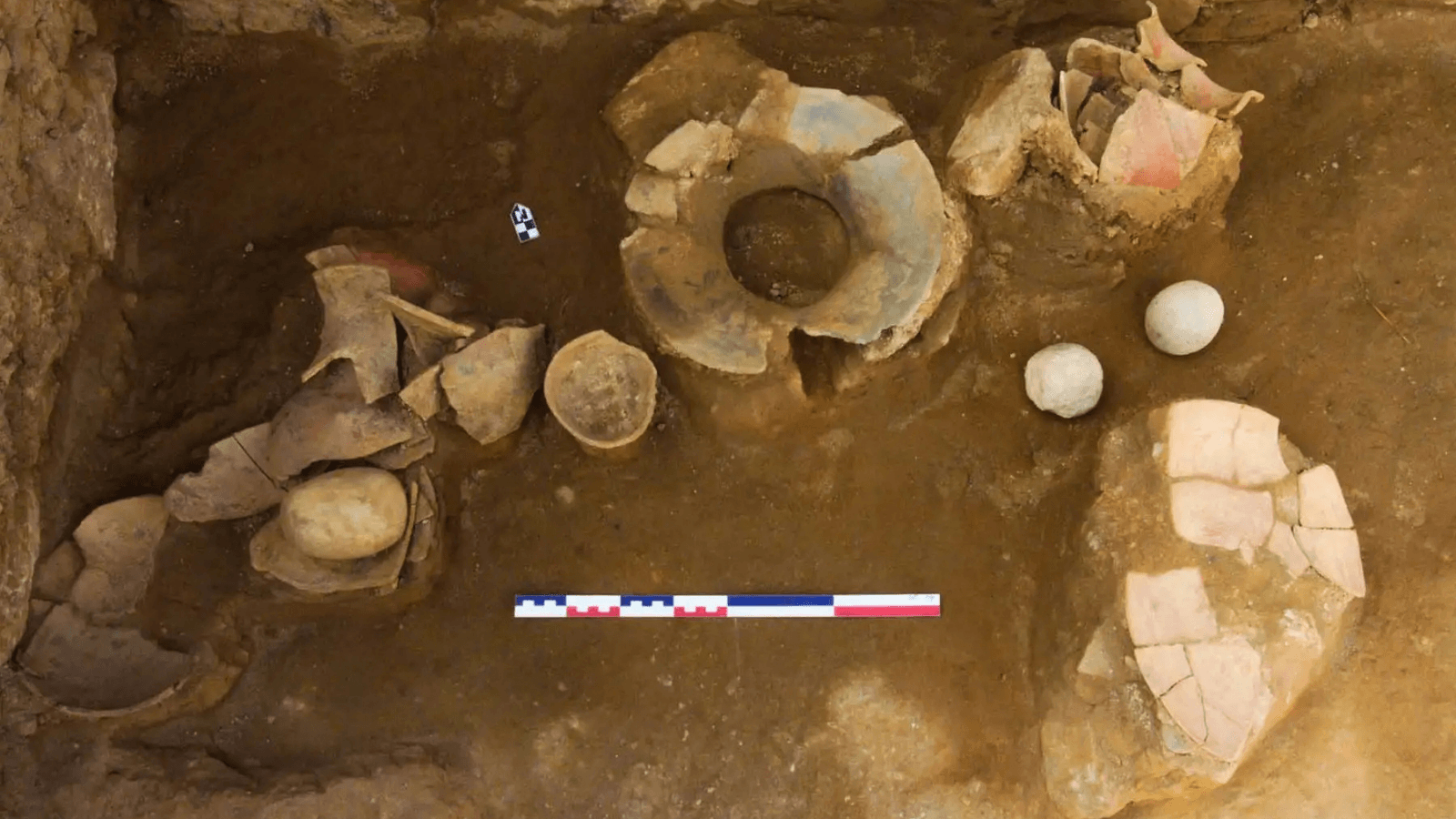
Archaeologists excavating the Inca site of Wancasanga in northern Peru have uncovered evidence of an Inca closing ritual in which a doorway was deliberately sealed. The deposit contained 18 ceramic vessels, 11 stone implements and an upright sacred monolith.
The discovery was made at Huaman Orco, a mountaintop location approximately 3,400 meters above sea level in Cajamarca’s Condebamba Valley. The project team believes the deposit marked the end of one phase in the building’s history before the surrounding area was remodeled.
A doorway closed through ritual
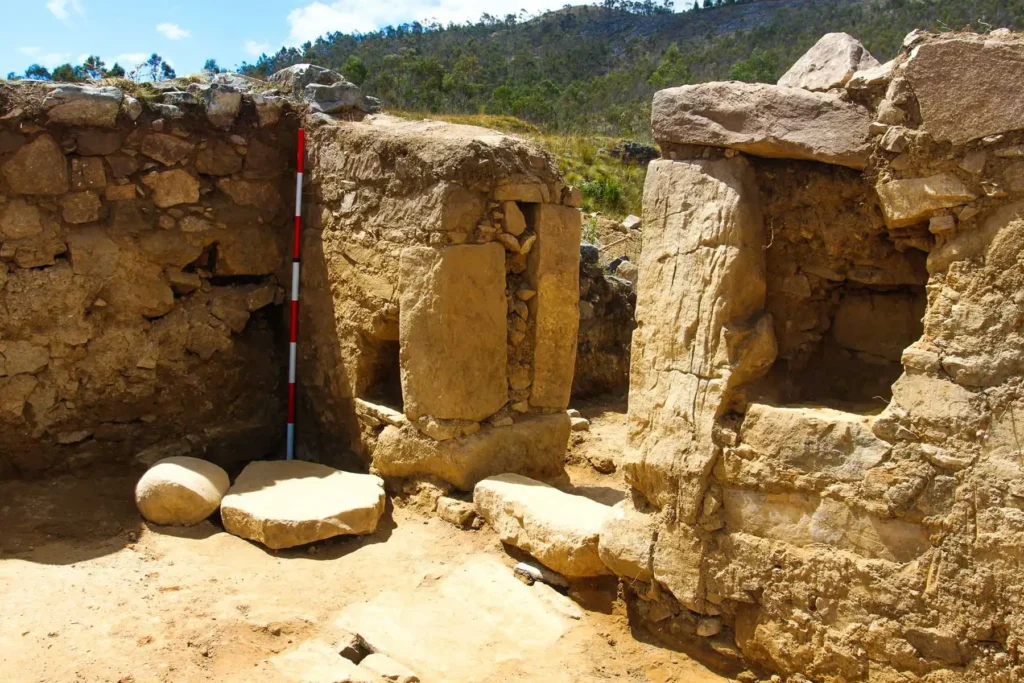
The deposit was uncovered in Excavation Unit 03, within Plaza 1 of Sector C. It filled an entrance that once connected Building 3 with the site’s principal plaza.
The archaeologists found 18 complete vessels together with 11 stone artifacts, including grinding slabs, handstones and tools identified as hoes. Their condition and placement suggest that the objects were deliberately arranged rather than discarded as construction debris.
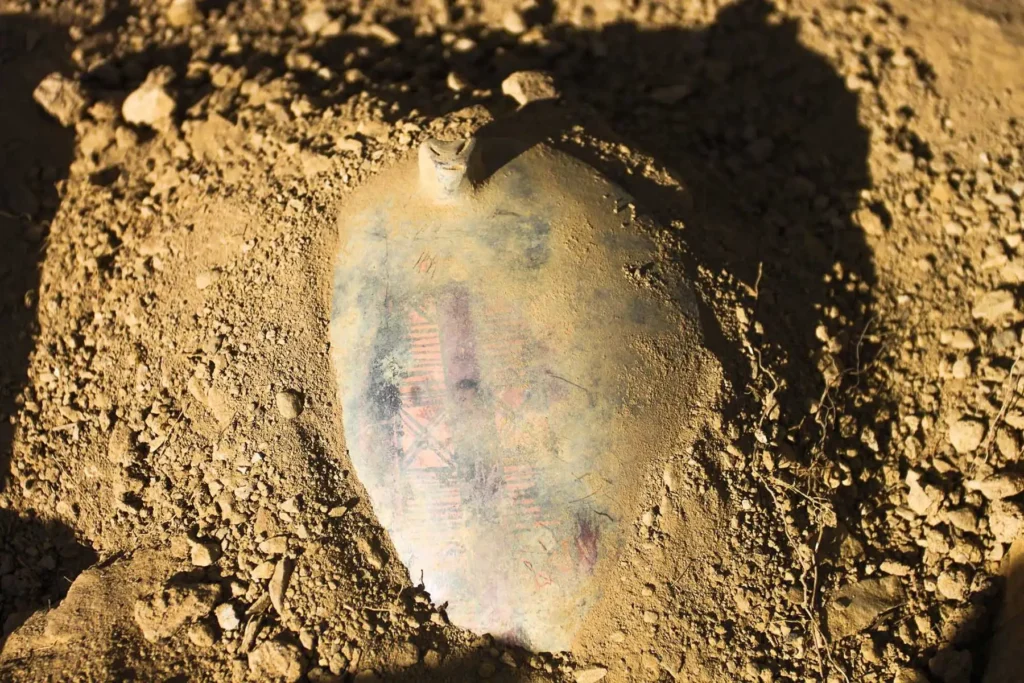
At the upper center of the sealed entrance stood a vertically positioned huanca. In Andean traditions, this term refers to a standing stone that could serve as a sacred or protective marker connected with a particular place.
Its placement directly above the blocked passage supports the team’s interpretation that the doorway was closed during a formal ceremony. Archaeologists describe the deposit as evidence of an Inca closing ritual—an act intended to end the use of an architectural space before it was altered or replaced.
Several phases of construction
The closure deposit covered the earliest identified construction phase in this part of Wancasanga. Later occupants remodeled the area using masonry built from worked stone blocks, leaving overlapping architectural remains that document changes within the settlement.
Fragments of Cajamarca and provincial Inca pottery were also recovered from the site. The finds point to contact between local cultural traditions and the administrative system of the Inca state, although an exact date for the closure deposit has not yet been announced.
The discovery follows the identification of 12 circular storage buildings, known as colcas, elsewhere in Sector C. Arranged in a semicircle, the structures contained ventilation channels that appear to have helped circulate air and protect stored food or other supplies.
The combination of storage facilities and ritual activity helps clarify Wancasanga’s role in the region. It appears to have functioned as an Inca administrative and logistical center where buildings also retained ceremonial importance during periods of renovation.
Excavations resume after three decades
According to details released through Peru’s Andina news agency, the Wancasanga Archaeological Project is directed by archaeologist Jerry Solano Calderón and financed by the District Municipality of Condebamba. The excavations are being conducted under authorization from Peru’s Ministry of Culture, with current research concentrated in sectors C and D.
Modern archaeological documentation of Wancasanga began in 1989, when architect José Pineda Quevedo recorded settlement patterns across the Condebamba Valley and produced an initial division of the site. The renewed investigations are now providing the first detailed evidence for the architecture, storage system and ceremonial practices preserved at Huaman Orco.
Residents of nearby Chauchabamba have also participated in the excavations and educational activities associated with the project. The sealed doorway provides a material record of how Wancasanga’s occupants formally ended the use of one space, placing vessels, tools and a standing sacred stone within the entrance before construction continued around it.
Cover Image: Ceramic vessels and stone implements exposed within the ritual closure deposit at Wancasanga. Archaeologists recorded 18 vessels and 11 stone artifacts in the sealed entrance. Photo: Andina/Difusión