
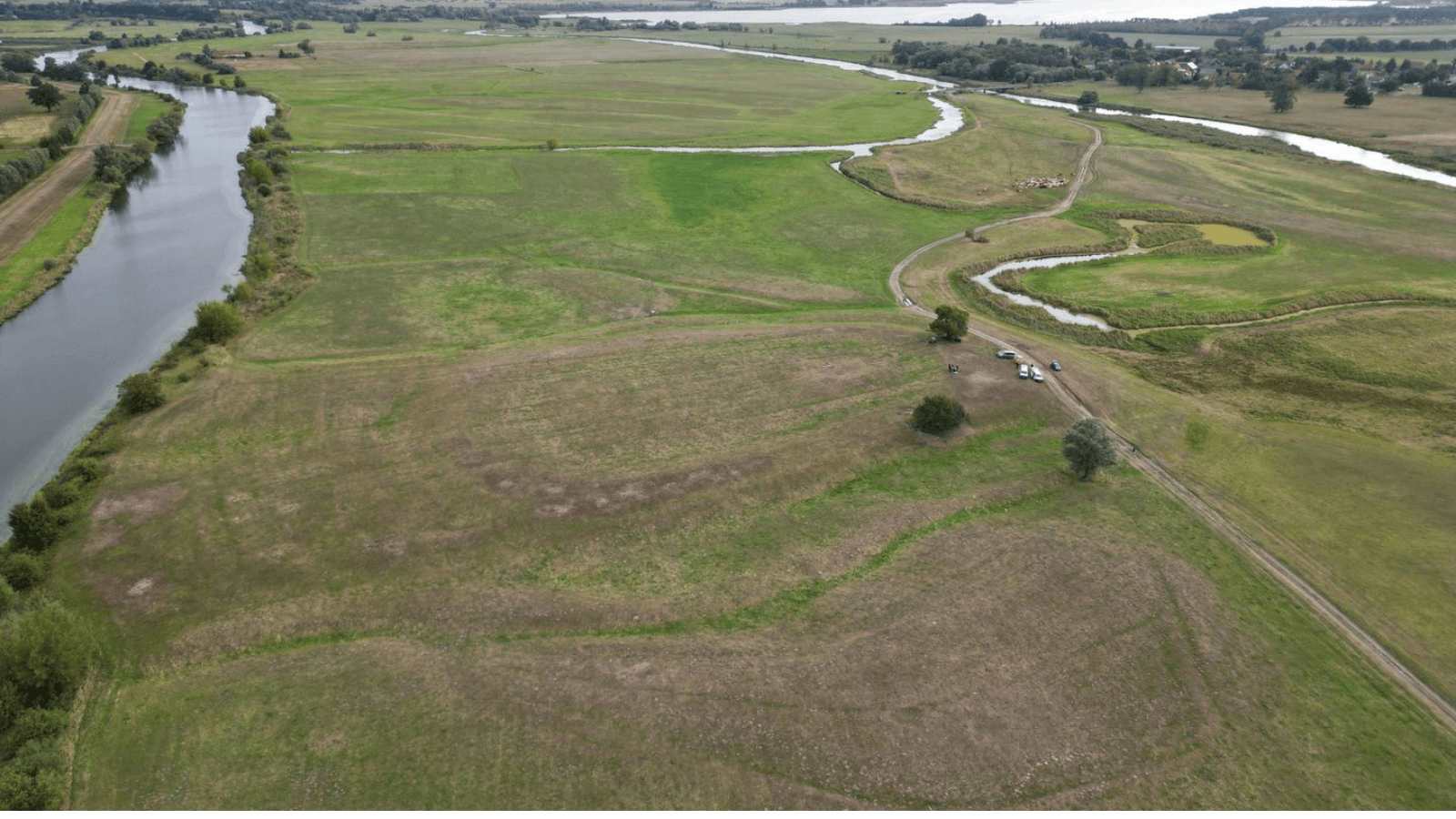
The first archaeological excavation at the Pilatsch Slavic stronghold in eastern Germany has uncovered evidence that people used the site long before its medieval defenses appeared. Alongside material linked to the Slavic occupation, archaeologists recovered finds from the pre-Roman Iron Age and the Neolithic period.
The discoveries were made near Gülpe in Brandenburg’s Lower Havel region during a two-week field campaign in late summer 2026. Pilatsch has long been known as a protected Slavic earthwork, but until this season, archaeologists had never opened an excavation trench at the site.
Researchers from Leipzig University, the University of Tübingen and the Helmholtz Centre for Environmental Research carried out the project in cooperation with the Brandenburg State Office for Heritage Management and Archaeological State Museum. Their initial findings suggest that the story of Pilatsch began thousands of years before the stronghold was constructed.
A Stronghold with a Much Older Past
Pilatsch stands in the floodplain of the Havel River, where changing channels, seasonal flooding and sediment deposits have repeatedly reshaped the landscape. Its most recognizable feature is the surviving Slavic rampart, yet the excavation revealed evidence of human activity from several much earlier periods.
Among the finds were numerous pottery fragments, animal bones and pieces of slag, a by-product commonly associated with metal production or processing. Some of the recovered material has been assigned to the pre-Roman Iron Age and Neolithic period, although detailed dates and the precise relationship between the finds have not yet been announced.
The discoveries do not necessarily point to continuous settlement over thousands of years. They do, however, show that people reached and used this part of the Havel floodplain at widely separated points in prehistory and the medieval period.
Pottery may help archaeologists distinguish these phases and refine their dates, while animal remains could provide evidence about diet, livestock and the surrounding environment. The slag may also reveal what kinds of craft or production activities took place at Pilatsch, once its archaeological context and date have been established.
The First Trench Tests What Lies Beneath Pilatsch
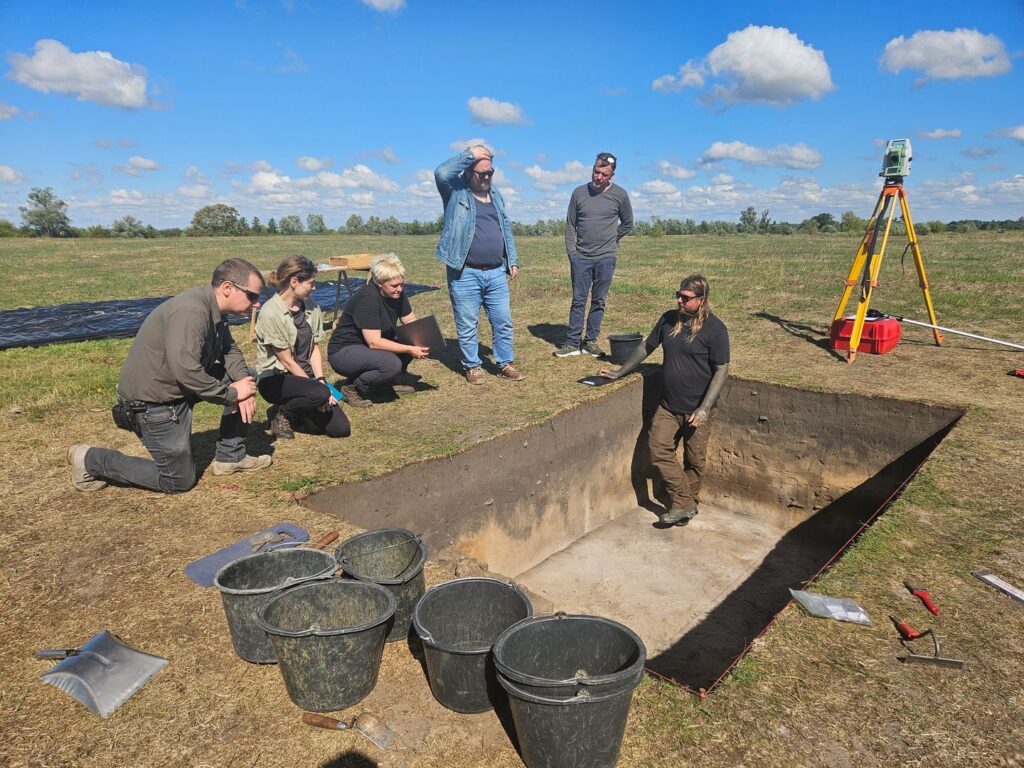
Although the 2026 campaign marked the first excavation at Pilatsch, researchers had already spent more than a year investigating the site without opening the ground. Geomagnetic survey, ground-penetrating radar, electrical measurements and subsurface coring provided an initial picture of features hidden beneath the modern landscape.
The results pointed to the inner structure of the rampart, neighboring ditches and areas that may contain settlement remains. Archaeologists then opened a small, carefully selected trench to compare these survey results with the actual layers preserved underground.
Their work concentrated on the inner rampart and the adjoining ditch system. The team wants to establish how the fortifications were constructed, whether they were altered during different periods and when each phase of the site was in use.
Students from the University of Tübingen joined the project as part of a training excavation, and all digging was completed by hand. The exposed layers and features were documented in detail, while excavated soil was sieved and washed to recover small artifacts, seeds, bones and other organic remains that could easily be missed during digging.
Why Was This Place Chosen?
The location of Pilatsch is one of the investigation’s central questions. Building and maintaining a fortified site in an active floodplain would have required an understanding of water, seasonal change and the stability of the surrounding ground.
Researchers collected sediment samples from selected layers for geological, chemical and paleoecological analysis. These tests should help them separate natural river deposits from sediments altered by construction, occupation and other human activities.
A mobile Direct Push system was also used to examine buried sediment sequences without opening large excavation areas. By combining these results with the trench and earlier geophysical surveys, the team can study the stronghold and its wider landscape while limiting damage to the protected monument.
The work may eventually show whether changes in the Havel influenced where people lived, built defenses or carried out economic activities. It could also explain why groups from different periods were drawn to the same location, even if their visits were separated by centuries or millennia.
The finds, sediment samples and survey data will now undergo detailed analysis. The results are expected to clarify the age and construction of the Slavic defenses, distinguish the earlier phases of activity and place Pilatsch within the longer settlement history of the Lower Havel region.
Cover Image: Aerial view of the Pilatsch archaeological site in the Havel floodplain near Gülpe, Brandenburg. The location was used during the Neolithic and Iron Age before becoming a Slavic stronghold. Credit: T. Martens/Leipzig University