
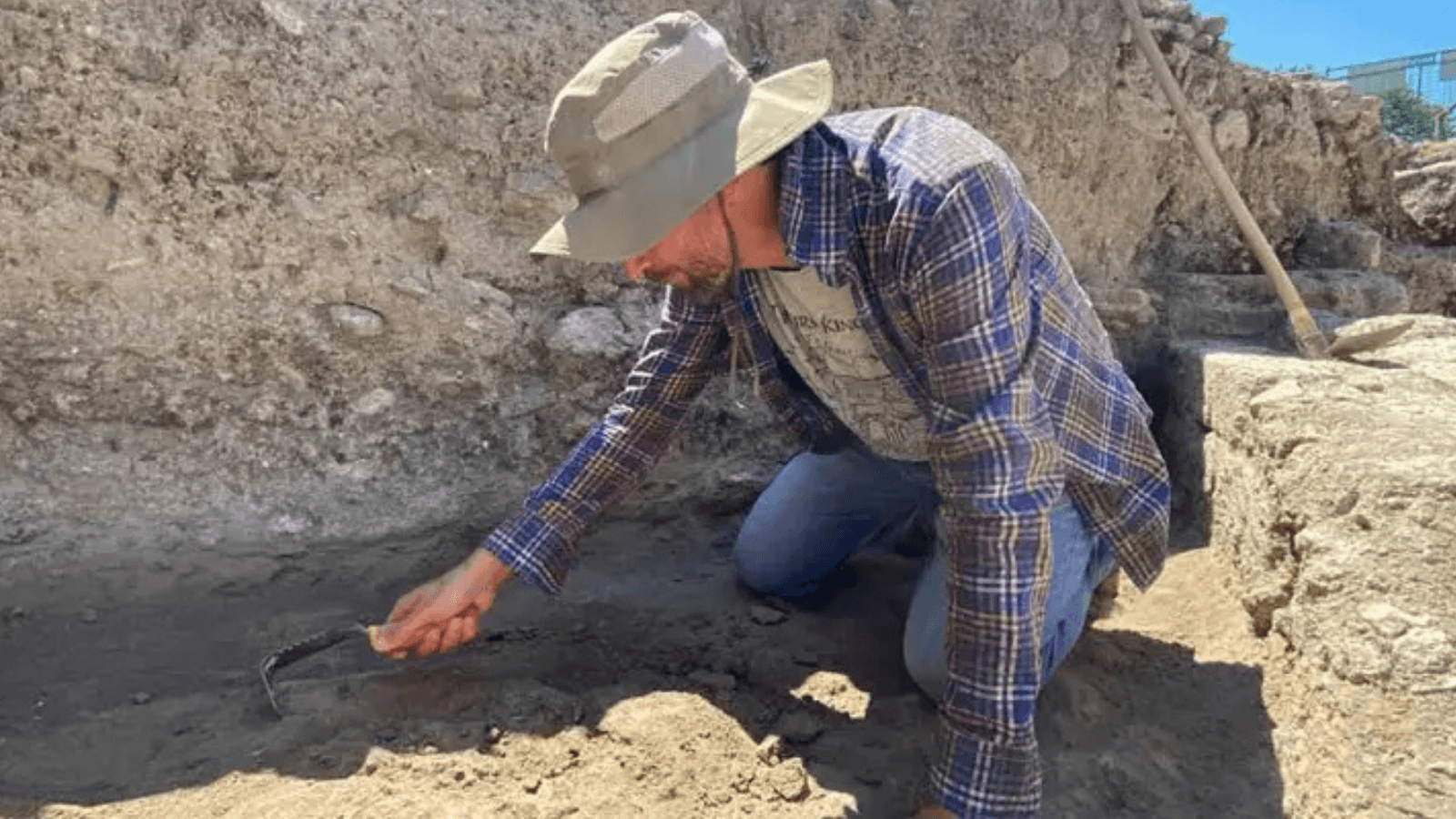
For generations, Troy’s story has centered on destruction—war, fire, earthquake and the collapse of the Bronze Age city immortalized in Homer’s Iliad. Troy’s oldest agora, a 2,800-year-old public space now emerging outside the southern gate, is revealing what happened after one of those endings.
Archaeologists believe the location already served as a marketplace during the Late Bronze Age. When settlers arrived approximately 80 to 90 years after the earlier settlement was abandoned, they built among its remains and returned the same public space to use.
An absence measured in decades
The excavation lies in front of the southern gate of Troy VI, one of the city’s major Bronze Age phases. Professor Reyhan Körpe, deputy director of the Troy excavations, said researchers have worked in this sector since 2014 to understand the transition between Bronze Age Troy and the settlement later known as Ilios or Ilion.
Evidence recovered from the area indicates that Troy did not remain deserted for centuries. New inhabitants arrived within several generations and constructed homes over parts of the older city.
Some of those houses reused sections of the Troy VI walls during the Early Archaic period. The surviving fortifications, gateway and routes therefore continued to shape the settlement long after the Bronze Age phase had ended.
A marketplace becomes Troy’s earliest agora
Körpe said the team has identified a marketplace that probably operated outside the southern gate during the Late Bronze Age. Later settlers revived the area and continued using it as an agora.
“We can say that the place we are excavating is Troy’s earliest agora,” Körpe said. Further work will be required to establish its full boundaries and determine how its layout changed between successive occupation phases.
Excavations have uncovered architectural remains associated with the public space, as well as part of a paved approach leading from the lower city toward the southern gate. Amphora fragments and other pottery found with the structures date to the Early Iron Age.
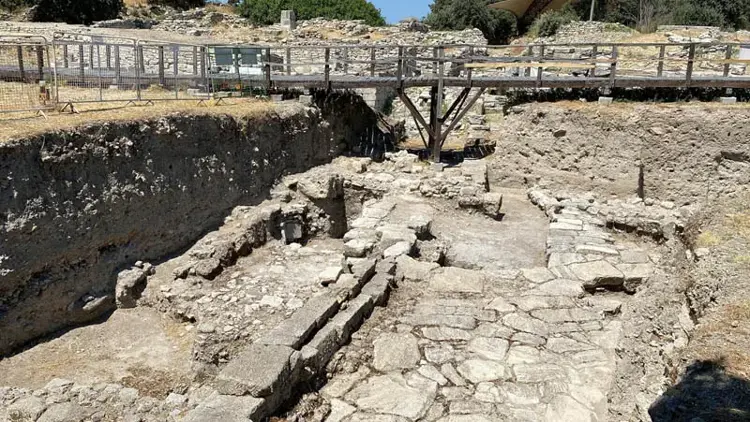
The evidence records several stages of activity rather than a single construction event. Early Iron Age pottery documents the return of occupation, while the houses built over Troy VI walls belong to a later, Early Archaic phase.
This chronological distinction is important. It shows that people repeatedly adapted the same part of the city as Troy developed from a Bronze Age center into the later settlement of Ilion.
What survived after Bronze Age Troy
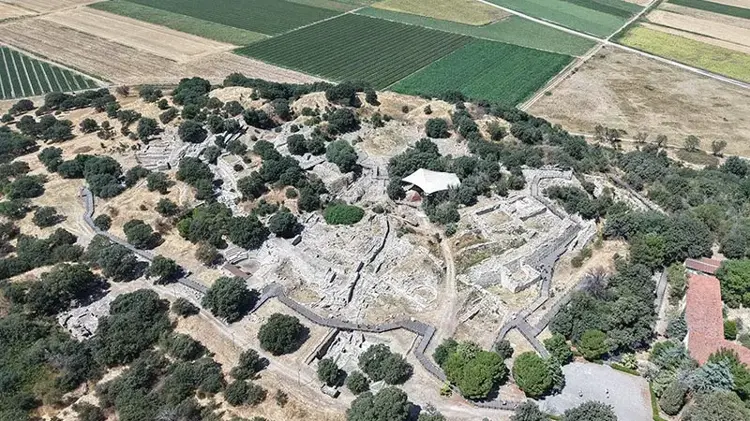
The discovery offers a view of Troy that monumental walls and destruction layers alone cannot provide. A marketplace reveals where people moved, gathered and exchanged goods during periods when the city was being rebuilt.
The settlers did not construct their community on untouched ground. They lived among visible remains of the earlier city and incorporated some of its walls and routes into their own built environment.
Körpe noted that the site associated with Wilusa in Hittite records later became known as Ilios or Ilion. He described this transformation as a continuation that allowed Troy to “live on as Ilion.”
The finds do not demonstrate that the newcomers preserved particular stories about the Trojan War. They instead provide physical evidence that occupation resumed relatively quickly and that parts of the older urban landscape remained useful.
Recovering a transition earlier excavations obscured
Understanding this period remains difficult because early archaeological campaigns damaged or removed parts of Troy’s later layers. Heinrich Schliemann’s 19th-century excavations cut deeply through the mound in search of the city he associated with Homer’s war.
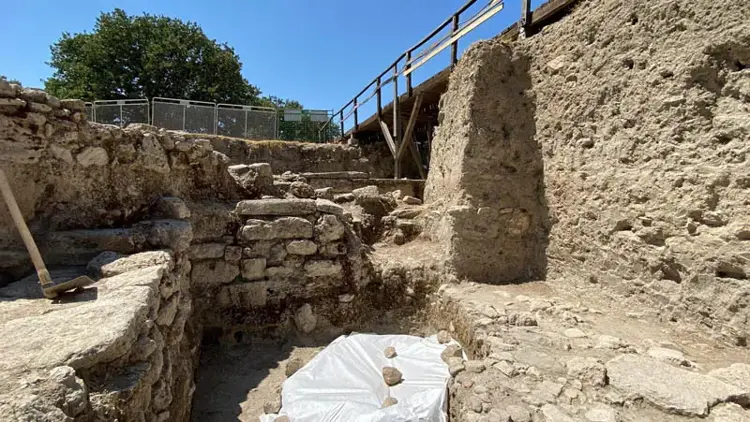
Today’s archaeologists are concentrating on smaller areas and recording the relationships between walls, surfaces and pottery in greater detail. This approach makes it possible to reconstruct phases that large-scale early excavations often overlooked.
Work around the southern gate will continue in future seasons. The team hopes to define the agora more clearly and determine how a Bronze Age marketplace developed into a public center used by Troy’s later inhabitants.
Professor Rüstem Aslan directs the excavations in coordination with Çanakkale Onsekiz Mart University and with permission from Türkiye’s Ministry of Culture and Tourism. Troy has been included on the UNESCO World Heritage List since 1998.
Cover Image: Archaeological work continues near Troy’s southern gate, where researchers are uncovering the city’s earliest known agora. Credit: DHA