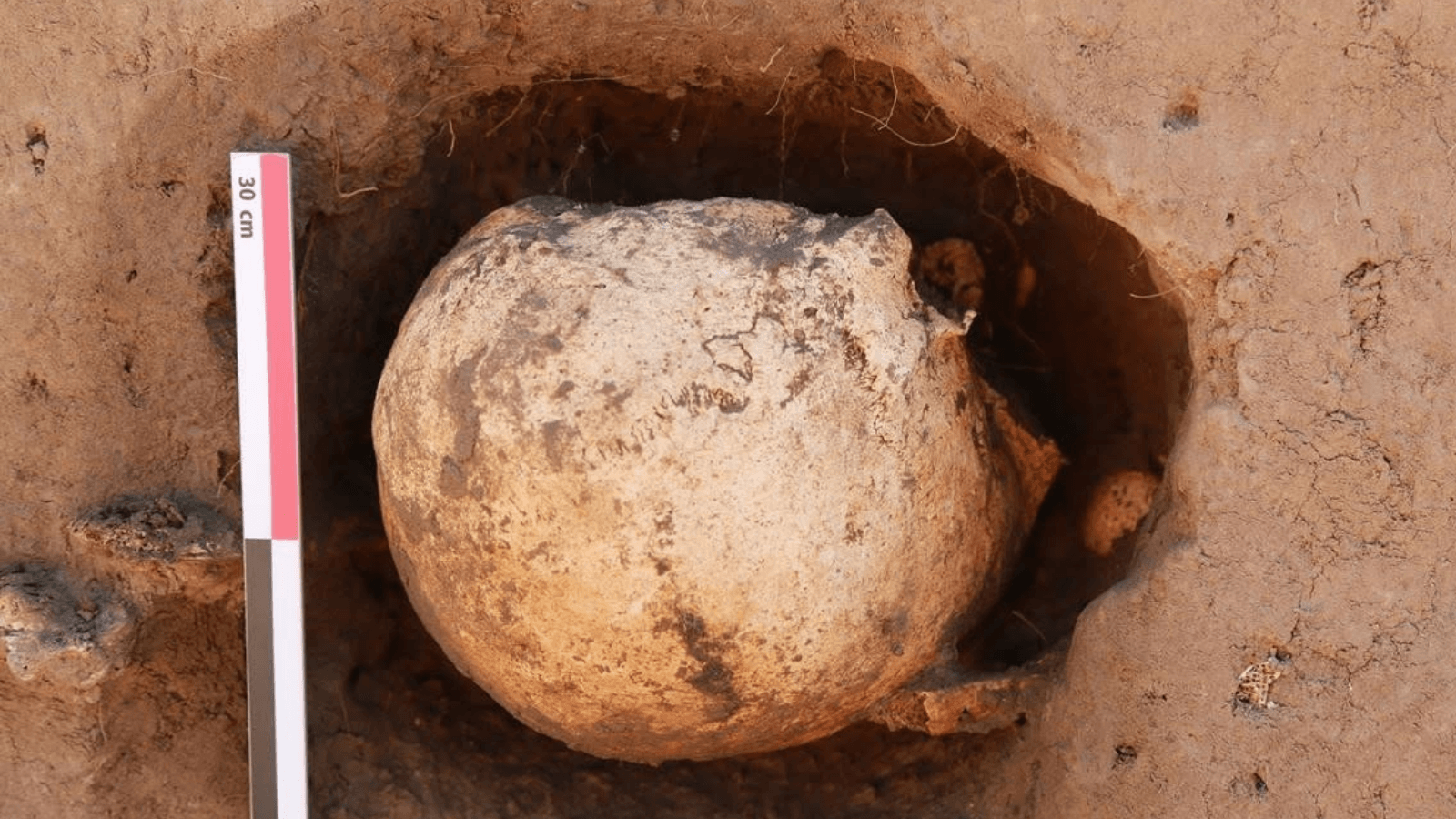
An inverted human skull has been uncovered in a puzzling grave at Ślipcze in eastern Poland, where archaeologists had already found disarticulated bones and iron nails among the human remains.
The toothless skull was positioned with its cranial vault facing downward and the foramen magnum — the large opening at the base of the skull where it connects with the spine — facing upward, according to the team behind the “Kurhany w Ślipczu – w poszukiwaniu odpowiedzi” archaeological project.
Researchers have not yet determined why the skull was arranged this way or whether its position was connected to the other unusual features of the grave.
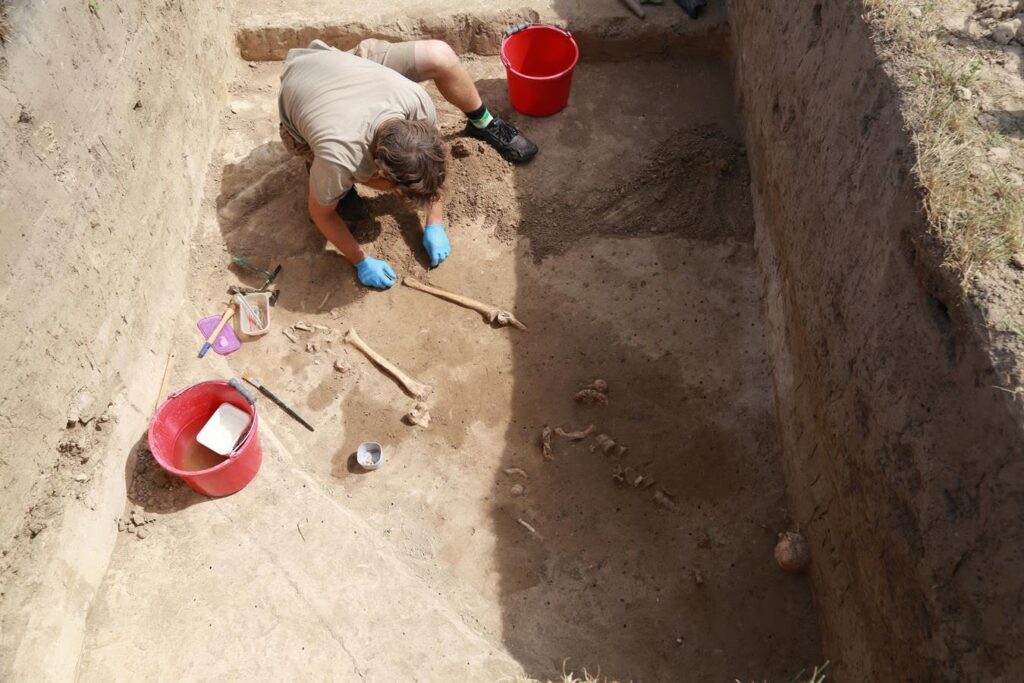
A grave that had already raised questions
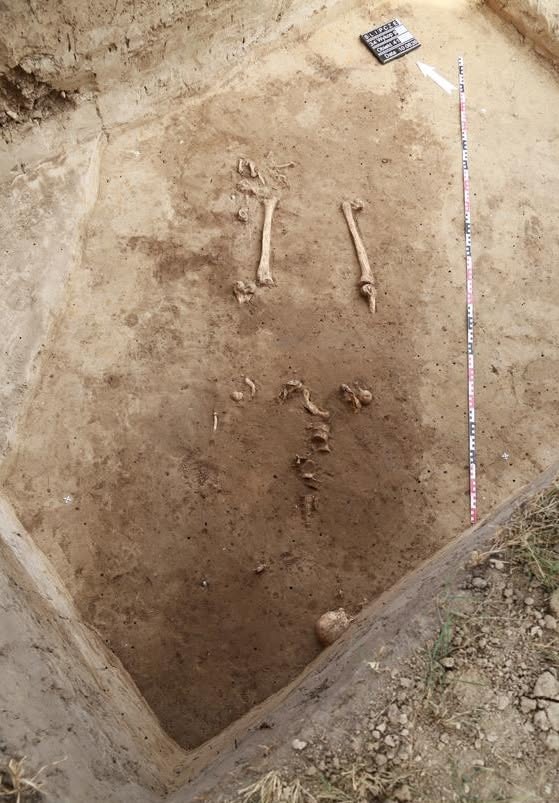
During earlier excavation, archaeologists reported finding human bones that were no longer in anatomical order. Iron nails, including examples with bent or curved heads, were also discovered among the remains.
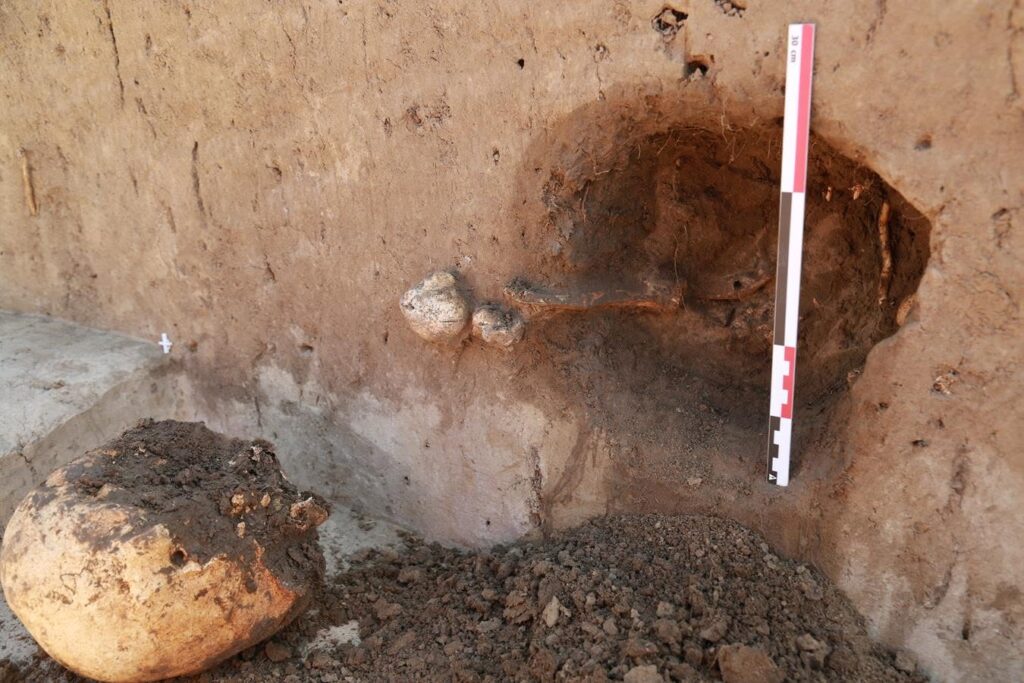
As work continued, part of the skull remained embedded in the excavation profile. The team eventually decided to remove it after exposure to air raised concerns that its condition could deteriorate before the next field season.
Once the skull was removed, its unusual orientation became clear. Rather than resting in the position normally expected in an undisturbed burial, it had been turned so that its upper surface faced downward.
No ritual explanation has been proposed by the archaeologists. At this stage, the iron nails, disordered bones and inverted skull are documented features of the burial, but their relationship to one another remains uncertain.
Excavations at Ślipcze
The research at Ślipcze is led by Prof. Barbara Niezabitowska-Wiśniewska of the Institute of Archaeology at Maria Curie-Skłodowska University in Lublin.
Archaeologists have been investigating a complex funerary landscape centered on three burial mounds near the village. The project seeks to establish when the mounds and surrounding graves were created, who used the cemetery and how burial practices at the site changed through time.
Fieldwork has shown that the area was used for burial by different communities over an extended period.
Beside the mounds, archaeologists have been excavating a flat cemetery since 2024. During the 2026 season, the team identified six graves attributed to the early medieval period.
Other burials and features at the site do not follow the same orientation, suggesting that the cemetery may preserve several phases of activity. Researchers have previously discussed evidence indicating that parts of the funerary landscape could date back as far as the Roman-period and Migration-period occupation of the region, although individual graves still require separate dating and analysis.
The unusual burial containing the inverted skull has not yet been assigned a definitive date.
Another grave emerges near the end of the season
The excavation produced another surprise just as the team was preparing to bring the season toward a close.
Archaeologists identified the outline of an additional grave and began exposing another skeleton. The researchers said they had suspected that another burial might be present, but had hoped it would appear earlier in the excavation campaign. Excavation of the newly identified skeleton is now continuing.
Meanwhile, the grave containing the inverted skull will require further archaeological and anthropological study. Examination of the bones may help establish the age and sex of the individual, while analysis of the grave structure and associated objects could clarify whether the unusual arrangement resulted from the original burial practice, later disturbance or another process.
For now, the most striking evidence remains the physical arrangement itself: a toothless human skull deliberately placed or left upside down in a grave already containing disordered bones and iron nails, with the reason still unknown.