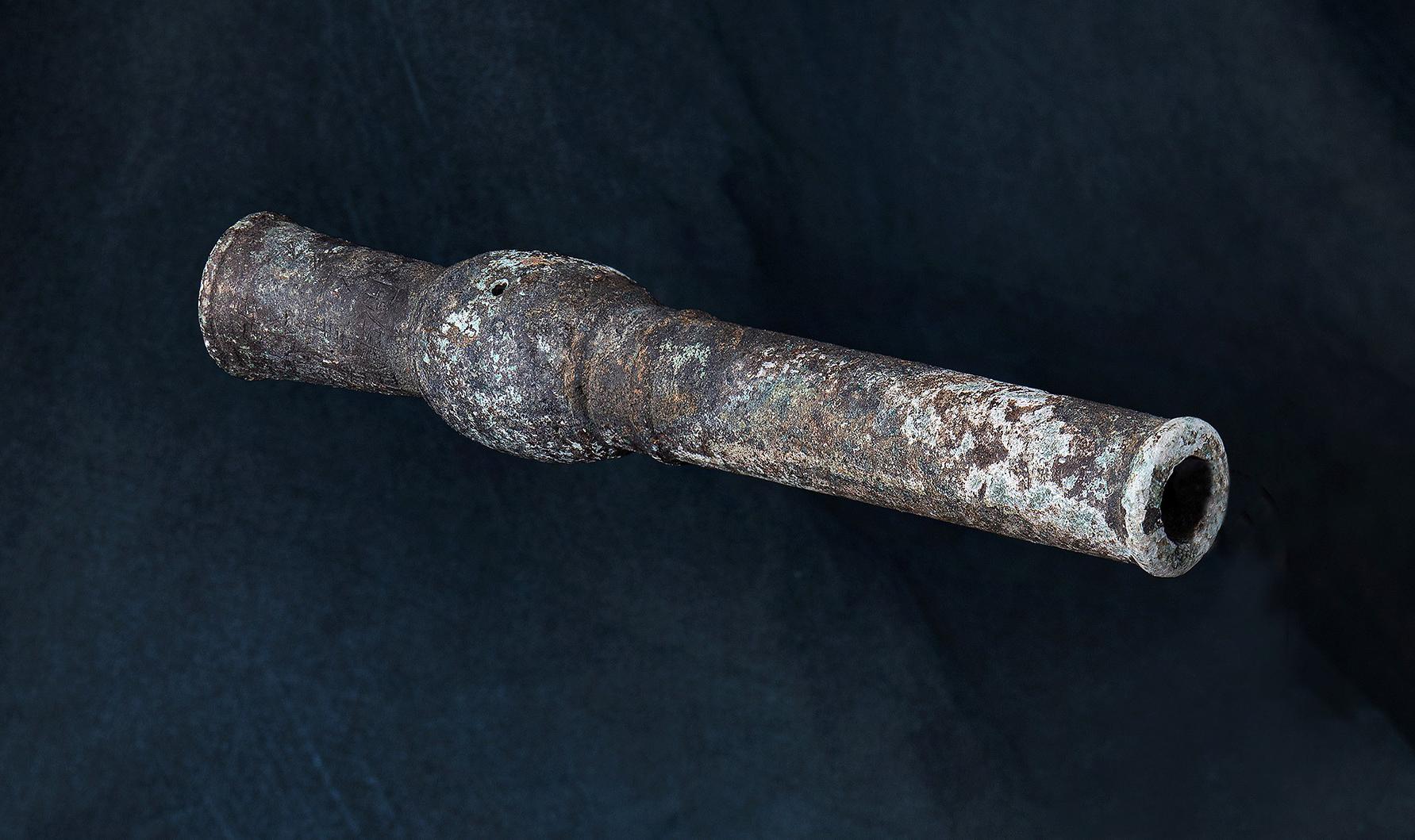
A small bronze weapon discovered on a mountainside in South Korea has been identified as the oldest known gunpowder firearm found in the country, providing rare physical evidence for Korea’s early development of gunpowder weapons.
Known as the Hwangja Hwatong, or “Yellow-Character Fire Tube,” the weapon was found on Geumseongsan Mountain in Naju in November 2023. After nearly three years of scientific analysis and historical research, specialists concluded that it was manufactured either in 1377 or 1437.
The Korea Heritage Service’s Naju National Research Institute of Cultural Heritage announced the findings on September 21. A 28-character inscription preserved on the bronze weapon proved crucial to identifying its date, makers and original function.
Found during a landmine survey
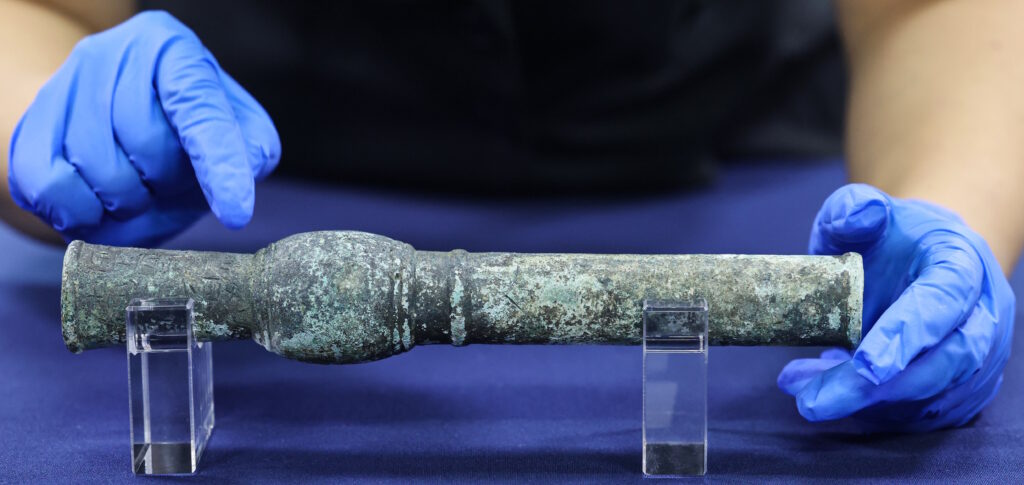
The Hwangja Hwatong did not come from a conventional archaeological excavation. It was discovered during a military landmine-detection operation carried out before trail construction on Geumseongsan Mountain, about 280 kilometers south of Seoul.
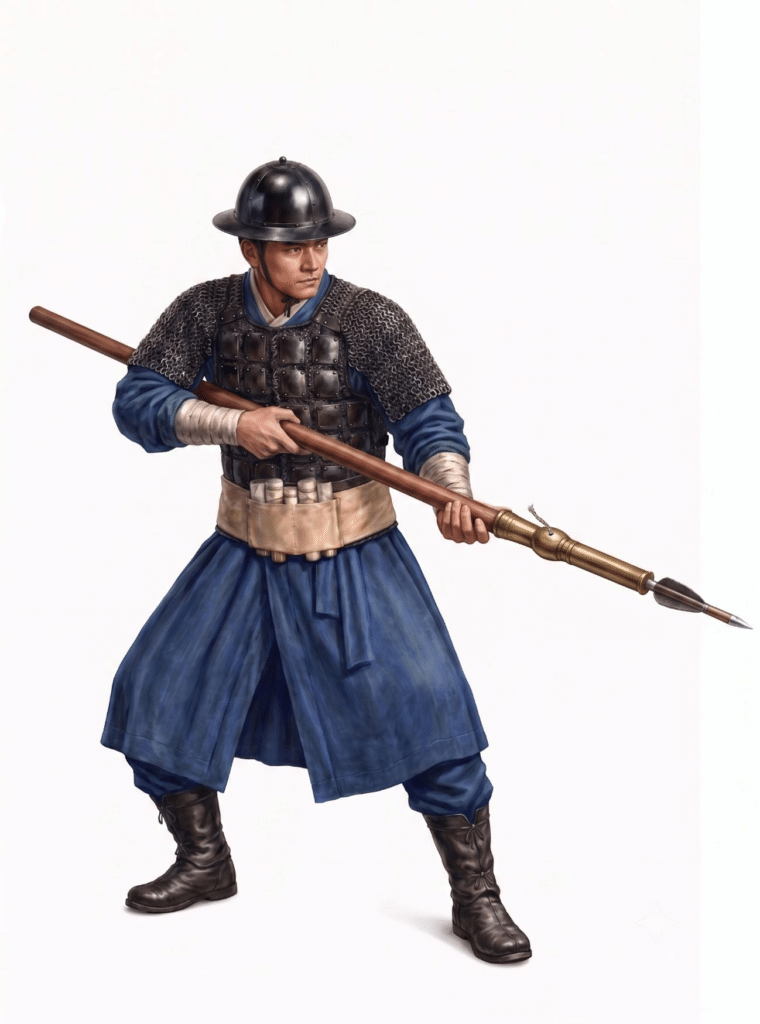
The weapon is remarkably compact, measuring 23.75 centimeters long and weighing 1,032 grams, with a bore diameter of 1.66 centimeters. A wooden handle would originally have been inserted into a socket at the rear, allowing the weapon to be held while firing.
Hwatong, literally meaning “fire tube,” was a term used for early gunpowder weapons capable of firing arrows or other projectiles. Such firearms became increasingly important as Korean states developed and standardized their own gunpowder technology.
In the case of the Naju weapon, however, the inscription makes the object particularly valuable because it preserves details normally lost from early firearms.
Twenty-eight characters identify its makers
Researchers identified 28 engraved characters on the Hwangja Hwatong, with 27 arranged in six lines around the socket and another character engraved on the muzzle.
The inscription records the weapon’s name and weight, as well as the people responsible for producing it. It identifies an official named An Hyu-bo as the supervisor and an artisan named Seok as the maker. A separate character meaning “eight” on the muzzle may have served as a production or inventory number.
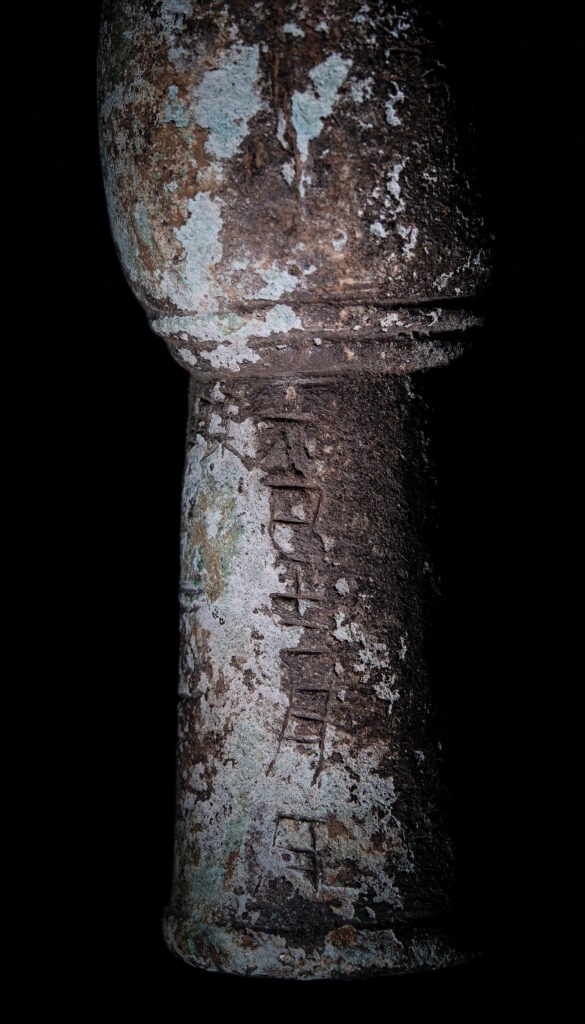
Most importantly, the inscription states that the weapon was made in the twelfth month of a Jeongsa year.
Because the traditional Korean calendar followed a repeating 60-year cycle, researchers cannot yet assign the inscription to a single modern year. Their analysis has narrowed the possibilities to 1377, during the late Goryeo Dynasty, or 1437, during the reign of Joseon king Sejong.
Either date places the weapon earlier than any other surviving gunpowder firearm currently known from Korea.
Either date places it at a turning point
If the Hwangja Hwatong dates to 1377, it would belong to a pivotal period in Korean military history. That year, Goryeo established the Hwatong Dogam, a state office responsible for producing gunpowder weapons following the work of military engineer Choe Mu-seon.
Choe played a central role in developing Korean gunpowder technology at a time when the kingdom faced repeated maritime attacks by Japanese raiders. Firearms soon became increasingly important in Korean naval and coastal defense.
A date of 1437 would also place the weapon within an important phase of technological development. King Sejong’s reign saw continued efforts to improve and standardize firearms before more advanced designs appeared during the 1440s.
The weapon’s internal construction may offer another clue. Its powder chamber has a rounded interior associated with relatively early firearms, differing from later weapons that used wooden plugs to transfer explosive force more efficiently to a projectile.
What the bronze weapon can still reveal
Scientific analysis showed that the Hwangja Hwatong was cast from a bronze alloy composed mainly of copper, tin and lead. Together with the inscription and the internal design of the weapon, the results confirmed that it was a functioning firearm rather than another type of bronze object.
Surviving gunpowder weapons from the transition between the late Goryeo and early Joseon periods are extremely rare. The Naju example is especially important because researchers know where it was found and because the people involved in its manufacture left their identities directly on its surface.
The Hwangja Hwatong is now being displayed at the National Palace Museum of Korea as part of a special exhibition of newly discovered cultural heritage.
Its small size may make it easy to overlook beside larger historic weapons, but the inscription across its bronze surface preserves something far more unusual: a direct connection between an early Korean firearm and the officials and artisan responsible for producing it more than six centuries ago.
Cover Image: The Hwangja Hwatong, a bronze “fire tube” identified as the oldest known gunpowder weapon found in Korea. The weapon may date to either 1377 or 1437.