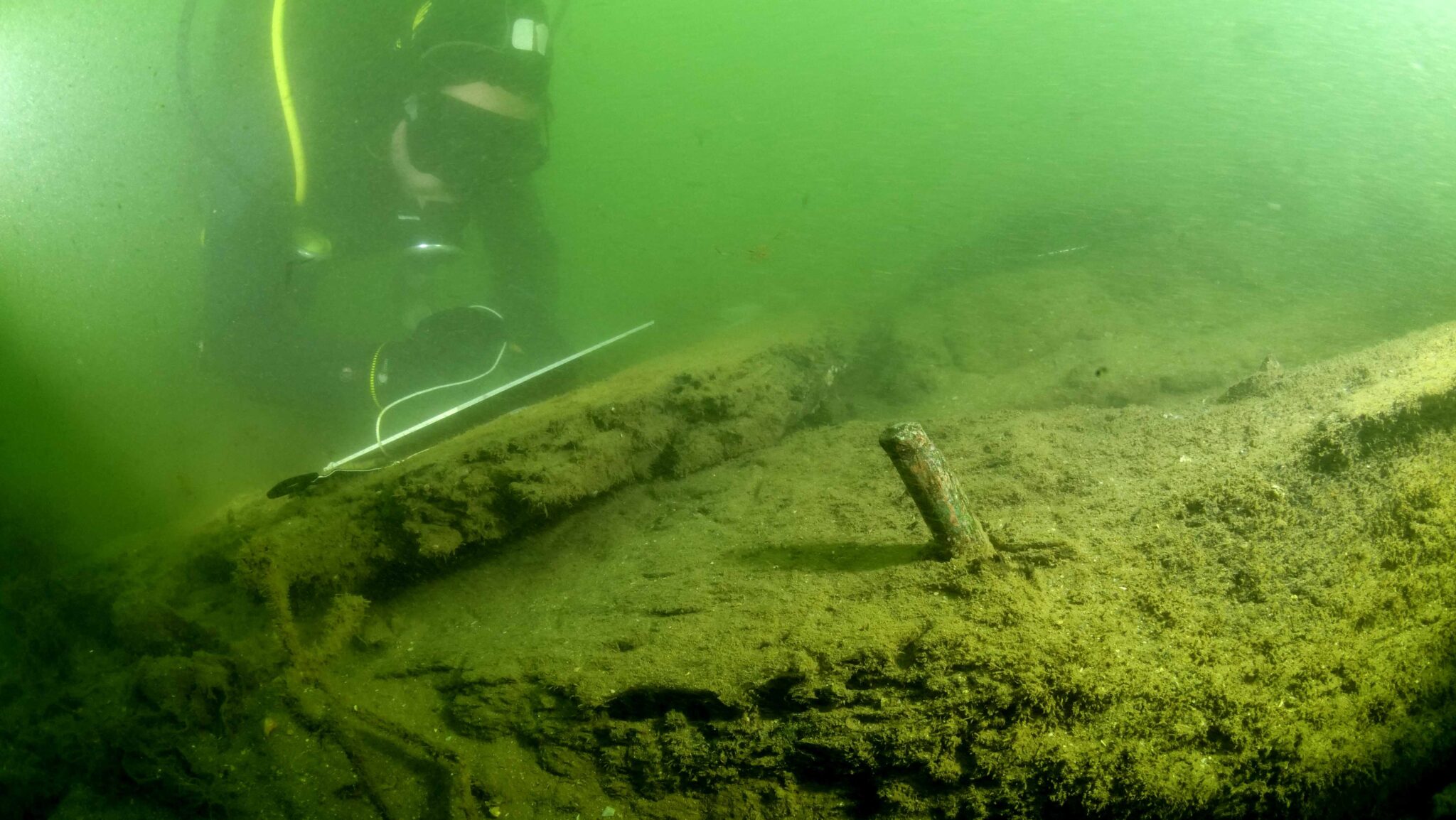
A mysterious wooden ship resting at the bottom of Portugal’s Arade River has emerged in unprecedented detail, giving archaeologists their clearest look yet at a vessel whose origin, purpose and final voyage remain unknown.
Known as GEO 5, the wreck lies near Ferragudo in Portugal’s Algarve region. Archaeologists believe it probably dates to the 19th century and estimate that the surviving structure extends for around 25 meters. The site has been known for years, but unusually favorable conditions during the latest campaign exposed more of the vessel than in earlier surveys and allowed researchers to document it in far greater detail.
A ship with no known origin
José Bettencourt, coordinator of Portugal’s National Centre for Nautical and Underwater Archaeology, presented the new results at the Museu de Portimão on October 1.
The vessel’s construction points broadly to the 19th century, but little else is certain. Archaeologists do not yet know where the ship was built, what it carried, what role it served or why it sank in the Arade.
That uncertainty gives the wreck unusual research value. While large naval vessels from the period are often well documented, archaeologists know far less about many merchant and working ships that moved goods and people between regional ports. GEO 5 may eventually help fill part of that gap.
The river preserved the lower part of the ship
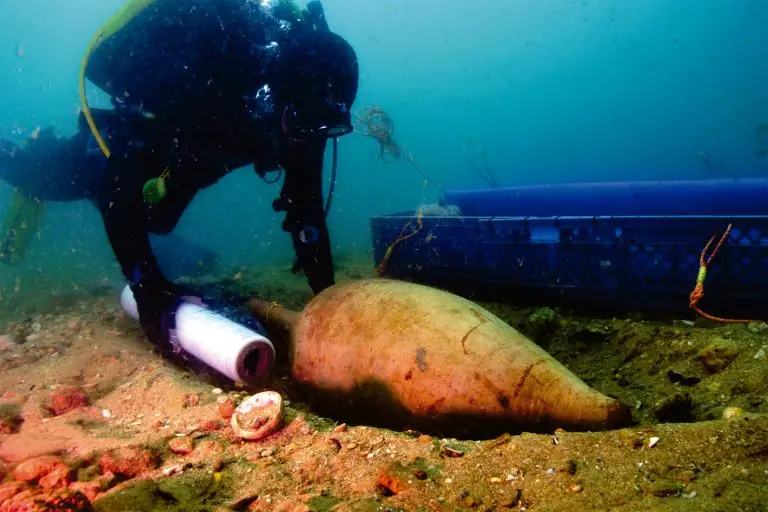
Time, currents and erosion have removed much of the vessel’s upper structure, but the lower section remains comparatively well preserved beneath river sediments.
Researchers have so far avoided a large-scale excavation. Earlier work focused mainly on non-invasive surveys and on recording whichever parts of the wreck were visible at the time. During the 2026 campaign, more of the structure was exposed than in previous interventions.
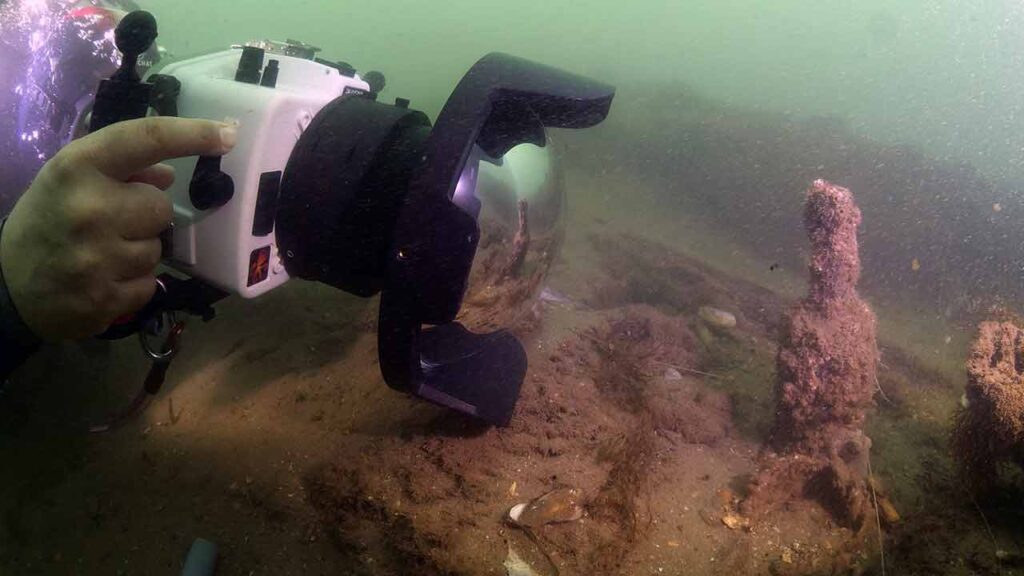
Archaeologists used underwater photography, video, photogrammetry and georeferencing to create a detailed three-dimensional model of the surviving timbers. The model allows them to examine the wreck’s construction and layout without disturbing the site.
Researchers also recovered some metal objects for chemical analysis and plan to study the timber itself. Determining the origin of the wood may eventually help narrow down the vessel’s own origins.
Excavation may reveal why the ship was here
The next phase is expected to begin in May 2027, when archaeologists plan targeted excavation trenches and systematic recovery of material from several underwater sites in the Arade.
For GEO 5, even limited excavation could provide crucial evidence. Objects still buried in the sediment may reveal what the crew carried, how the ship was used and what kind of maritime activity brought it into the river.
Those clues could place the vessel within the wider commercial networks that linked the Algarve to other ports during the 19th century.
GEO 5 is only one part of a much longer maritime landscape beneath the Arade. The MUSA project is investigating underwater remains spanning from the Roman period to the early 20th century, showing how the river served as a maritime corridor for centuries.
A wreck facing modern threats
The mystery surrounding GEO 5 is matched by a more immediate concern: its preservation.
During the latest survey, researchers documented fishing nets, cables and other modern activity around the wreck. Its position close to an active navigation channel adds further pressure to a site that has survived beneath the river for more than a century.
Archaeologists will eventually have to decide whether GEO 5 should remain protected in place or whether more extensive excavation is necessary.
For now, much of its story remains sealed beneath the sediment. The 2026 campaign has revealed the ship’s surviving structure in unprecedented detail, but questions about where it came from, what it carried and why it ended up in the Arade could begin to find answers during the next phase of excavation.
Cover Image: A diver documents the remains of the 19th-century shipwreck known as GEO 5 in the Arade River, near Ferragudo in Portugal’s Algarve. The surviving wooden structure extends for around 25 meters. Photo: Pedro Barros / José António Bettencourt / Bruno Filipe Pires