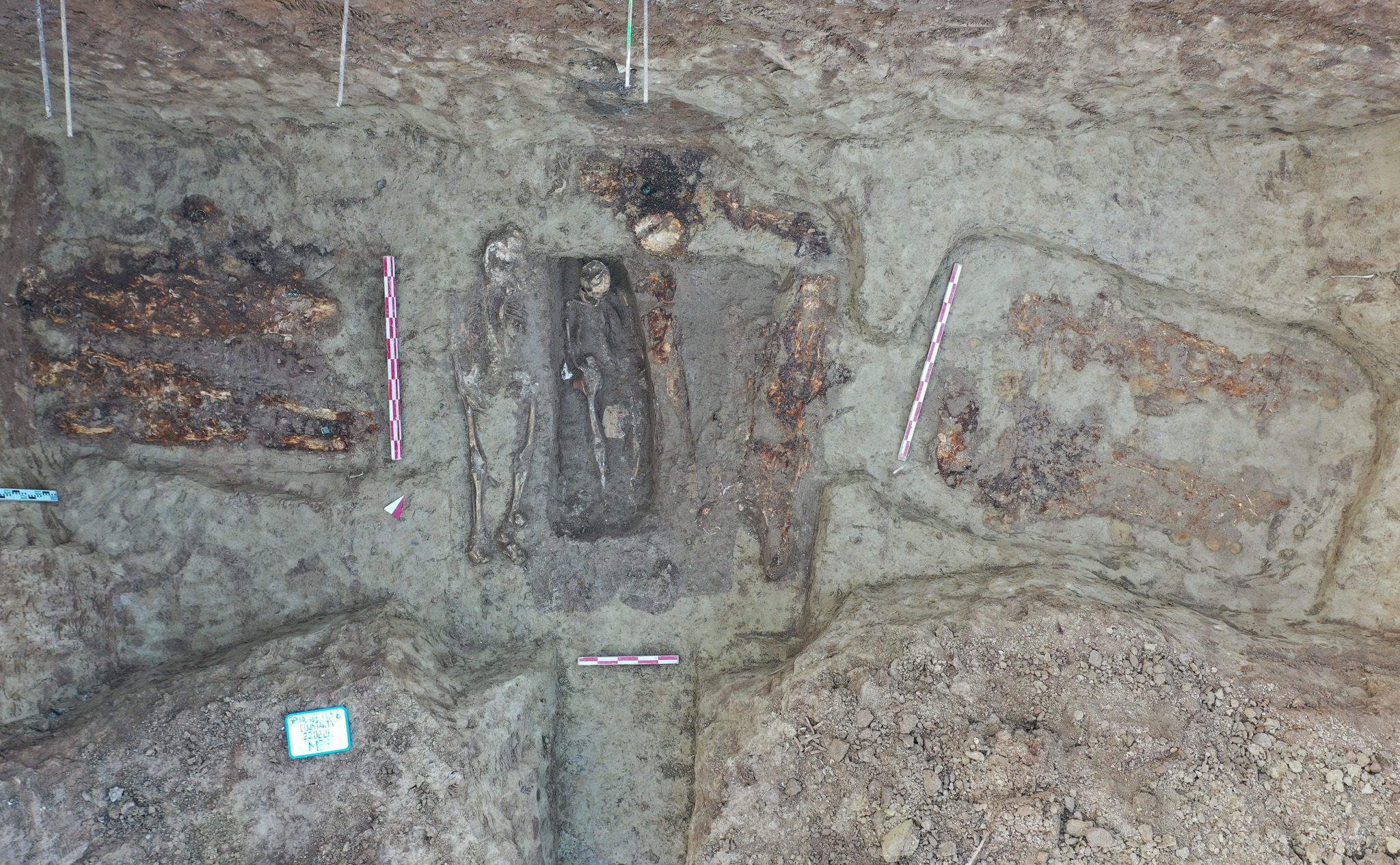
Construction works at the Constanța Municipal Hospital have led to a significant archaeological discovery inside the ancient necropolis of Tomis, revealing 34 Roman-era graves — some arranged in catacomb-style burials — along with rare and high-status funerary objects.
The finds were made during legally mandated preventive excavations carried out by the Constanța Museum of National History and Archaeology (MINAC), as part of an energy-efficiency modernization project at the hospital building.
What began as routine archaeological supervision quickly evolved into a substantial excavation campaign.
Excavations Inside the Necropolis of Ancient Tomis
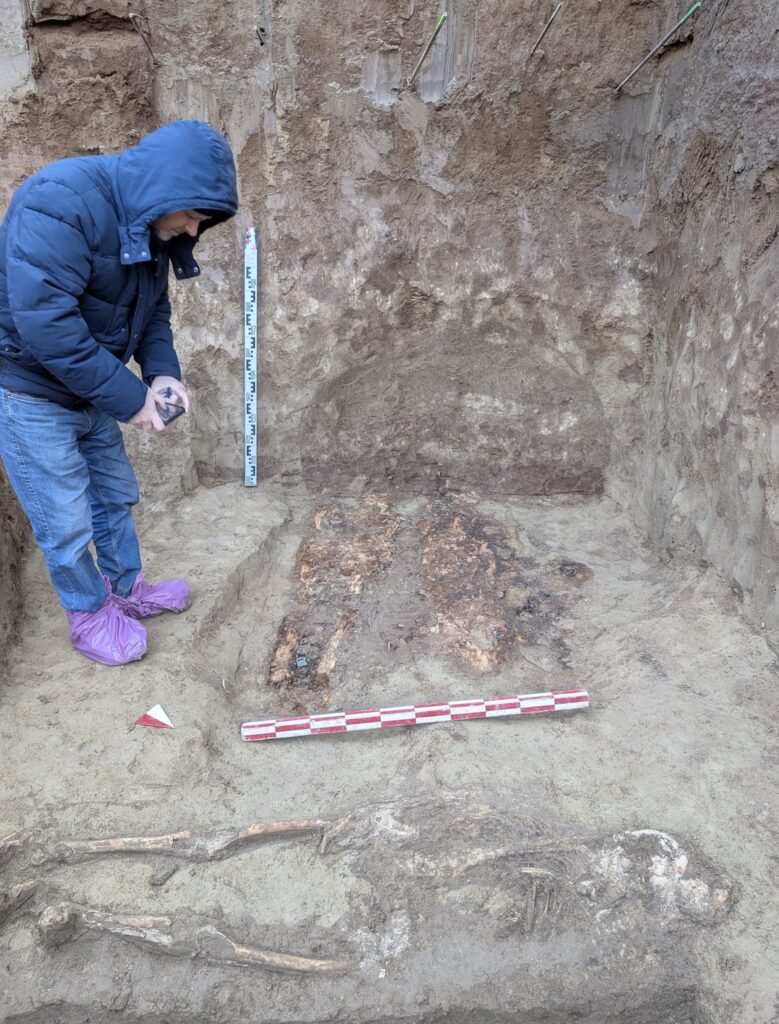
The hospital complex lies within the protected perimeter of the Necropolis of ancient Tomis, one of the most important Roman-era burial zones on the western Black Sea coast. Romanian heritage law requires preventive archaeological investigation before any major construction in such areas.
Fieldwork was conducted in two phases between September 2025 and February 2026, after demolition and utility relocation works allowed archaeologists access to the site.
Despite interruptions caused by demolition activities and later by structural safety concerns involving adjacent hospital buildings classified in the highest seismic risk category (RS1), archaeologists completed the research stage in late February.
Out of 114 scheduled working days, 39 were active excavation days — a timeline shaped not by delay, but by the sequencing of construction and safety constraints.
Catacombs, Amphorae, Jewelry and Coins
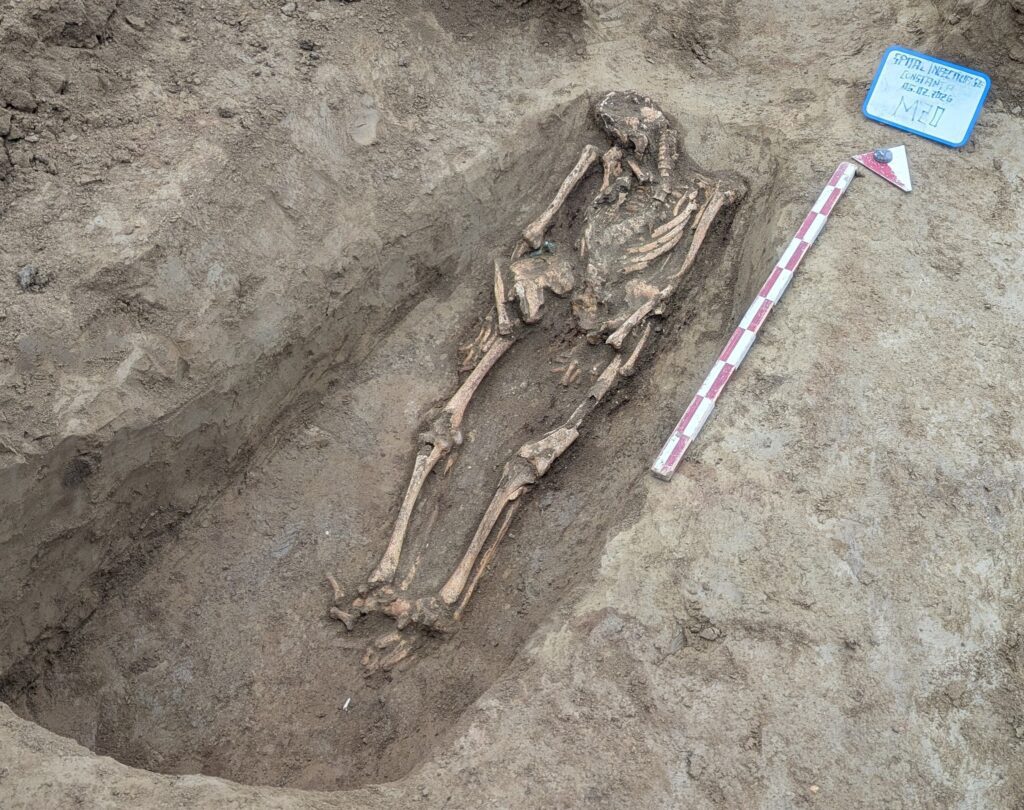
The excavation revealed 34 graves dating to the Roman period. Several burials were arranged in catacomb-type structures, indicating organized funerary planning and possibly family groupings.

Most of the graves contained funerary goods, including personal adornments and jewelry placed beside the deceased, glass vessels, Roman coins, and a substantial quantity of ceramics, particularly African amphorae that once carried goods across the Mediterranean.
The amphorae suggest long-distance trade links between Tomis and North Africa, reinforcing the city’s role as a dynamic Black Sea port integrated into Mediterranean commerce.
A Rare Parade Shield Umbo
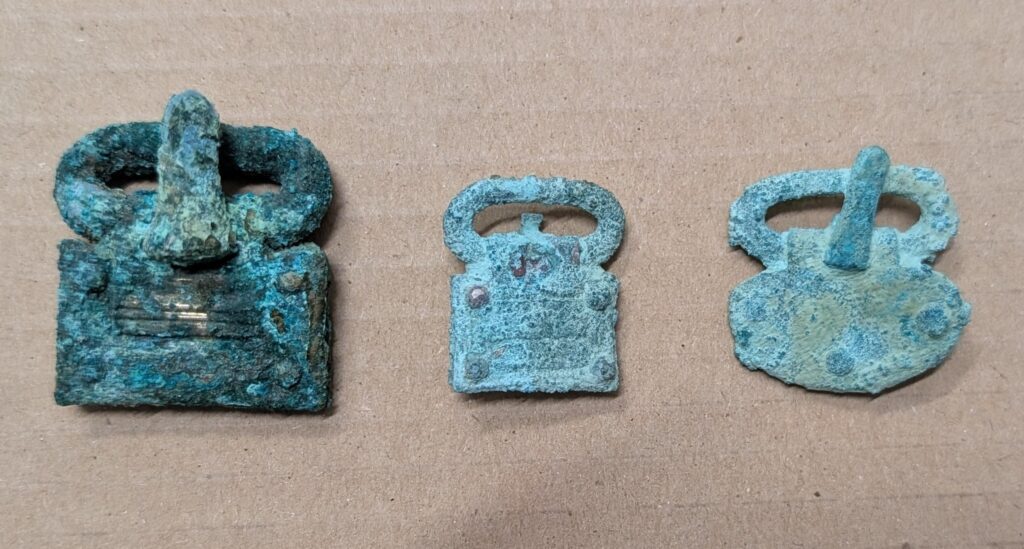
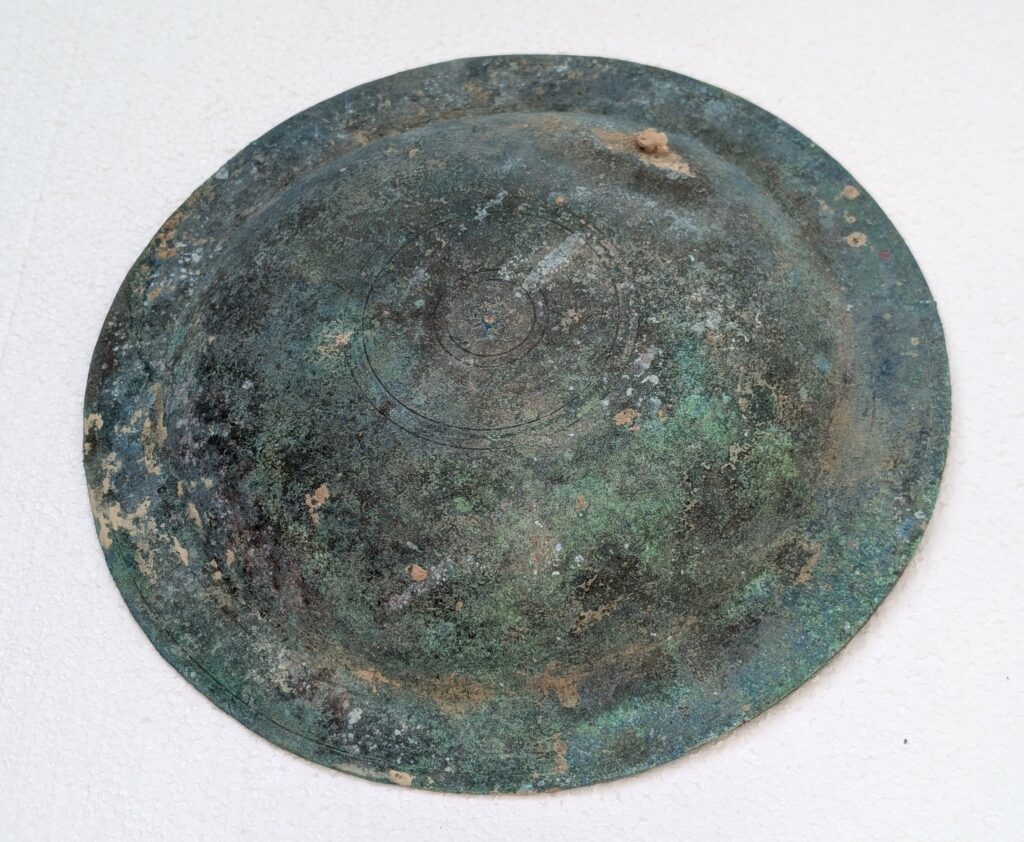
Among the discoveries, one object stands out: a metal umbo — the central boss of a shield — identified as part of a ceremonial or parade shield.
Such items are rarely found in funerary contexts in Dobrogea. The find may indicate the burial of a person connected to military or civic ceremonial roles, potentially someone of elevated status within Roman Tomis.
Greek Inscription Points to Religious Association
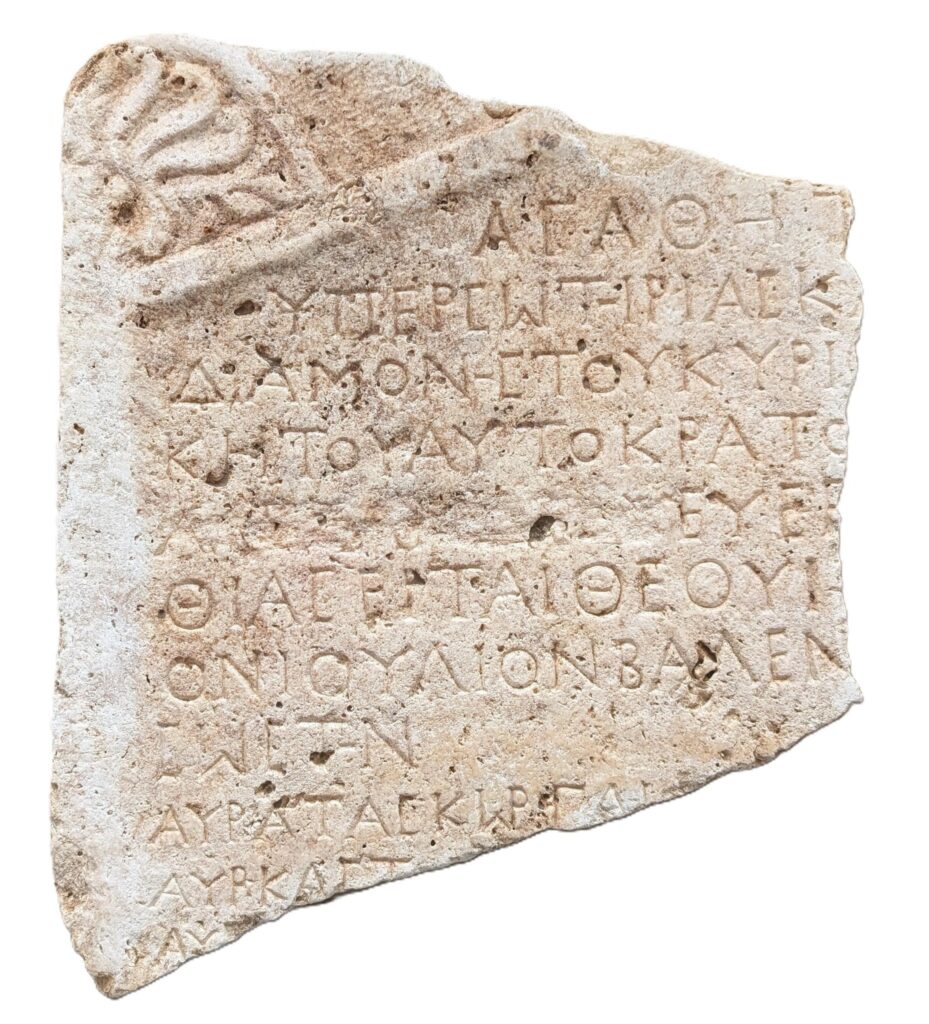
Another exceptional find is a Greek inscription dating to the 3rd century AD. According to preliminary interpretation, the inscription refers to a religious association active in Tomis during the Roman period.
If confirmed, the inscription adds new evidence to the complex religious life of the city, where pagan cults, imperial worship, and later early Christian communities coexisted.
Tomis — known today as Constanța — was a thriving provincial center of Roman Scythia Minor and the place of exile of the poet Ovid in the 1st century AD. Its necropoleis remain one of the richest archaeological sources for understanding daily life and belief systems along the western Pontic frontier.
Safety Interruptions and Seismic Risk
Excavation work was temporarily suspended in early February 2026 after official notices warned of dangerous demolition conditions and structural instability in nearby hospital buildings. One adjacent structure was classified in RS1 seismic risk category, the highest level under Romanian regulations.
Archaeologists returned to the site to recover materials and complete topographic documentation once limited access was deemed safe.
By February 25, 2026, the museum formally confirmed that preventive research within the affected perimeter had been completed, allowing the infrastructure project to proceed.
Archaeology in an Urban Landscape
Preventive excavations in historic cities often reveal how deeply modern infrastructure overlaps with ancient landscapes. The Constanța case highlights the layered character of Tomis — where Roman catacombs now lie beneath hospital foundations.
The duration of such research cannot be precisely forecast. Each trench can alter the scale of discovery. What began as mandatory supervision ultimately yielded one of the more substantial recent Roman funerary assemblages in the city.
Cover Image Credit: Muzeul de Istorie Națională și Arheologie Constanța via Facebook