
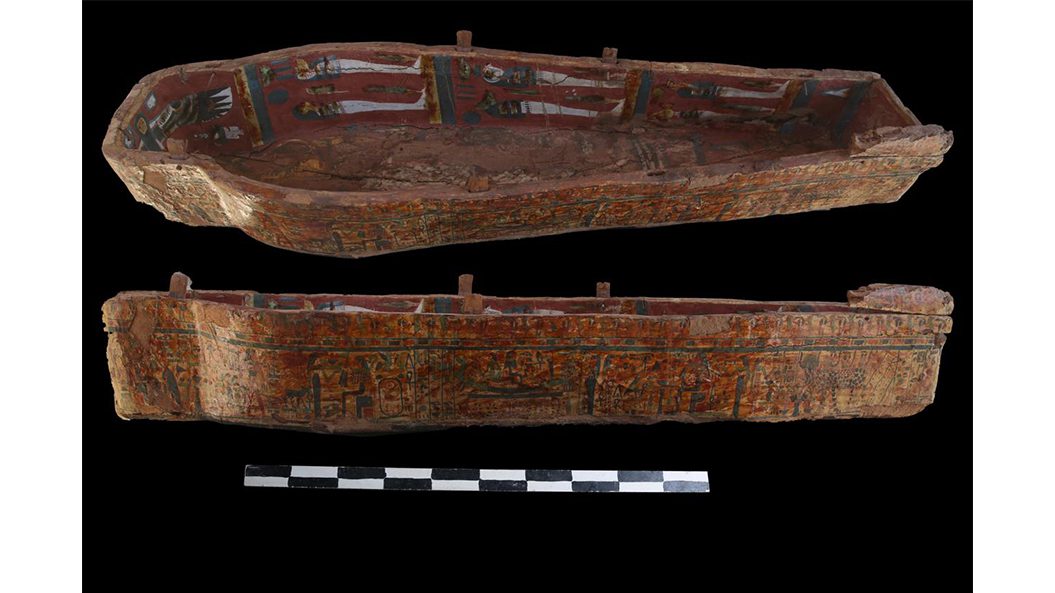
A tightly packed rock-cut chamber in the necropolis of Asasif on Luxor’s West Bank has yielded one of the most visually striking finds of recent years: 22 brightly painted wooden coffins linked to women who served as “Singers of Amun” during Egypt’s Third Intermediate Period.
The discovery was announced by Egypt’s Ministry of Tourism and Antiquities following excavations carried out by a joint mission affiliated with the Supreme Council of Antiquities and the Zahi Hawass Foundation for Archaeology and Heritage. The burial cache was uncovered in the southwestern corner of the Asasif necropolis, part of the broader Theban funerary landscape opposite modern Luxor.
A Carefully Organized Funerary Repository
The coffins were found stacked in multiple layers inside a rectangular rock-cut chamber that appears to have functioned not as a primary tomb, but as a secondary funerary repository. Arranged in ten horizontal rows, the coffins had their lids separated from their bases—an intentional strategy to maximize space within the confined chamber.
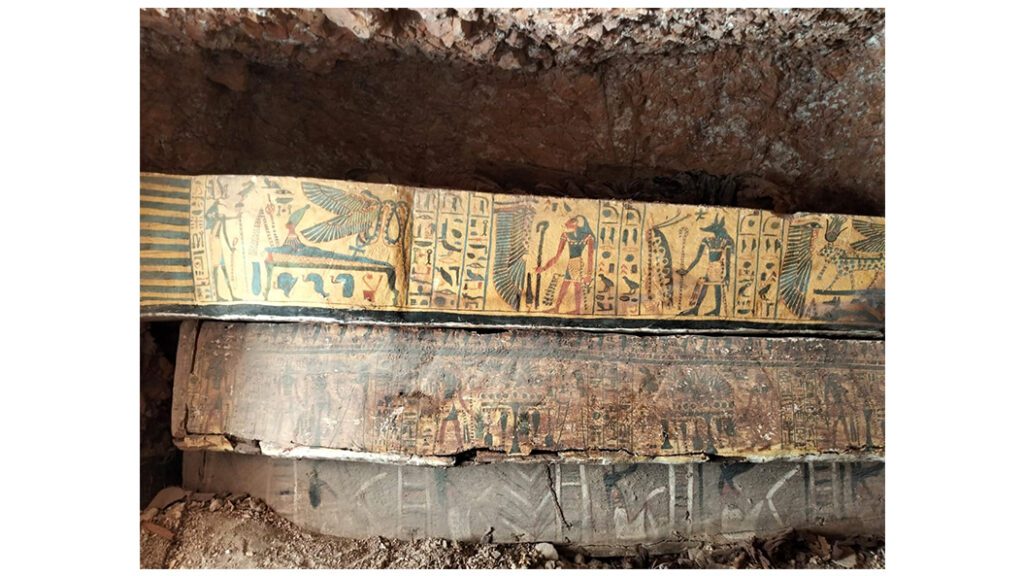
This detail alone suggests careful planning by ancient embalmers and temple authorities. Rather than a chaotic reburial, the arrangement reflects deliberate organization, likely carried out during a period when earlier tombs were being cleared, consolidated, or protected from looting.
Preliminary assessments date the coffins to the Third Intermediate Period, approximately 1070–664 BC, spanning Dynasties 21 to 25. This era followed the political fragmentation of the New Kingdom and was marked by shifting power structures between Tanis in the north and Thebes in the south. In Thebes, temple institutions—especially those dedicated to Amun—held considerable influence.
The “Singers of Amun” and Temple Authority
What makes this discovery particularly significant is the repeated appearance of a specific title on the coffins: “Singer of Amun.”
Rather than prominently displaying personal names, many of the coffins emphasize this religious designation. The title refers primarily to women attached to the cult of Amun, Egypt’s supreme deity at the nearby temple complex of Karnak Temple. These women participated in ritual music, chanting, and ceremonial performances integral to temple liturgy.
The concentration of coffins bearing this title provides rare insight into the collective burial practices of temple-associated women. It also sheds light on the social prominence of female religious functionaries during a transitional period in Egyptian history, when priestly and temple networks wielded substantial economic and political authority.
Far from being peripheral figures, these singers formed part of a structured religious hierarchy that sustained the cult of Amun at Thebes—then one of the most powerful religious centers in the Nile Valley.
Rare Sealed Vessels: An “Information Treasure”
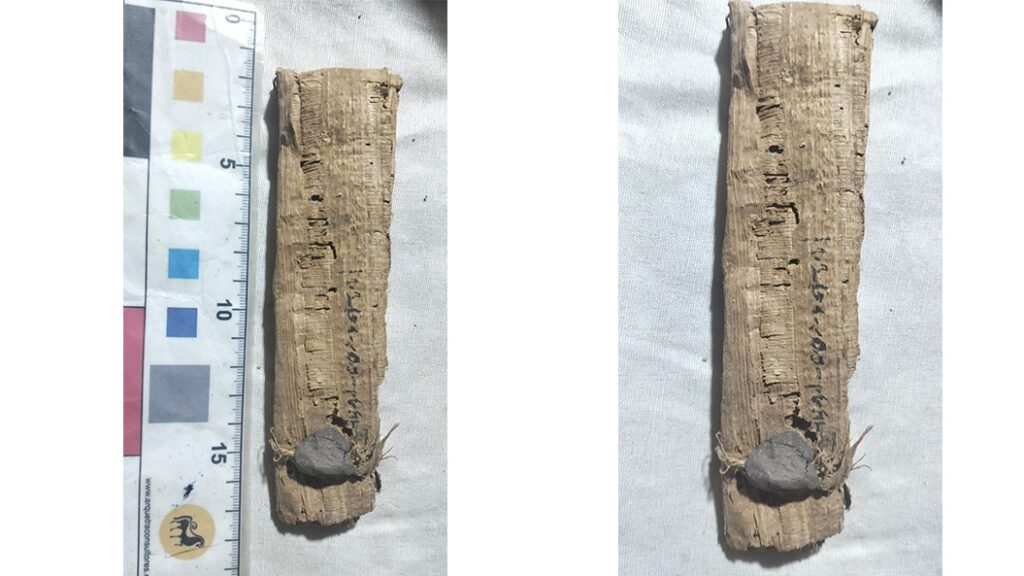
In addition to the coffins and associated mummies, archaeologists uncovered pottery vessels likely used in mummification rituals. Most striking among them are eight rare sealed containers placed inside a larger ceramic vessel.
Several still retain their original clay seals in varying sizes. Their intact condition raises the possibility that organic materials, ritual substances, or embalming residues may still be preserved inside. Specialists have described these jars as a potential “information treasure,” pending careful conservation and laboratory analysis.
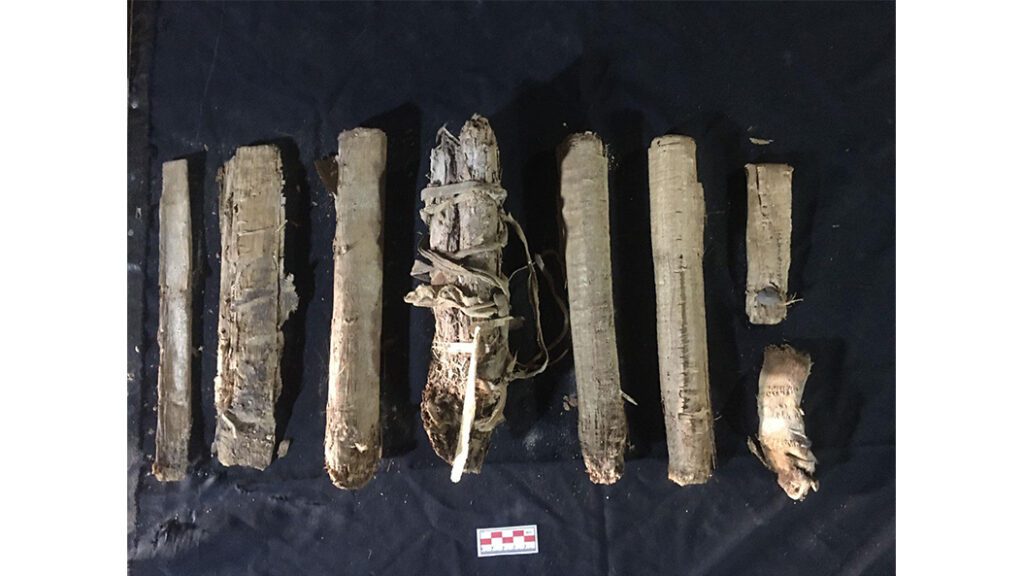
If their contents remain undisturbed, they could offer valuable data on embalming techniques, ritual substances, and the material culture of Theban temple communities during the Third Intermediate Period.
Conservation Efforts Underway
The coffins themselves are in fragile condition. According to Minister of Tourism and Antiquities Sherif Fathy, urgent conservation measures were initiated immediately after their discovery. Restoration teams have stabilized weakened wood fibers, consolidated flaking pigment layers, and carried out meticulous mechanical cleaning to preserve the vivid painted decoration.
These interventions aim to secure the artefacts before further study and eventual display or storage. Zahi Hawass, who heads the expedition, characterized the discovery as a major addition to the archaeological record of the Third Intermediate Period—an era often overshadowed by Egypt’s more centralized dynasties.
Searching for the Original Tombs
Excavations are ongoing as researchers attempt to locate the original burial places from which the coffins were relocated. The existence of a secondary repository suggests that the coffins were transferred from earlier tombs, possibly during times of instability or as part of systematic reorganization within the necropolis.
Identifying the primary tombs could clarify whether the individuals were buried together intentionally as a temple cohort or reassembled later for protection.
Within the vast funerary landscape of Thebes—often described as the world’s largest open-air museum—such discoveries continue to refine our understanding of religious life, gender roles, and institutional power in ancient Egypt.
The painted coffins of the “Singers of Amun” do more than add color to museum collections. They illuminate a network of women whose voices once resonated through the halls of Karnak, linking ritual performance to eternal remembrance in the necropolis across the Nile.
Cover Image Credit: Ministry of Tourism and Antiquities