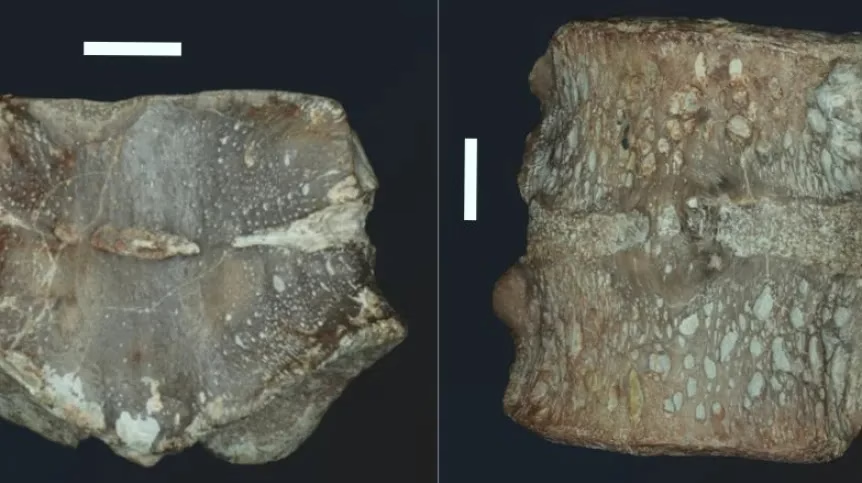
Fossil excavations in Krasiejów, Poland, have revealed that prehistoric amphibians were far more fragile than once thought. Researchers from the Paleobiology Center at Opole University have identified the earliest recorded spinal disorders in fossils of the genus Metoposaurus, distant relatives of modern frogs and salamanders.
The findings, published in Scientific Reports (Nature Publishing Group), show that spinal pathologies date back 225 million years, to the Late Triassic period.
Scoliosis and spondyloarthropathy in giant amphibians
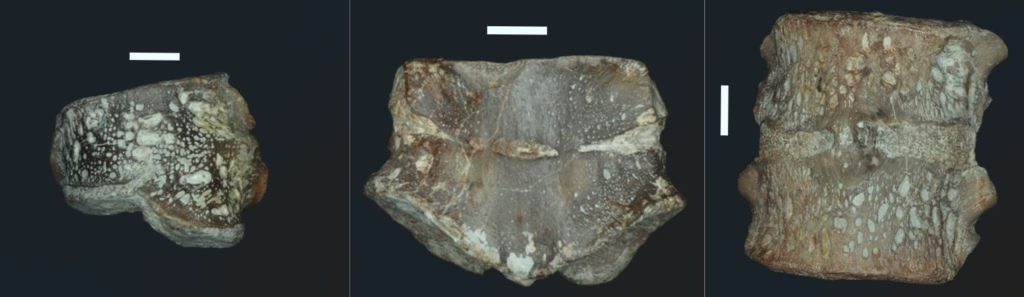
According to lead author Dr. Mateusz Antczak, several pathologies were documented in the fossils, including:
- Scoliosis (lateral curvature of the spine),
- spondyloarthropathy (abnormal bone and cartilage overgrowth),
- and an abnormal split in the first cervical vertebrae.
The latter anomaly represents the earliest known case in the entire fossil record. Until now, such malformations had only been observed in mammals dating back thousands—not millions—of years.
Metoposaurus: amphibians the size of crocodiles
Although related to frogs and salamanders, Metoposaurus species were crocodile-sized predators. Their fossils are among the most numerous finds from Krasiejów, one of Poland’s most important paleontological sites, where excavations have continued for over two decades. The specimens described in the new study were uncovered in recent excavation seasons.
Reading disease in stone
Cartilage does not fossilize, but in this case, vertebrae were preserved in a fused state, allowing researchers to reconstruct disease progression step by step.
“Some specimens show early stages of ossification, while others represent advanced stages where the vertebrae are fully fused into a single structure,” Antczak explained.
Importantly, the team also identified spinal disorders in young individuals. This suggests that some conditions were congenital, emerging during embryonic development, rather than acquired with age.
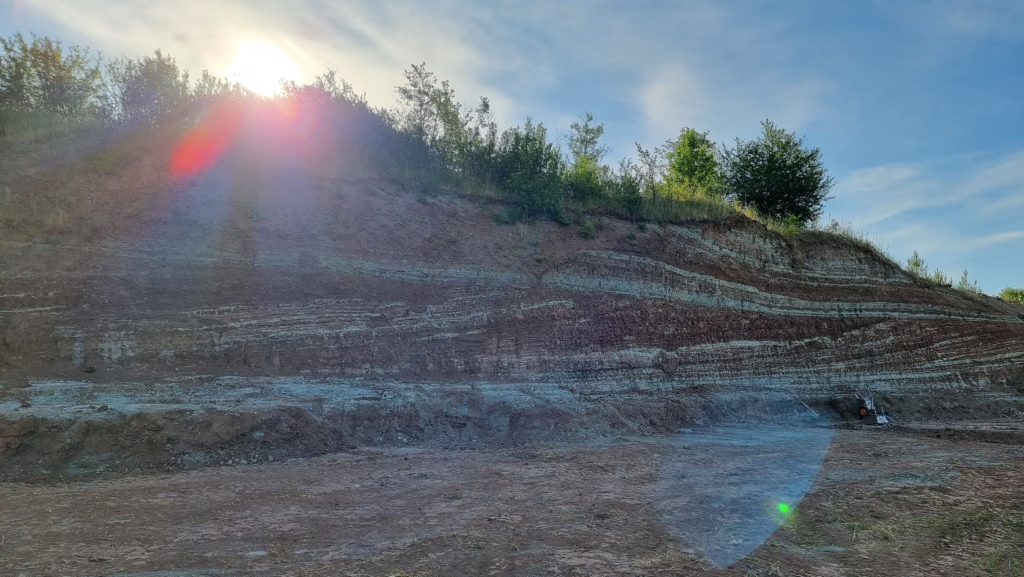
Krasiejów’s wider significance
This is not the first time Krasiejów fossils have revealed evidence of disease. In 2023, a team from the University of Silesia reported a malignant tumor in the vertebra of a Triassic amphibian from the same site—proving that cancer affected prehistoric animals as well.
The latest discovery highlights how fossils preserve not only evolutionary history but also the medical history of ancient life. Antczak noted that additional pathological specimens were unearthed during this year’s excavations and that further research is underway.