
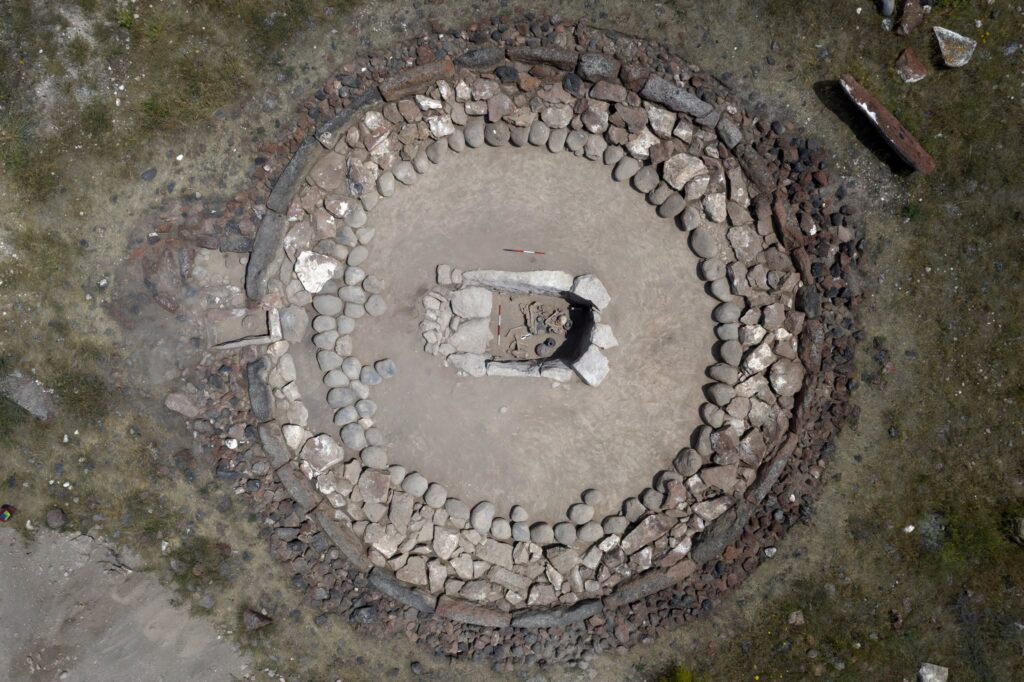
Encircled by massive rings of stone, a Late Bronze Age tomb at Shamiram in western Armenia has yielded bronze weapons, obsidian arrowheads and the remains of a horse sacrificed during an elaborate funerary ritual.
Known as Tomb No. 3, the burial dates to roughly 1600–1200 BCE. Its concentric stone enclosures and central chamber distinguish it from an ordinary grave, while the quality of the objects placed inside points to a burial associated with members of the local elite.
The discovery emerged during the 2026 season of the joint Armenian-Italian archaeological mission at Shamiram, one of Armenia’s largest and most deeply layered ancient settlements.
A monument built around the dead
The tomb was constructed around a central burial chamber surrounded by several circular stone boundaries. Creating such a monument would have required substantial labor, planning and access to an organized workforce.
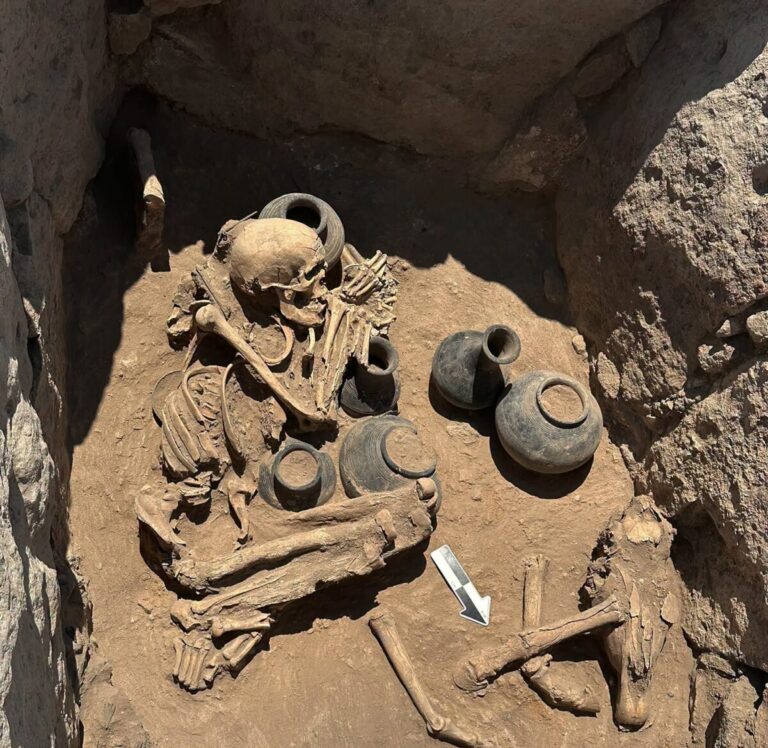
Inside the chamber, archaeologists documented bronze weapons along with arrowheads made from metal and obsidian. Obsidian, a naturally occurring volcanic glass found across the Armenian Highlands, was widely valued for producing sharp-edged tools and projectiles.
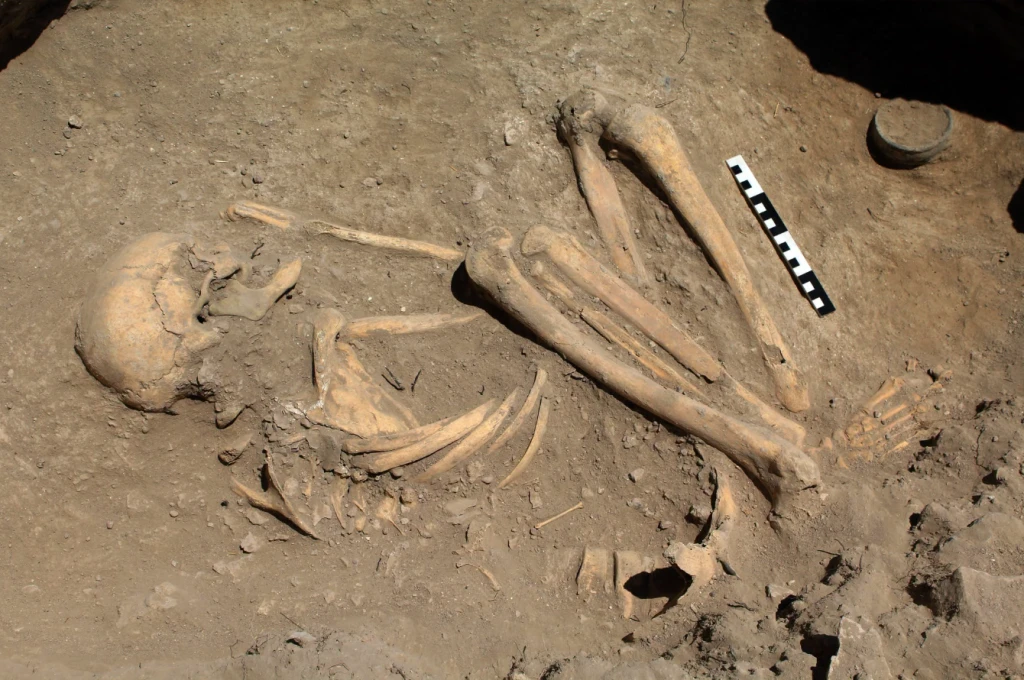
The grave goods, together with the scale of the structure, suggest that the burial belonged to individuals of elevated social standing. Rather than serving only as a place of interment, the monument may also have expressed rank, authority and family identity within the surrounding landscape.
The remains of a horse add a striking ritual dimension to the burial.
Researchers believe the animal was sacrificed during the funerary ceremonies. Horses carried considerable economic and symbolic value during the Bronze Age, particularly in societies where mobility, warfare and prestige were closely connected. Killing and burying such an animal would therefore have represented a costly act.
According to Armenia’s Institute of Archaeology and Ethnography, the find provides new evidence for examining elite burial customs and the symbolic role of horses among Late Bronze Age communities in the Armenian Highlands.
The 2026 campaign continued earlier work at Tomb No. 3 rather than marking the tomb’s initial discovery. This season allowed the team to investigate its construction and funerary assemblage in greater detail.
Shamiram before Urartian rule
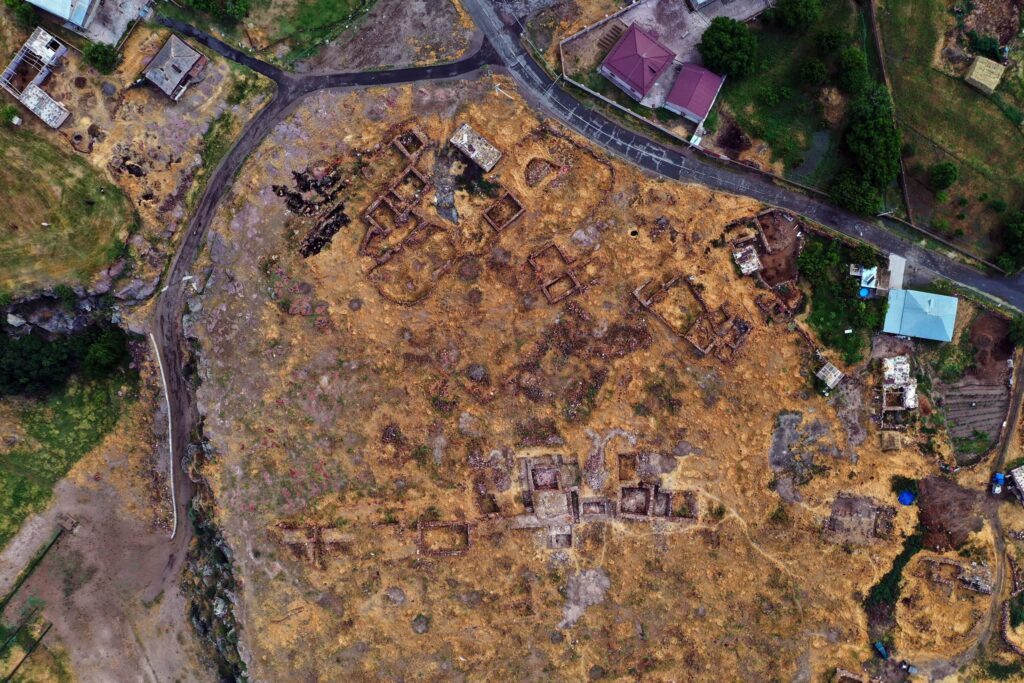
The excavation took place between May 26 and June 25, 2026, across several areas of the Shamiram complex in Aragatsotn Province.
The expedition is directed by Varduhi Melikyan for Armenia and Roberto Dan for Italy. It is conducted through cooperation between the Institute of Archaeology and Ethnography of Armenia’s National Academy of Sciences and ISMEO, the International Association for Mediterranean and Oriental Studies.
Shamiram occupies a broad fortified rocky plateau containing burial grounds, habitation areas and monumental defenses. Archaeological layers at the site preserve more than 3,000 years of activity, extending from the Late Bronze and Iron Ages through the Urartian, Hellenistic, Late Antique, medieval and post-medieval periods.
This long sequence makes it possible to trace how successive communities reused the same fortified landscape.
Behind one of the towers of the Urartian fortress, archaeologists uncovered an Iron Age room bearing clear evidence of fire and destruction. A still earlier burial found below the defensive level predates the construction of the Urartian fortifications.
These layers are particularly important for understanding the period before Shamiram was incorporated into the political sphere of Urartu, also known as the Kingdom of Van.
Urartu emerged as a major power in the Armenian Highlands during the ninth century BCE and remained influential until the sixth century BCE. Its rulers built large fortresses, administrative centers and hydraulic systems across the region.
At Shamiram, the relationship between the earlier settlement and the later Urartian fortress may clarify how local communities were transformed as Urartian authority expanded.
Towers reused across centuries
Elsewhere at the site, archaeologists examined the remains of the fortified settlement’s gateways and towers.
At Tower 3, they exposed a well-preserved Urartian megalithic structure measuring approximately 8.5 meters on each side. Work at another defensive sector indicated that an L-shaped entrance visible today was probably rebuilt during the Hellenistic period over an earlier Iron Age gateway.
Column bases and medieval buildings were also documented beside older Urartian structures. These later additions show that the fortress walls continued to shape the settlement’s layout long after their original defensive role had ended.
The monumental tomb, however, belongs to a much earlier chapter in Shamiram’s history. Its weapons, stone architecture and sacrificed horse indicate that the site already held considerable social and ceremonial importance centuries before the rise of Urartu.
Future study of the human remains, animal bones and grave goods may determine how many people were buried in Tomb No. 3 and provide a clearer picture of the community that built one of Shamiram’s most imposing Bronze Age monuments.