
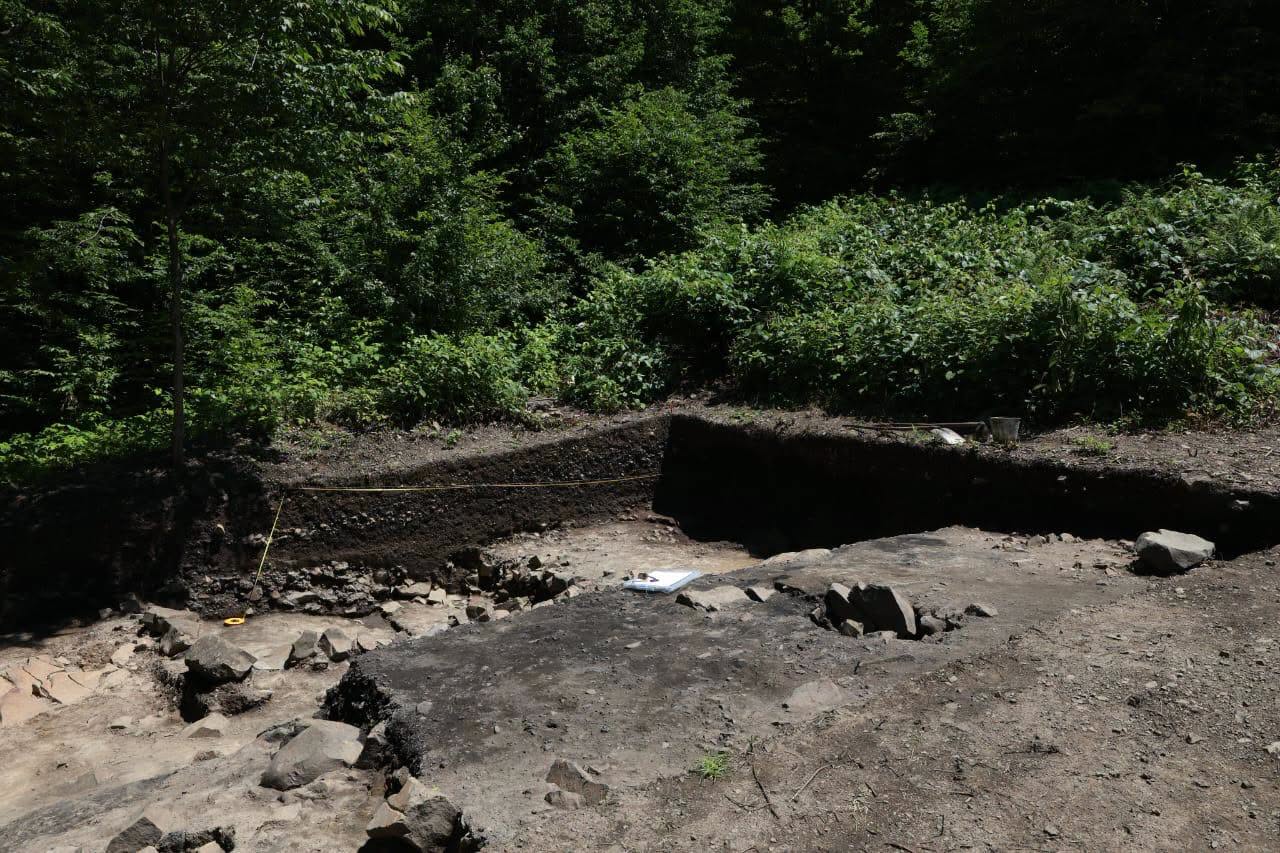
Archaeologists working in western Georgia have uncovered a 3,000-year-old metallurgical complex described as the largest Bronze Age copper workshop yet discovered in the ancient region of Colchis.
The site lies near the village of Doghurashi in Tsageri Municipality, within the mountainous district of Lechkhumi. Laboratory analysis conducted at the University of Oxford dates the complex to between the 13th and 9th centuries BC, spanning the transition from the Late Bronze Age to the Early Iron Age.
According to the Georgian National Museum, the discovery provides rare evidence of large-scale metal production in a region long associated with copper mining and bronze manufacture.
A Major Workshop in Mountainous Colchis
The excavations are being led by the Georgian National Museum in cooperation with researchers from the United Kingdom, Israel and Italy.
The newly exposed complex strengthens the case that Lechkhumi was one of the principal metallurgical centres of mountainous Colchis. Rather than producing metal only for nearby communities, the workshops may have formed part of a broader copper industry operating across the western Caucasus.
The region’s combination of mineral deposits, forests and mountain terraces created favourable conditions for ancient metallurgy. Copper-bearing ore could be extracted locally, while wood from the surrounding landscape provided the charcoal needed to operate the furnaces.
The Doghurashi workshops were therefore positioned close to both the raw material and the fuel required for production, reducing the need to transport heavy ore over difficult mountain routes.
Earlier Excavations Revealed Tonnes of Slag
The latest announcement builds on more than a decade of archaeological work around Doghurashi.
Surveys conducted in 2013 and 2014 first identified several prehistoric copper-production sites northeast of Tsageri. Later excavations documented three separate industrial areas known as Doghurashi I, II and III.
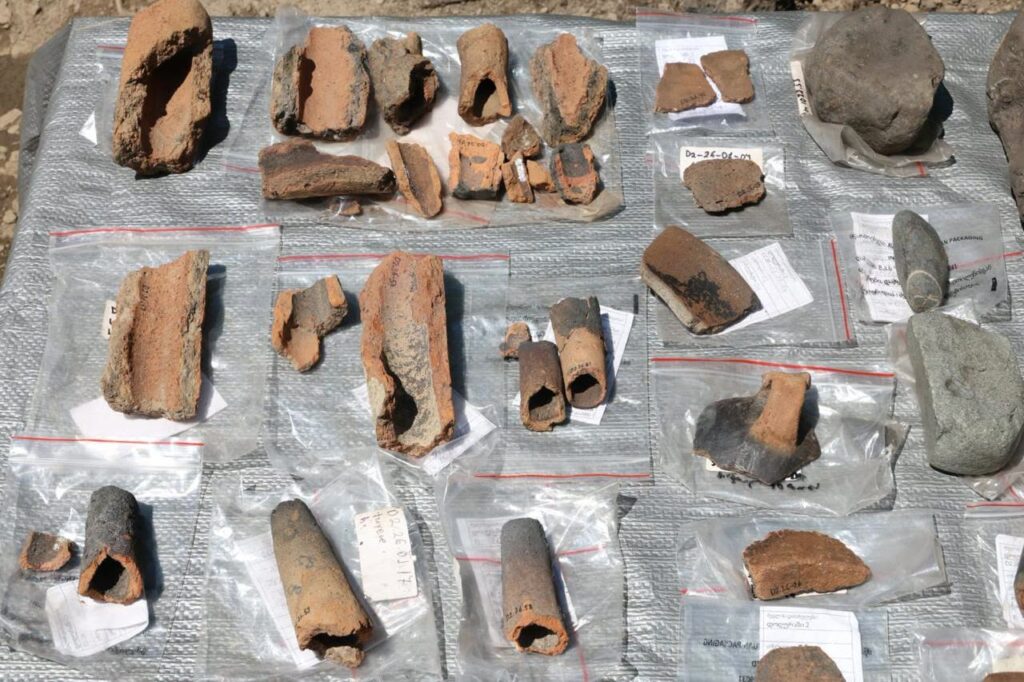
Those earlier investigations uncovered large quantities of slag, charcoal, furnace debris, crucible fragments and ceramic tuyères—pipes used to force air into a smelting furnace. Archaeologists also identified possible hearths where sulphide-rich copper ore was roasted before smelting.
At Doghurashi I, previous researchers estimated that the surviving waste included between 20 and 25 tonnes of slag. Deposits reached depths of up to 2.5 metres, indicating that metalworkers repeatedly returned to the terrace and reorganised the workshop as production continued.
Radiocarbon dates obtained from charcoal and slag placed activity at the site between the 13th and 9th centuries BC. The results suggest that copper was produced there over several centuries rather than during a single, short-lived episode.
Among the more unusual discoveries from the earlier campaigns was a fragment of a tuyère decorated with a raised, snake-like motif. Researchers have cautiously proposed that the design may have carried a symbolic or protective meaning connected with the unpredictable process of smelting.
Reconstructing an Ancient Copper Industry
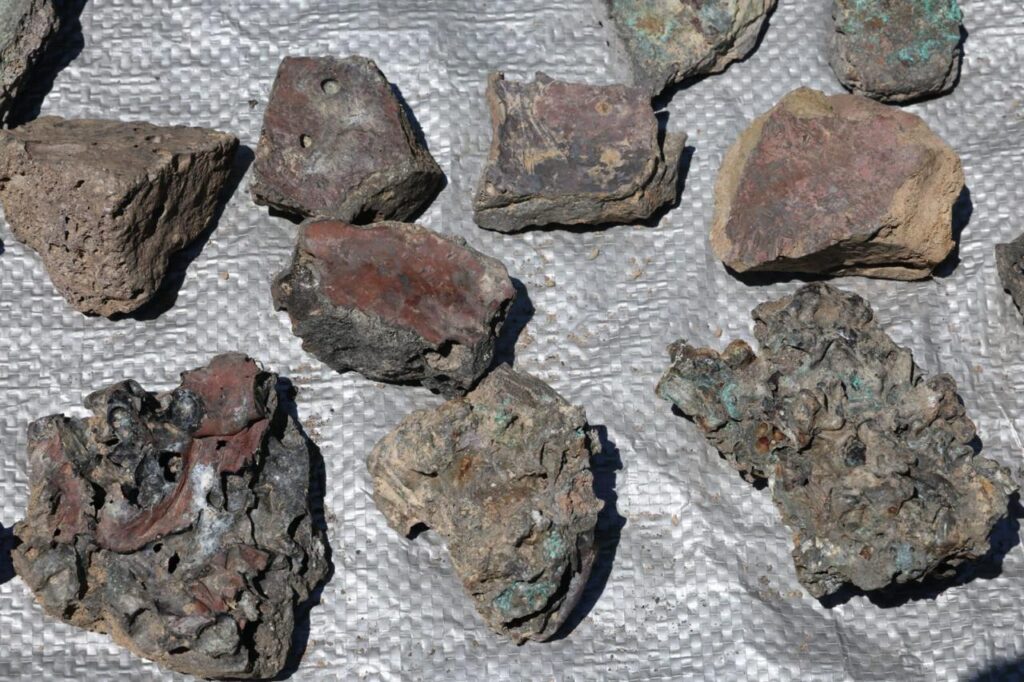
Smelting copper from sulphide ores required more than access to mineral deposits. Metalworkers had to control airflow, temperature and the preparation of the ore while separating usable copper from large volumes of waste material.
The scale of the Doghurashi complex shows that these techniques were practised systematically. The furnaces and surrounding production areas were part of an organised industrial landscape rather than isolated installations used only occasionally.
The expedition is led by archaeologist Nana Rezesidze, while research into the ancient copper workshops is headed by historian Nino Sulava. The project brings together Georgian specialists and international researchers studying archaeology, geology and early metallurgy.
The discovery adds a substantial new chapter to the history of Colchis, a region better known outside Georgia through later Greek accounts and the legend of the Golden Fleece. Long before those stories were written, communities in Lechkhumi had already developed a specialised copper industry capable of operating for generations in the Caucasus mountains.
Cover Image Credit: Georgia’s Ministry of Culture