
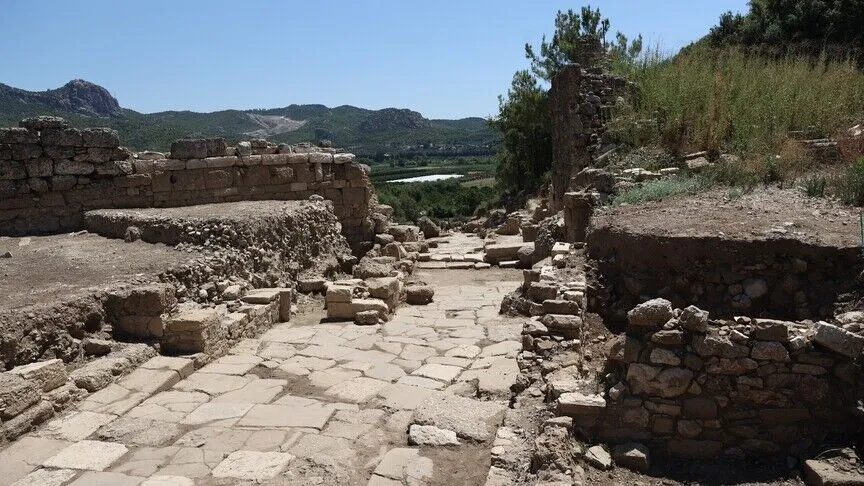
Archaeologists at Aspendos in southern Turkey have uncovered nearly 300 metres of a 2,000-year-old street lined with shops, houses, public buildings and a well-preserved bread oven.
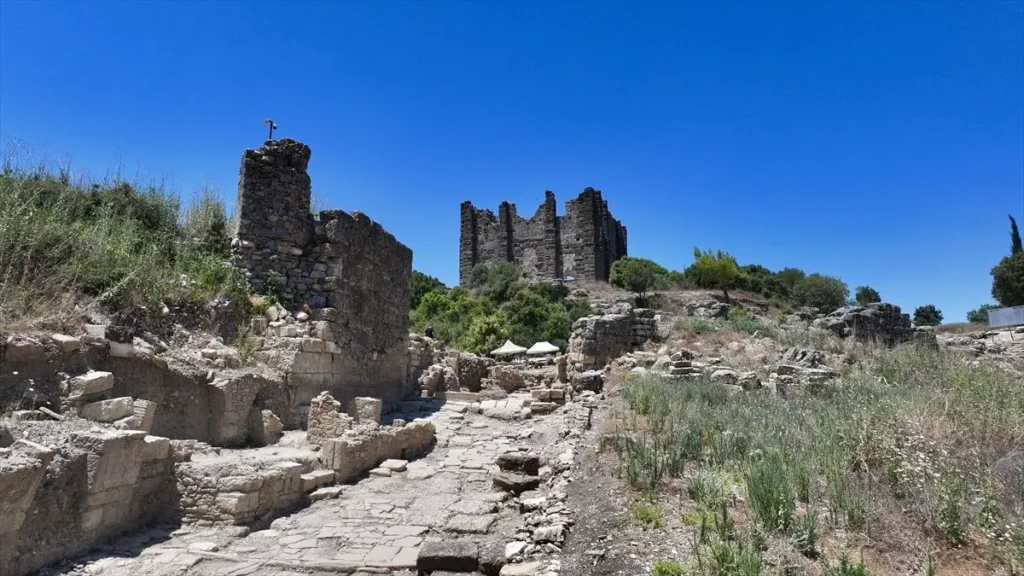
Known as the Theatre Street, the road once connected Aspendos’s famous Roman theatre with the acropolis above. It was one of the ancient city’s main internal routes, carrying residents and traders through a busy district rather than serving only as a ceremonial approach to the hilltop monuments.
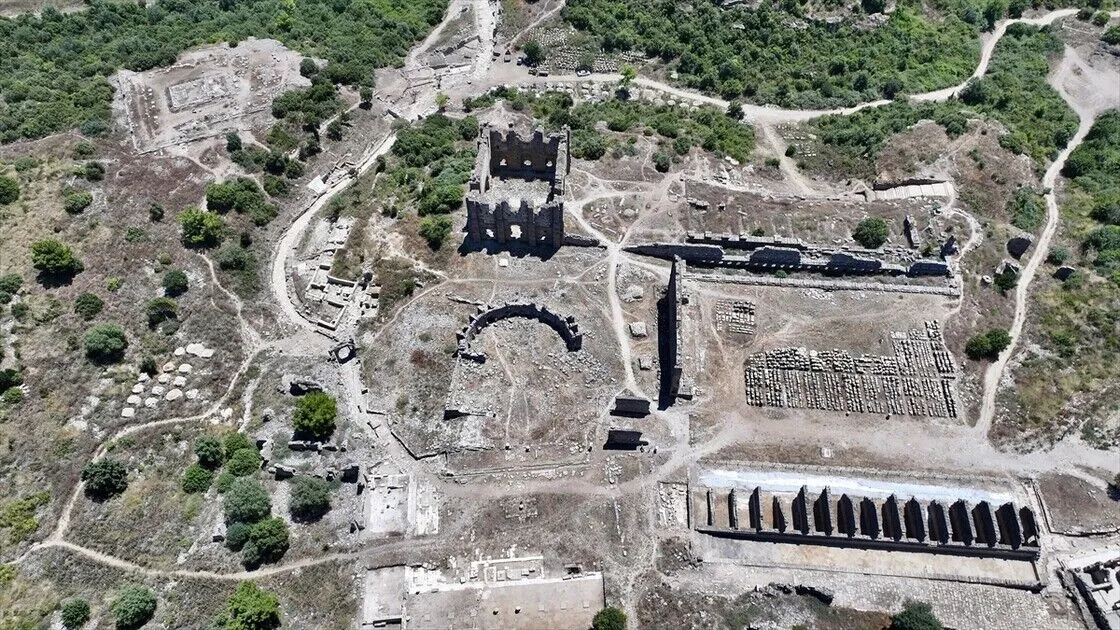
Excavations are being directed by Assoc. Prof. Mustafa Bilgin of Afyon Kocatepe University.
Bilgin said the two-year excavation of the street is now nearing completion. Once conservation work is finished, visitors will be able to walk from the theatre to the acropolis along much of the ancient route.
A Street Built Across the Slope
The exposed road varies between three and five metres in width. Beneath its stone paving, archaeologists found a sewer channel approximately one metre deep.
The street was constructed on sloping ground, but its stones were positioned to follow the incline and prevent the surface from shifting. Large parts of the paving remained stable despite the earthquakes that affected the region over the centuries.
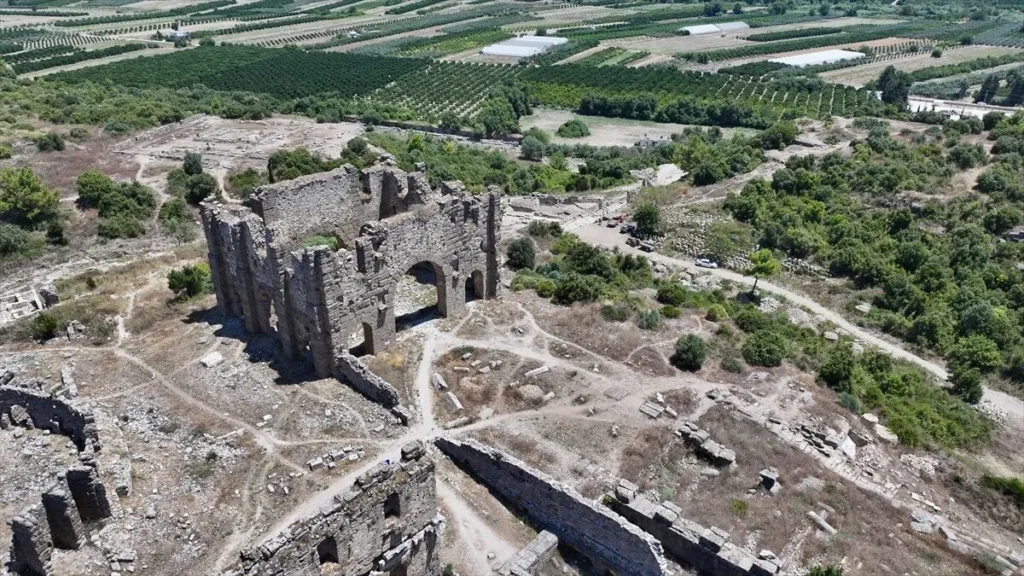
Buildings uncovered beside the road include public structures, private houses, two-storey shops and a monumental gateway. Their density suggests that the Theatre Street passed through one of the most active parts of Aspendos.
A surviving bread oven is among the most striking discoveries. Found close to the shops and public buildings, it offers direct evidence of food production in the centre of the ancient city.
Phoenician Coin Points to Wider Trade
Excavations in the shops and a nearby stoa complex produced a Phoenician coin and small glass perfume vessels.
According to Bilgin, the finds support evidence that Aspendos maintained commercial contacts with the eastern Mediterranean, including regions corresponding to present-day Syria and Palestine.
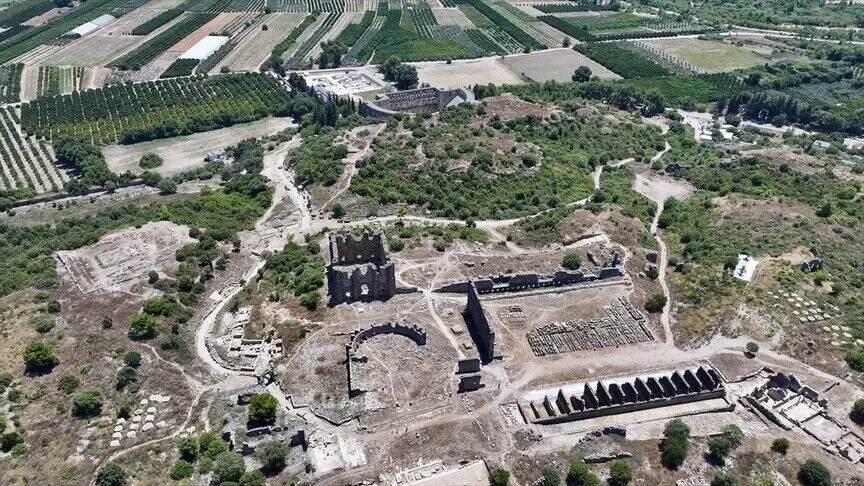
The city stood near the Eurymedon River, now known as Köprüçay. The river connected inland Pamphylia with the Mediterranean coast and helped Aspendos develop into an important regional trading centre.
Outside the eastern fortification gate, archaeologists also identified the city’s eastern necropolis. A grave dating to the late fifth century BC shows that the area was already being used for burials during the Classical period.
A separate building with a mosaic floor was uncovered in the East Square, although its date and original purpose have not yet been established.
Aspendos is best known for its exceptionally preserved Roman theatre and monumental aqueducts. The newly uncovered street adds the shops, houses, workshops and drainage systems that supported daily life around those famous structures.