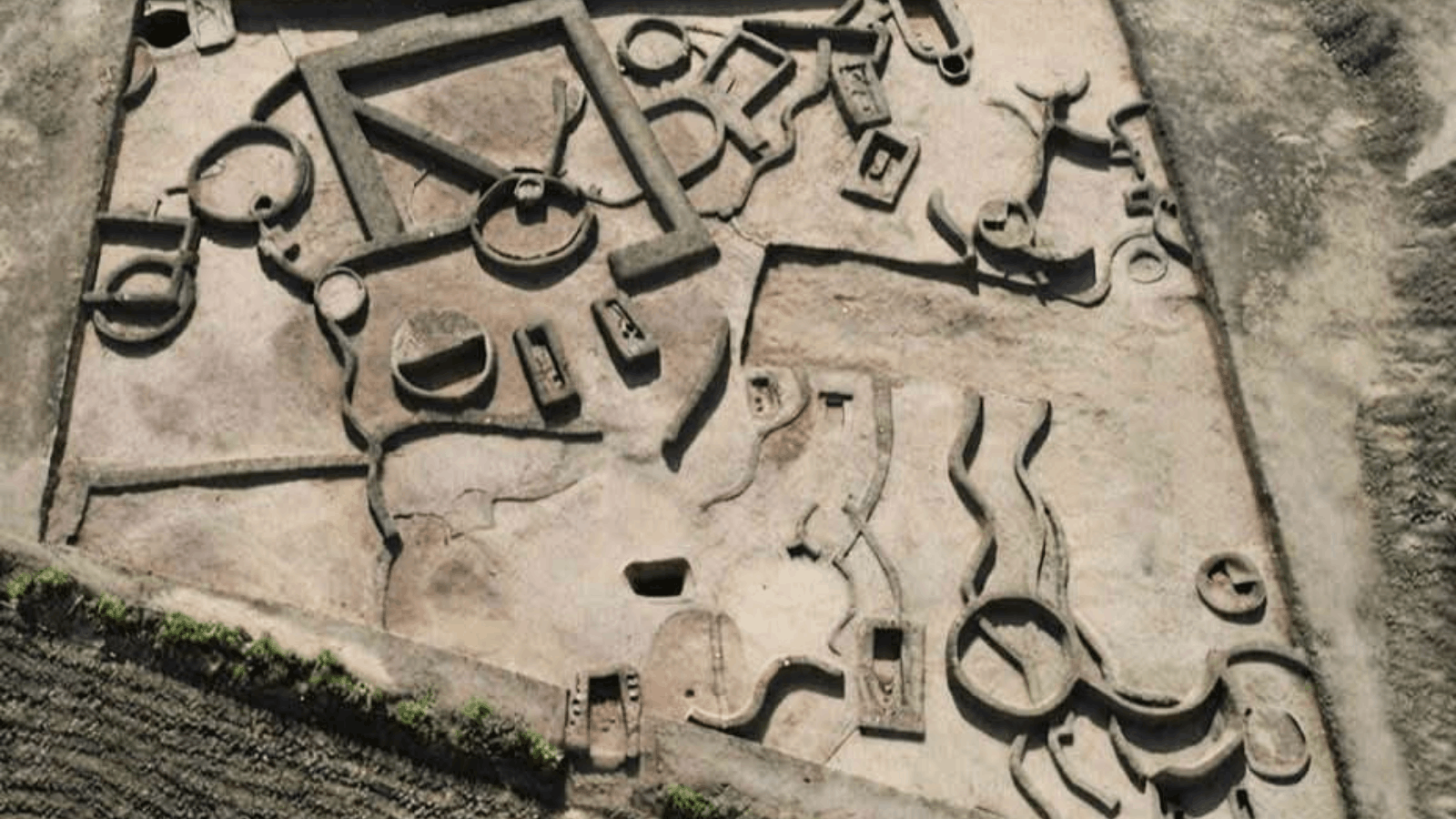
Archaeologists excavating a site in Egypt’s eastern Nile Delta have uncovered evidence of communities that lived and buried their dead there across more than five millennia, from the Predynastic Period to Ptolemaic Egypt.
The discoveries at Kom El-Khelgan in Dakahlia Governorate include graves dating back more than 5,500 years, a settlement from the Second Intermediate Period, burials from the time of the Hyksos, early New Kingdom structures and the burial of a child inside two reused amphorae.
Egypt’s Supreme Council of Antiquities said the latest excavations are providing an unusually long archaeological sequence for this part of the eastern Delta, revealing changes not only in burial customs but also in settlement, food production and everyday life.
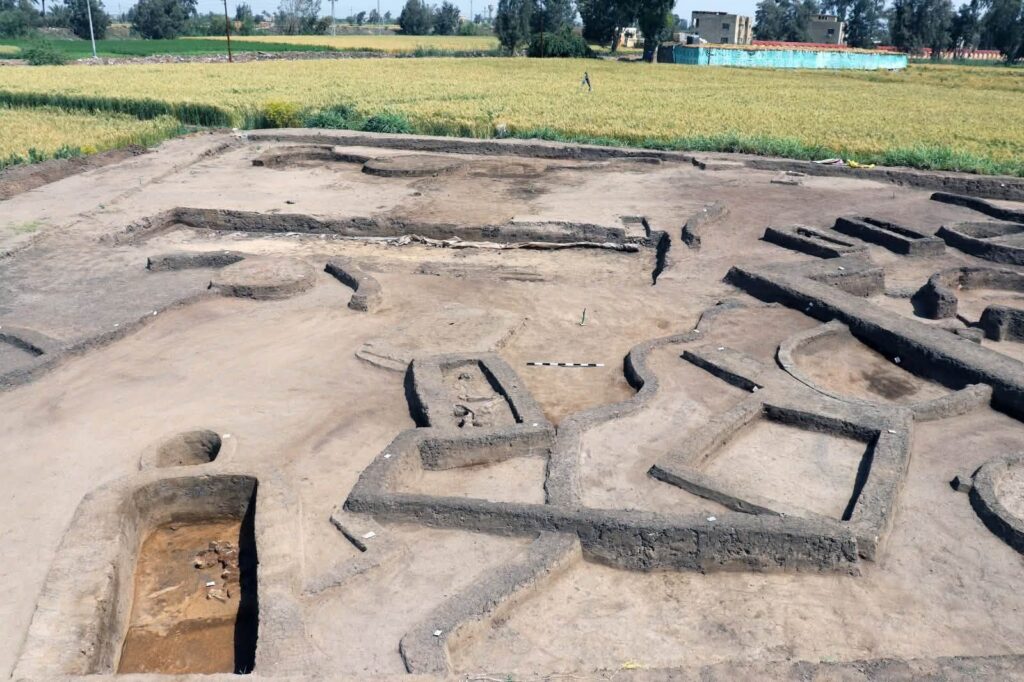
Burials from the time of the Hyksos
Some of the most revealing discoveries belong to the turbulent centuries of Egypt’s Second Intermediate Period, when the Hyksos controlled parts of northern Egypt.
The team uncovered a residential area with mudbrick buildings, grain-storage silos, ovens and hearths. Pottery, stone tools and large quantities of fish, bird and animal bones were also recovered, preserving evidence of what the inhabitants ate and how the settlement functioned.
Nearby graves date from the 15th through 17th Dynasties and the beginning of the New Kingdom. According to the excavation team, the finds confirm that the area was occupied during the Hyksos period.
That connection is particularly significant because Kom El-Khelgan lies in the eastern Nile Delta, within the broader region dominated by Avaris, the Hyksos capital.
The graves vary in construction and burial practice. Some were built as mastaba-type tombs, while others incorporated cornices. Preliminary examination has also identified differences in the ages of the dead and the positions in which they were buried.
Jewelry, amulets and scarabs were found alongside bronze tools and weapons. The pottery assemblage includes Tell el-Yahudiya ware, a distinctive ceramic tradition closely associated with the Second Intermediate Period.
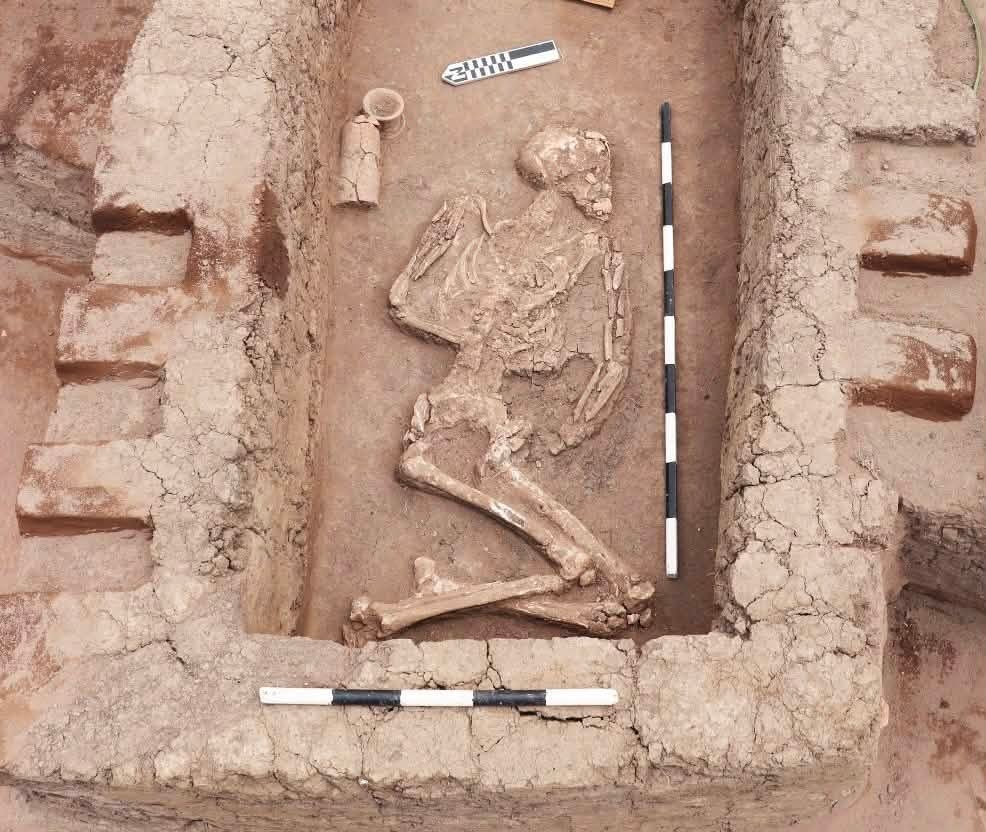
The story begins more than 5,500 years ago
Long before the Hyksos appeared in Egypt, people were already burying their dead at Kom El-Khelgan.
The earliest graves belong to the Lower Egyptian culture, represented at the site by the Buto I and Buto II phases of the first half of the fourth millennium BC.
These burials were comparatively simple. Oval graves were cut into the sandy ground, with bodies placed in several different positions.
Small handmade pottery vessels and marine shells were among the limited grave goods.

The concentration of burials indicates that Kom El-Khelgan was already used by a sizeable community during Egypt’s Predynastic Period, centuries before the emergence of the pharaonic state.
The site was not abandoned as Egypt entered later historical periods.
Alongside the Second Intermediate Period settlement, excavators identified a mudbrick tomb dating to the beginning of the 18th Dynasty, which marked the opening of the New Kingdom. Pottery vessels and bronze tools were recovered from the tomb.
The foundations of another structure with unusually thick mudbrick walls were also exposed. Pottery fragments and stone tools found on its floor have likewise been dated to the beginning of the New Kingdom.
A child buried inside two amphorae
One of the latest burials discovered at Kom El-Khelgan comes from a very different Egypt.
During the Ptolemaic Period, centuries after the New Kingdom, part of the site was still being used for burial.
Excavators found several simple burial pits from this period, including the remains of a child placed inside two amphorae reused as a funerary container.
Using large ceramic vessels for child burials was a known funerary practice during the period. At Kom El-Khelgan, the burial provides another chronological marker in a site whose archaeological record stretches across thousands of years.
The latest discoveries therefore document more than a cemetery.
Mudbrick houses, storage installations and ovens record daily life; animal and fish bones preserve traces of diet; graves document changing approaches to death; and artifacts ranging from handmade Predynastic pottery to scarabs and bronze weapons reveal communities separated by thousands of years but occupying the same landscape.
Excavations at Kom El-Khelgan are continuing under Egypt’s Supreme Council of Antiquities.
Cover Image Credit: Aerial view of the Kom El-Khelgan excavation site in Egypt’s Nile Delta, where archaeologists documented mudbrick structures, burial features and settlement remains spanning several periods of occupation.