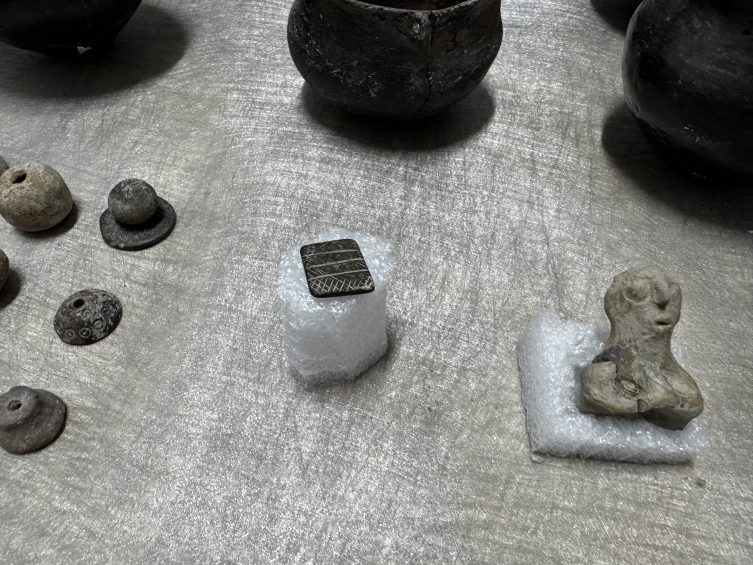
At first glance, it is a small object—unassuming, made of stone. Yet the seal recently uncovered at Tadım Höyük carries a weight far beyond its size. Dating back roughly 7,500 years, the artifact offers rare insight into how some of Anatolia’s earliest communities began to define identity, ownership, and social order long before the invention of writing.
The discovery was made in eastern Anatolia, near the modern city of Elazığ, during ongoing excavations at Tadım Höyük—one of the Upper Euphrates Basin’s most deeply stratified archaeological sites.
A Seal from the Dawn of Social Organization
Archaeologists believe the stone seal may have been used to mark property, identify households, or regulate shared resources—functions that point to early administrative thinking in prehistoric society. Objects of this kind are extremely rare in contexts dating to the early Neolithic, making the Tadım Höyük example particularly significant.

Elazığ Governor Numan Hatipoğlu underscored the importance of the find:
“This stone seal is unlike anything previously discovered in our region. It may have been linked to ownership or identity, indicating that organized social life here extends back to around 7500 BCE.”
The seal is currently undergoing detailed study at the Elazığ Archaeology and Ethnography Museum, where specialists are examining its form, wear patterns, and possible symbolic meaning.
Why Stone Seals Matter in Prehistoric Contexts
In early agrarian societies, seals often appear alongside evidence for grain storage, surplus management, and exchange systems. Their emergence marks a turning point—when communities began to formalize relationships between people, property, and production.
The Tadım Höyük seal suggests that inhabitants of the Upper Euphrates Basin were already experimenting with resource control and social differentiation, laying foundations for more complex economic and administrative systems that would emerge millennia later across the ancient Near East.
More Than a Village: Ritual Life at Tadım Höyük
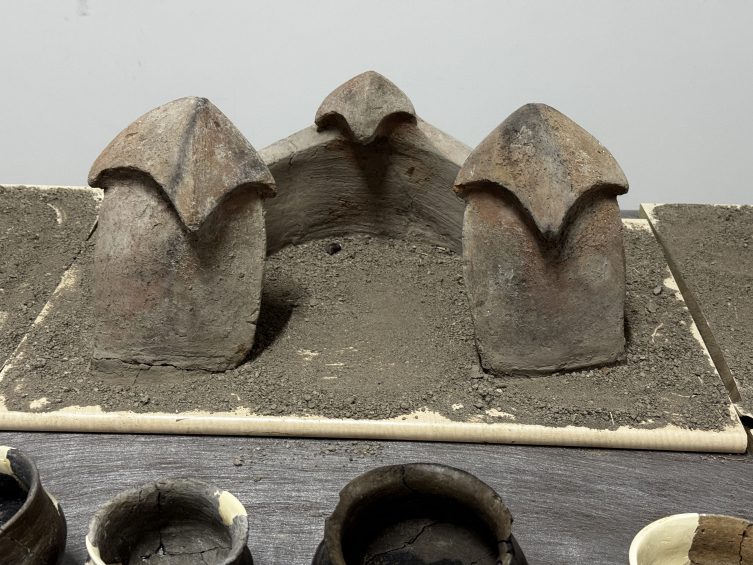
Excavations have also revealed that Tadım Höyük was not merely a place of everyday habitation. Among the most striking discoveries is a bull-headed stone altar measuring approximately 160 by 130 centimeters, dated to the Late Chalcolithic and Early Bronze Age.
Bull imagery held powerful symbolic meaning in ancient Near Eastern cultures, often associated with fertility, strength, and communal ritual. Alongside ritual hearths and stylized figurines, the altar suggests that Tadım Höyük functioned as a ceremonial center, where spiritual practices were closely intertwined with daily life.
A Strategic Hub in Early Anatolia
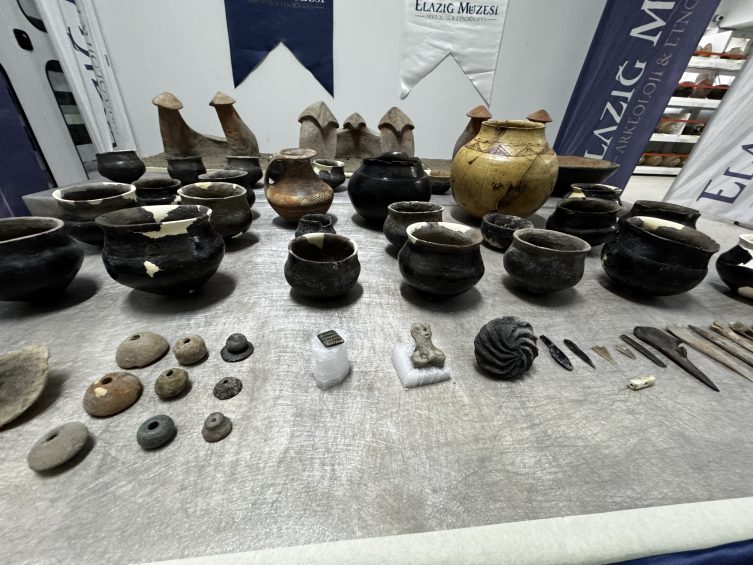
Geographically, Tadım Höyük occupies a key position along routes linking Mesopotamia, the Caucasus, and Central Anatolia. Previous excavation seasons have produced Karaz-type ceramics, geometric pottery, stone tools, arrowheads, and stamp seals, pointing to cross-regional interaction and shared cultural traditions.
These findings support interpretations of the site as an economic and organizational hub within the Upper Euphrates Basin—an idea now reinforced by the discovery of the stone seal.
Reframing the Origins of Organized Life in Anatolia
Taken together, the evidence from Tadım Höyük challenges older assumptions about the pace and geography of early social complexity. The 7,500-year-old seal shows that concepts of identity, ownership, and communal regulation were already taking shape in Anatolia at a remarkably early date.
As excavations continue, Tadım Höyük is increasingly viewed as a key reference site for understanding how prehistoric societies in Anatolia transitioned from loosely organized communities to structured, enduring settlements.
Sometimes, it is the smallest objects that tell the largest stories. In this case, a simple stone seal opens a new window onto the deep roots of civilization in the Upper Euphrates Basin.