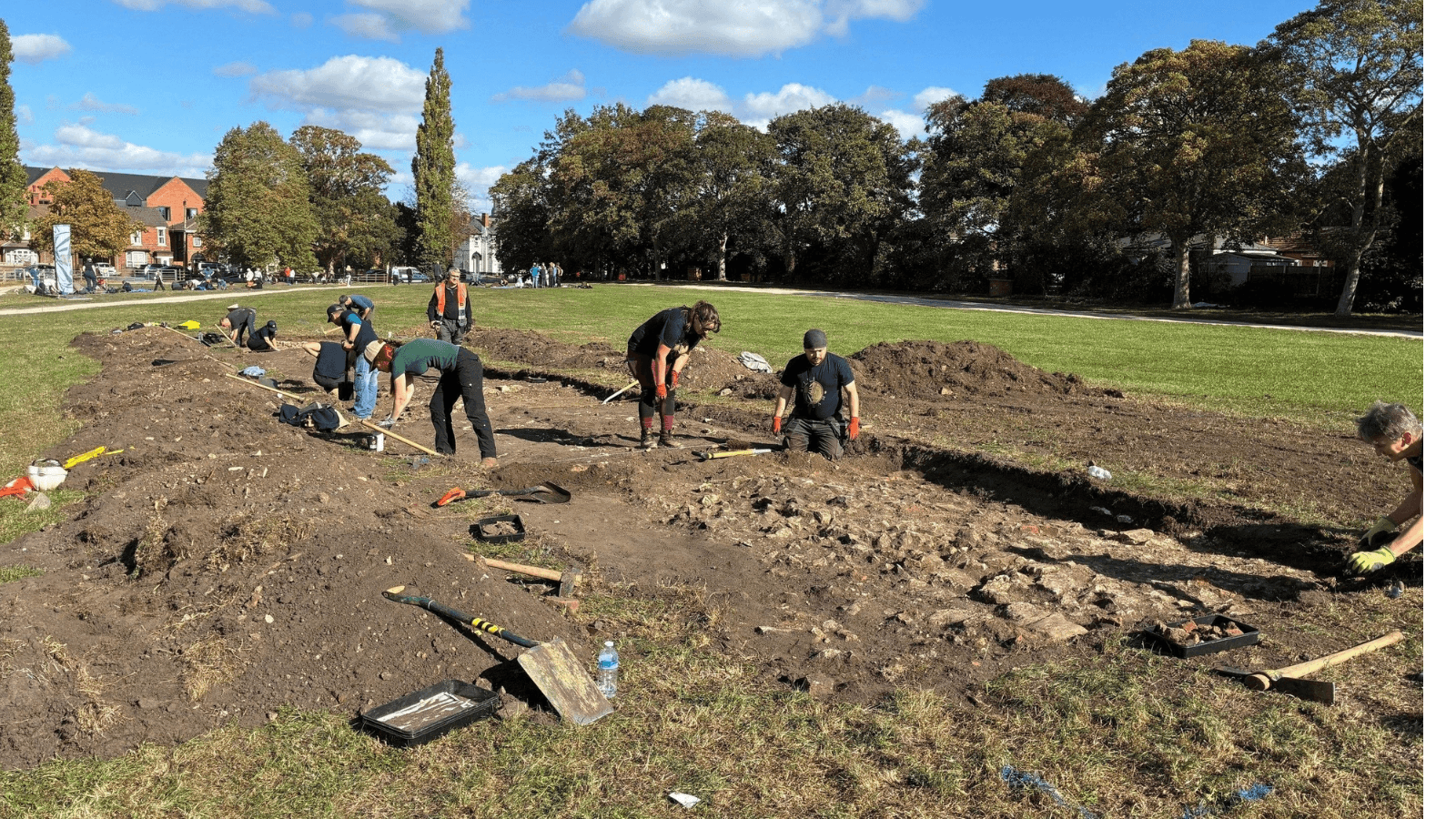
Archaeologists excavating one of England’s earliest medieval leprosy hospitals have uncovered traces of square structures that may reveal how people with the disease lived around 900 years ago.
The remains emerged during a three-day excavation at the Hospital of the Holy Innocents on South Common in Lincoln. The hospital was founded around the late 11th or early 12th century and remained in use for several centuries.
According to a BBC report from the excavation, archaeologists found traces of square features that may have been living spaces for people housed at the hospital. The discovery offers a rare opportunity to investigate the physical spaces occupied by medieval people with leprosy, whose lives are more often known through documentary records.
The excavation, carried out with Time Team, marks the beginning of the three-year Hidden Histories Unearthed project, which aims to reconstruct both the hospital complex and the lives of the people who lived, worked and died there.
Square structures may have housed hospital residents
The most intriguing discoveries are traces of roughly square features identified during the excavation.
Professor Carenza Lewis of the University of Lincoln, one of the excavation directors, said archaeologists believe people may have been housed in these structures. She also described them as features that had not previously been excavated elsewhere, making their interpretation particularly important.
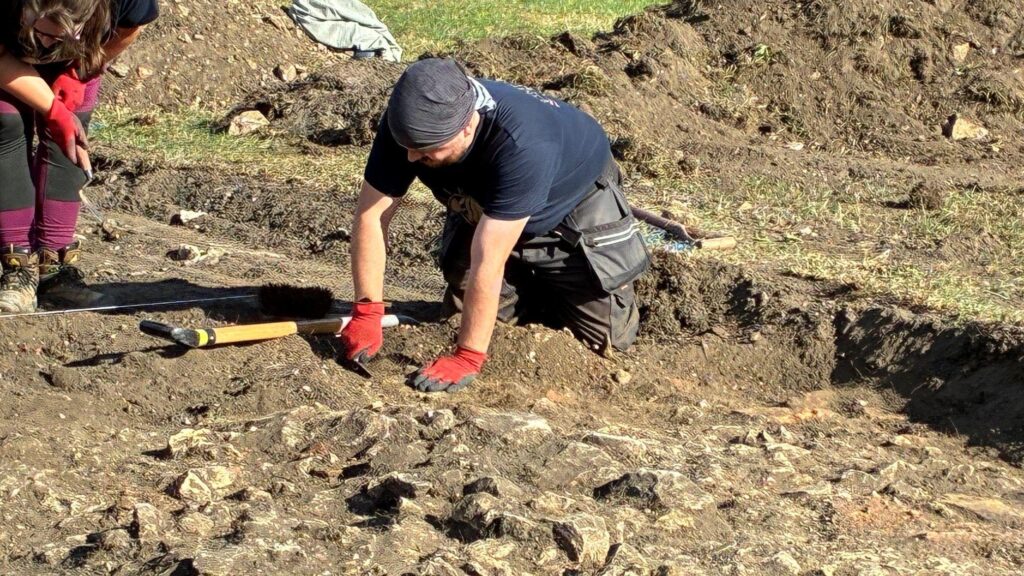
Researchers will need further excavation to establish exactly how the structures were used, how many existed and how they fitted into the wider hospital complex.
The discovery is especially significant because medieval hospitals for people with leprosy are often much better documented historically than they are understood archaeologically. Buildings associated with everyday life can therefore provide evidence that surviving written sources cannot.
One of England’s earliest leprosy hospitals
The Hospital of the Holy Innocents, also known as the Malandry, was founded in the early medieval period, probably around 1100.
The institution could house up to 20 people with leprosy. Earlier documentary evidence recorded by the Lincolnshire Historic Environment Record describes an arrangement for 10 residents of either sex under the care of a warden and two chaplains, suggesting that the hospital may have changed in scale during its long history.
Historical records also mention a church and several houses associated with the institution.
The hospital remained active for around five centuries, making it an unusually long-lived institution for the care and accommodation of people affected by leprosy.
Earlier excavations revealed walls and medieval remains
The latest discoveries build on archaeological work carried out across South Common in 2025.
More than 100 volunteers excavated 41 test pits during that project, uncovering boundary walls, possible building surfaces and medieval artefacts associated with the hospital.
Those results helped archaeologists decide where to excavate this year. The new investigation targeted areas where structural remains had already appeared, while geophysical survey results helped identify further locations for investigation.
Dr Samantha Tipper of Anglia Ruskin University and Professor Carenza Lewis are directing the archaeological work.
Archaeology can reveal life beyond the disease
The project is also examining what life was actually like for people living in medieval leprosy hospitals.
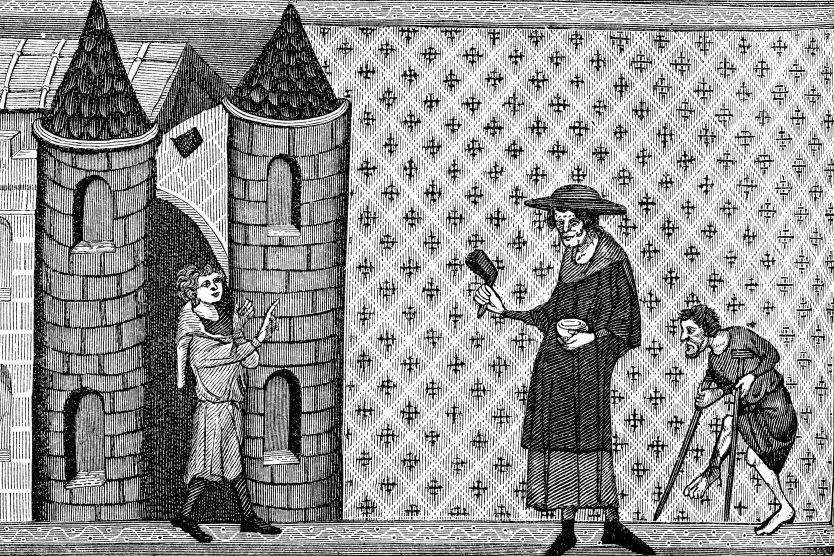
Leprosy carried serious physical and social consequences, but institutions such as the Hospital of the Holy Innocents were not simply places where people disappeared from society. They included buildings, religious spaces and organised communities that survived for generations.
Finding the rooms or small structures where residents may have lived brings that history down to a much more personal scale. Instead of relying only on institutional records, archaeologists can begin to examine the spaces people occupied in their daily lives.
That is what makes the newly uncovered structures particularly valuable: they may preserve evidence of how the hospital functioned from the perspective of its residents rather than only its administrators.
The excavation is only the beginning
The October excavation marks the opening stage of Hidden Histories Unearthed, a three-year project supported by the National Lottery Heritage Fund.
Researchers plan to investigate more of South Common while involving local volunteers in excavation and heritage work. Their aim is to identify more of the hospital’s buildings and better understand the people who occupied them over several centuries.
The square structures uncovered during the latest dig are still being interpreted, but they have already provided archaeologists with something unusually tangible: possible traces of the places where people with leprosy actually lived.
Cover Image: Archaeologists excavating the site of the medieval Hospital of the Holy Innocents on South Common in Lincoln. Credit: BBC