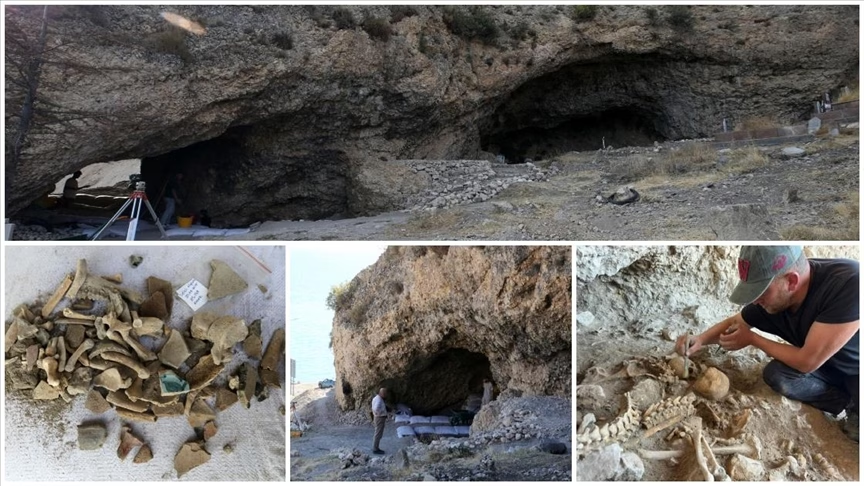
Archaeologists in eastern Türkiye have uncovered remarkable evidence of continuous human activity spanning nearly eight millennia in a cave overlooking Lake Van, one of the world’s oldest and largest high-altitude lakes. The discovery offers a rare look into how communities in ancient Anatolia adapted to changing environments—from the Stone Age to the Medieval period.
The site, known as Delikli Cave, lies about 60 meters above the modern lake level near the district of Adilcevaz. Excavations are being conducted under the direction of the Ahlat Museum Directorate, with scientific supervision by Dr. Sinan Kılıç of Van Yüzüncü Yıl University’s Department of Archaeology, and permission from the Turkish Ministry of Culture and Tourism. Over two seasons of fieldwork, the team has uncovered artifacts that chart a continuous sequence of settlement stretching back to 6000 B.C.
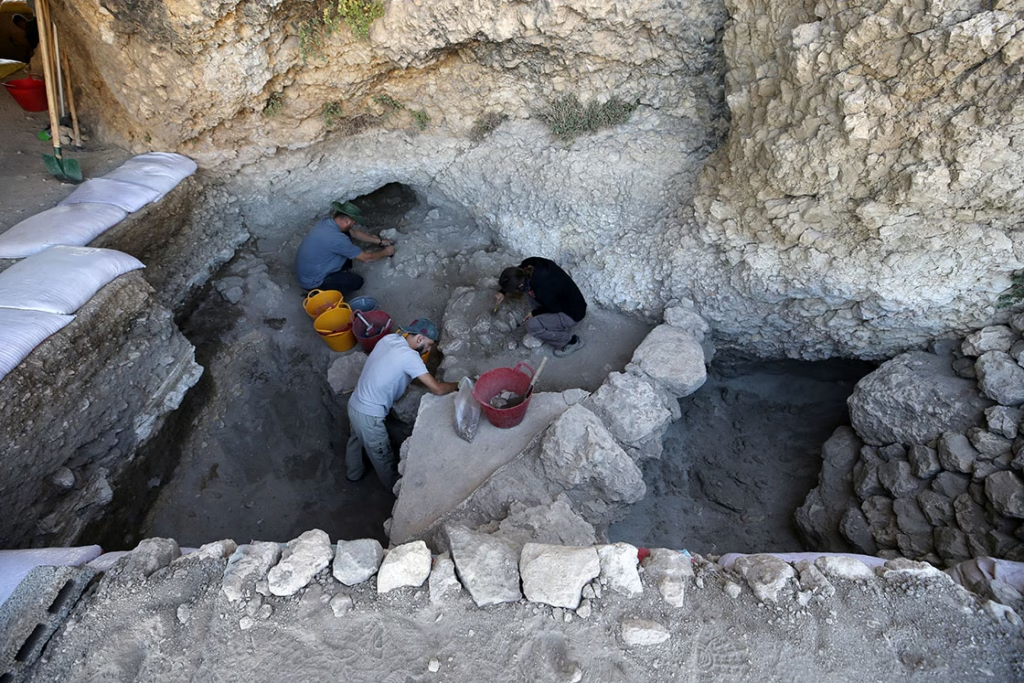
From Prehistoric Camps to Urartian Burials
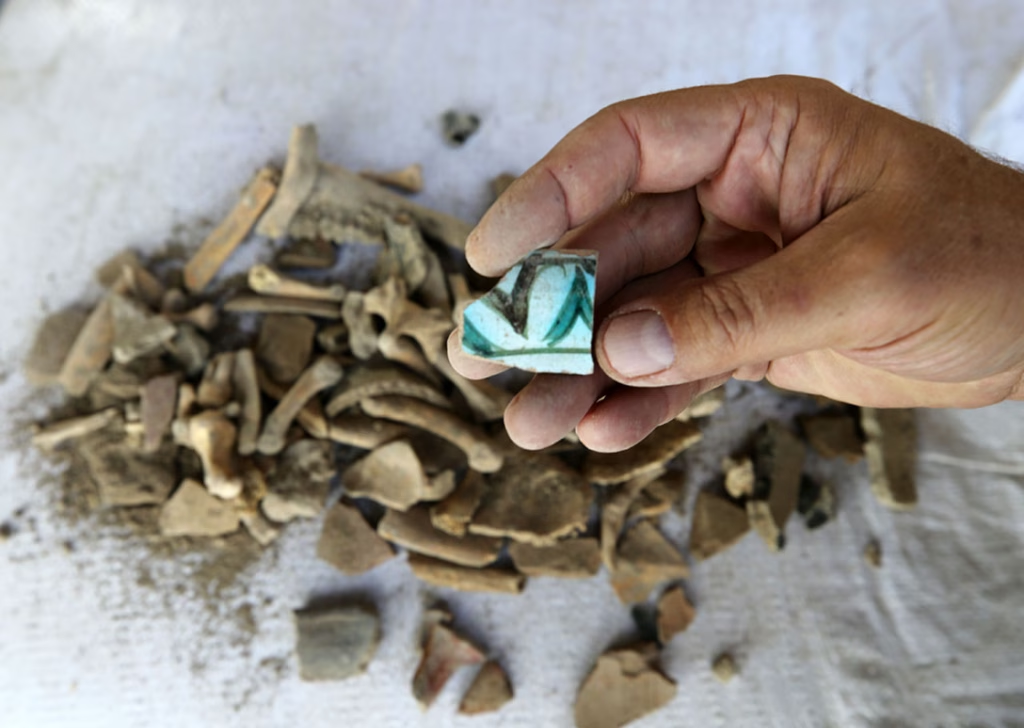
The cave’s deepest layer contained finely made obsidian and flint tools together with handmade pottery fragments. These finds point to an early Neolithic or Chalcolithic occupation, when mobile groups used the site as a temporary camp or lakeside workshop.
Dr. Kılıç notes that the transparent, glass-like obsidian artifacts appear to have originated from Meydan Mountain in Erciş, about 80 kilometers away—evidence of early resource transport and interaction networks across the Lake Van basin.
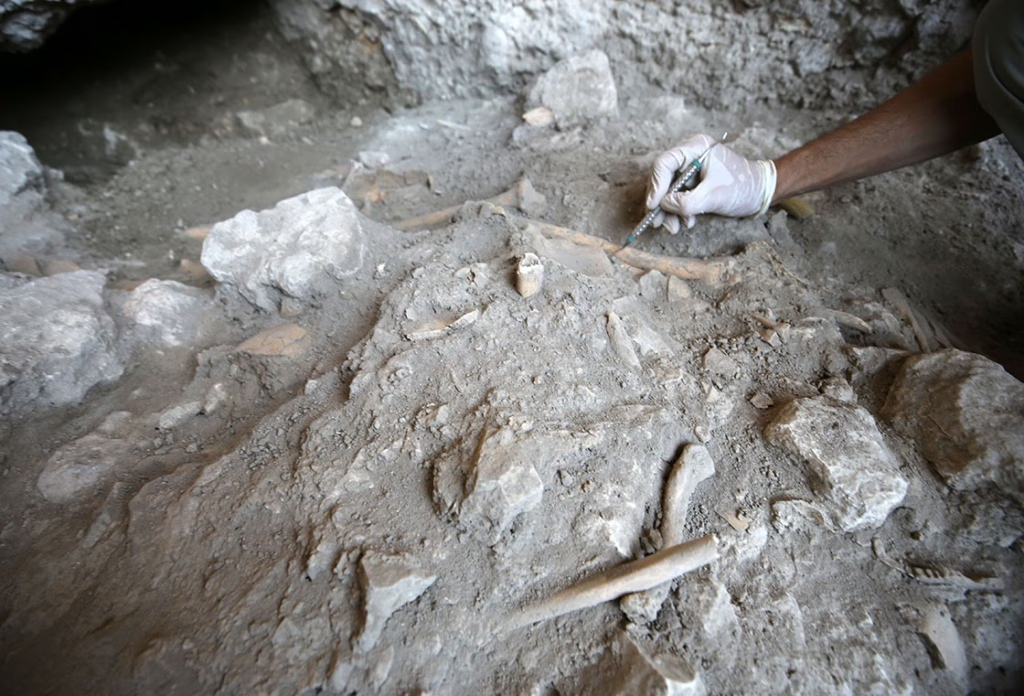
Above this horizon, archaeologists discovered a disturbed Urartian multiple burial dated to the early first millennium B.C. The tomb yielded human skeletons, iron knives, shell and glass beads, and ceramic vessels, suggesting that the cave had become part of the funerary landscape of the Urartian Kingdom (9th–6th centuries B.C.).
Later, during the Medieval period, a lime-plastered floor and wall remains were added, indicating that the cave was reused as a dwelling or perhaps a small chapel.
Tracing the Ancient Shoreline of Lake Van
Beneath the lowest archaeological layer, a band of lake-deposited sand was found—clear evidence that Lake Van’s shoreline once extended much closer to the cave entrance.
“In prehistory, people here lived directly on the lake’s edge,” says Dr. Kılıç. “Its resources—fish, reeds, and fresh water—must have shaped the earliest lifeways in this region.”
This finding not only refines the paleogeography of the Van basin but also shows how early Anatolian communities organized their settlements around dynamic water systems.
A Missing Chapter in Eastern Anatolia’s Prehistory
The combination of obsidian tool industries, early ceramics, and Urartian mortuary evidence fills a major gap in the archaeological record of Eastern Anatolia.
According to Kılıç, the discoveries at Delikli Cave may soon become a key reference for understanding the transition between foraging and early farming societies in the highlands of Southwest Asia.
Future work will include laboratory analyses, isotopic studies on the human remains, and detailed documentation of the artifacts, all to be curated at the Ahlat Museum. The project’s findings are expected to redefine how scholars view cultural continuity and adaptation around Lake Van—an ancient cradle of Anatolian civilization.